
Wheat vs Tares: Understanding the Parable and its Modern Relevance
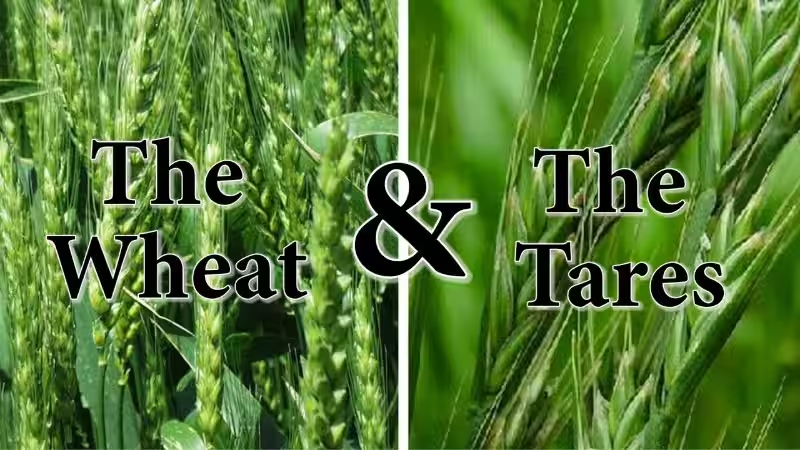
The parable of the wheat and the tares, found in Matthew 13, is more than just an ancient story; it's a timeless allegory with profound implications for understanding the complexities of faith and the challenges of discerning truth from falsehood in our modern world. This seemingly simple story of a farmer, his field, and the insidious growth of weeds speaks volumes about the infiltration of false teachings within religious communities and the importance of careful discernment.
- The Parable: A Deeper Dive
- Identifying the Tares: Stumbling Blocks and Lawlessness
- The Importance of Discernment in the Modern Era
- The Role of the Believer: Patience, Gentleness, and Correction
-
Frequently Asked Questions: Understanding the Parable of the Wheat and the Tares
- What is the parable of the wheat and the tares about?
- Who are the "wheat" and the "tares" in the parable?
- What does the field represent?
- When does the separation of wheat and tares occur?
- How can we distinguish between wheat and tares?
- Is it our responsibility to judge and remove the tares?
- What should we do if we encounter someone spreading false teachings?
- Where can I find reliable biblical teaching to help me discern truth from falsehood?
- What is the overall message of the parable?
The Parable: A Deeper Dive
The parable depicts a farmer who sows good seed (wheat) in his field, only to have an enemy secretly sow weeds (tares) amongst them. These tares, visually indistinguishable from the wheat in their early stages, grow alongside the good seed until harvest time. The landowner, representing God, instructs his workers to let both grow together until the harvest, at which point the tares will be separated and burned.
This seemingly simple narrative encapsulates a profound truth: the kingdom of God, represented by the wheat, coexists with the kingdom of darkness, represented by the tares, in this world. The intermingling of true believers and false prophets, of genuine faith and deceptive practices, is a reality we must confront. The wheat and tares aren't easily separated; identifying false teaching requires wisdom, patience, and a deep understanding of scripture.
Identifying the Tares: Stumbling Blocks and Lawlessness
Discerning between "wheat" and "tares" – true believers and those who deceptively mimic faith – isn't about judging individuals. That responsibility belongs solely to God. However, identifying and navigating false teachings is a crucial responsibility for every believer. The parable highlights two key characteristics to help us differentiate: stumbling blocks ( skandalon) and lawlessness (anomia).
Stumbling blocks represent anything that hinders or misleads, leading individuals away from true faith. This could manifest as misleading interpretations of scripture, manipulative practices, or the promotion of harmful ideologies disguised as spirituality. Lawlessness, on the other hand, signifies a willful disregard or violation of God's commands, often presented in a way that appears appealing or even progressive to the worldly mindset. These "tares" might be unintentionally deceived themselves, or they might be deliberate agents of deception, sown by the enemy. Pastor Cary Gordon's film, "Enemies Within the Church," powerfully illustrates this concerning trend of increasing false teachings in modern Christianity.
The Importance of Discernment in the Modern Era
The challenge of distinguishing wheat from tares is intensified in our modern context. The internet, social media, and a plethora of readily available information create fertile ground for the spread of false teachings. The subtle nature of deception, as predicted in scriptures like 1 John 2:18 and 1 Timothy 4:1, makes discernment even more critical. Satan's deception is often palatable and appealing, making it crucial to cultivate a robust understanding of biblical truth.
This calls for diligent study of the Bible, prayerful reflection, and a commitment to comparing any teaching against the unwavering standard of scripture. We must hold all teachers accountable to the teachings of Jesus Christ and the apostles. It is not about rejecting everything that is different; rather, it is about carefully evaluating the fruit of any teaching or ministry. Does it align with the teachings of the Bible? Does it produce love, joy, peace, patience, kindness, goodness, faithfulness, gentleness, and self-control (Galatians 5:22-23)?
The Role of the Believer: Patience, Gentleness, and Correction
The parable doesn't encourage immediate action against those we perceive as "tares." Instead, it emphasizes patience and trust in God's ultimate judgment. 2 Timothy 2:24-26 highlights the importance of gentleness, patience, and correction in addressing those who spread false doctrine. Our role is not to condemn or destroy, but to gently correct and guide, hoping for their repentance and escape from the devil's snare.
This approach requires humility and self-awareness. We must be careful not to fall into the trap of self-righteous judgment, which can be just as harmful as the false teachings themselves. Remember that even those who spread error might themselves be deceived. Our approach should always be rooted in love and a desire to see others come to the truth.
Practical Steps for Discernment:
- Consistent Bible Study: Regularly engage with scripture, seeking to understand its context and application.
- Prayerful Discernment: Seek God's guidance through prayer as you evaluate teachings.
- Community Accountability: Engage with a community of believers who will hold you accountable to biblical truth.
- Critical Thinking: Develop critical thinking skills to evaluate claims and evidence.
- Seek Reliable Resources: Utilize trusted resources like Growing4Life and Olive Tree Ministries that consistently uphold biblical truth.
The parable of the wheat and the tares serves as a powerful reminder that the struggle between truth and falsehood is ongoing. It is not a battle we can fight alone, but one that requires vigilance, discernment, and a commitment to the unwavering truth of God's word. By understanding the nature of "wheat vs tares" and applying the principles of biblical discernment, we can navigate this complex world with wisdom, grace, and unwavering faith.
Frequently Asked Questions: Understanding the Parable of the Wheat and the Tares
What is the parable of the wheat and the tares about?
The parable of the wheat and the tares, found in Matthew 13:24-30, 36-43, is a story Jesus uses to illustrate the coexistence of genuine believers ("wheat") and deceptive individuals ("tares") within the world. The tares, resembling wheat initially, represent those who outwardly appear Christian but are agents of evil, subtly undermining true faith. It highlights the difficulty of distinguishing between true and false believers and emphasizes God's ultimate judgment in separating them at the harvest (end times).
Who are the "wheat" and the "tares" in the parable?
The "wheat" symbolizes true believers, those who genuinely follow Christ and bear the fruit of the Spirit. The "tares" represent false believers or those who spread false teachings ("stumbling blocks" and "lawlessness") that lead others astray. These individuals may be intentionally deceptive or unintentionally misled themselves.
What does the field represent?
The field represents the world, not the church. The parable illustrates that true and false believers exist together in the world until the final judgment.
When does the separation of wheat and tares occur?
The separation of the wheat and tares happens at the harvest, which symbolizes the final judgment at the end times. It is not our role to prematurely separate them; that responsibility belongs to God, represented by the angels who carry out the separation.
How can we distinguish between wheat and tares?
Distinguishing between wheat and tares is challenging because they initially appear similar. Key characteristics to look for in those who spread false teachings include: "stumbling blocks" (anything that hinders or misleads people from true faith) and "lawlessness" (a disregard or willful violation of God's commands). Diligent study of the Bible and holding all teachers accountable to scripture are crucial for discernment.
Is it our responsibility to judge and remove the tares?
No. The parable emphasizes that we are not to attempt to identify and remove false believers ourselves. That is God's prerogative at the final judgment. Our role is to discern, avoid false teachings, and warn others, but not to condemn or actively try to eliminate those spreading falsehoods.
What should we do if we encounter someone spreading false teachings?
While we shouldn't judge or attack those spreading false teachings, we should be vigilant and avoid them. We must actively discern and avoid those who preach false doctrines that contradict scripture or promote lawlessness. Approaching such situations with patience, gentleness, and correction (as suggested in 2 Timothy 2:24-26), hoping for their repentance, is the right approach.
Where can I find reliable biblical teaching to help me discern truth from falsehood?
Resources like Growing4Life and Olive Tree Ministries (mentioned in the original text) are examples of places to find reliable biblical teaching. It’s important to be discerning and cross-reference information from multiple trustworthy sources. Regular engagement with scripture is essential to develop spiritual maturity and discernment.
What is the overall message of the parable?
The parable's central message is one of patience, trust in God's judgment, and the importance of diligent discernment. It highlights the presence of both good and evil in the world, the ultimate triumph of good over evil, and the need for believers to remain faithful and watchful against deception. It also emphasizes the dangers of self-appointed judgment and the importance of relying on God's timing and methods.