
Understanding the Foolish Farmer: A Parable for Our Times
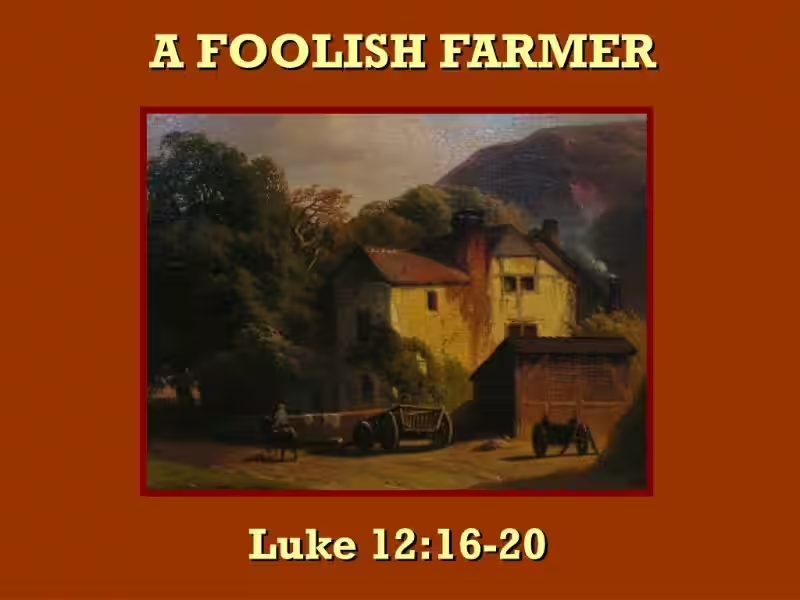
The parable of the foolish farmer, found in Luke 12:16-21, is more than just an ancient story; it's a timeless warning against the pitfalls of unchecked ambition and misplaced priorities. It speaks directly to our modern world, where the pursuit of wealth often overshadows deeper values. This article will explore the key lessons this parable teaches us, helping you understand its relevance in your own life.
The Foolish Farmer's Fatal Flaw: Covetousness
The parable begins with a wealthy farmer who experiences an exceptionally bountiful harvest. Instead of rejoicing in God's provision and considering how to use this abundance for good, he fixates on one thing: building bigger barns. His focus isn't on gratitude or generosity; it's solely on accumulating more, a classic example of covetousness.
This isn’t simply about being stingy; it's about an insatiable desire for more, a relentless pursuit of material wealth that eclipses all other considerations. The farmer's heart is consumed by his possessions, not by God or his fellow human beings. He's not just a miser, he's a man possessed by his possessions.
The Unexpected Twist: Death's Interruption
The farmer's meticulously crafted plans for a life of leisure – "eat, drink, and be merry" – are abruptly shattered by his unexpected death. This sudden end highlights the unpredictable nature of life and the folly of basing one's happiness solely on material possessions. The farmer's wealth, which he believed would guarantee security and endless enjoyment, proves utterly powerless against death.
This unexpected death serves as a powerful reminder that life is finite. We may make long-term plans, but ultimately, our time on earth is limited. The parable challenges us to examine our own priorities and ask whether we're building our lives on a foundation of sand (material wealth) or rock (spiritual values).
More Than Just a Farmer: A Reflection of Ourselves
The foolish farmer isn't just a character in a story; he represents a certain kind of mindset that can affect anyone, regardless of wealth. Many of us, even those who don't possess vast fortunes, can fall into the trap of prioritizing material things over spiritual growth and meaningful relationships.
We might not be building bigger barns, but we might be relentlessly pursuing promotions, accumulating possessions, or chasing after fleeting pleasures that ultimately leave us empty. The core message of the parable isn't about condemning wealth itself, but about warning against the dangers of covetousness and allowing material pursuits to dictate our lives.
What constitutes a "foolish farmer" mentality in modern life?
- Prioritizing material possessions over relationships: This could manifest as neglecting family and friends in favor of work or accumulating possessions.
- Chasing status symbols: Constantly seeking external validation through expensive cars, houses, or clothes.
- Defining success solely by financial gain: Measuring self-worth based on income or net worth.
- Ignoring the needs of others: Failing to share wealth or time with those less fortunate.
- Living for the weekend (or retirement): Delaying true fulfillment until some future point, instead of finding joy in the present.
The True Wealth: Spiritual Abundance
The parable concludes with a stark judgment: the farmer is called a fool. This isn't merely a harsh critique; it's a call to wake up and re-evaluate our priorities. The true wealth, the parable implies, lies not in accumulating earthly possessions but in cultivating a rich spiritual life, a life centered on God and marked by generosity, gratitude, and love.
This doesn't mean rejecting material possessions entirely; rather, it means being mindful of our relationship with them. We should use our resources wisely, sharing them with others and using them for the greater good. The goal isn't to become ascetics, but to cultivate a heart that is rich toward God – a heart that prioritizes spiritual growth, meaningful relationships, and acts of service. A foolish farmer focuses on what he can get; a wise one gives what he has.
Lessons for Today's World
The parable of the foolish farmer offers poignant lessons for modern society, particularly in our consumer-driven culture. It challenges us to critically examine our values and priorities:
- Practice gratitude: Regularly acknowledge God's provision in our lives, big and small.
- Be generous: Share our resources and time with others, supporting causes we believe in.
- Seek spiritual growth: Prioritize prayer, Bible study, and fellowship with other believers.
- Live in the present: Find joy in the everyday moments of life, rather than postponing happiness until some distant future.
- Remember our mortality: Live each day with intention, mindful of the brevity of life.
The foolish farmer's story serves as a potent reminder that true riches lie not in material abundance but in a life lived in accordance with God's will, a life marked by generosity, gratitude, and a commitment to spiritual growth. Let us learn from his folly and choose a path that leads to lasting fulfillment, rather than fleeting earthly pleasures.
Frequently Asked Questions: The Parable of the Foolish Farmer
What is the main point of the parable of the foolish farmer?
The parable of the foolish farmer, found in Luke 12:16-21, primarily warns against the dangers of covetousness and misplaced priorities. It highlights the futility of accumulating material wealth at the expense of spiritual growth and relationship with God. The farmer's focus on earthly possessions ultimately proves meaningless in the face of his unexpected death. The core message is to prioritize spiritual wealth over material gain.
What does the farmer's abundance symbolize?
The farmer's abundant harvest symbolizes material prosperity and success. However, the parable doesn't condemn wealth itself but rather the attitude towards it. The farmer's problem wasn't his wealth, but his obsession with it and his failure to use it for good or to acknowledge God as the source of his blessing. It represents a misguided pursuit of security and self-indulgence.
Why is the farmer considered foolish?
The farmer is deemed foolish because he prioritizes material accumulation and self-indulgence over spiritual matters. He makes elaborate plans for future enjoyment of his wealth, completely neglecting the uncertainty of life and the importance of a relationship with God. His death exposes the emptiness of his materialistic pursuits. His foolishness lies not in having wealth, but in being possessed by it.
What is the significance of the farmer's unexpected death?
The farmer's sudden death underscores the unpredictability of life and the folly of relying solely on earthly security. It serves as a stark reminder of life's brevity and the importance of spiritual preparedness. No amount of wealth can postpone or prevent death, highlighting the ultimate futility of material possessions without a corresponding spiritual foundation.
How does the parable relate to covetousness?
The parable directly addresses covetousness—an insatiable desire for more. The farmer's actions demonstrate the dangers of this insatiable desire. It's not simply about accumulating wealth, but the underlying attitude of greed and the failure to use blessings for good, to give thanks to God, and to consider the needs of others. Covetousness leads to misplaced priorities and ultimately to spiritual emptiness.
What is the sermon's call to action?
The sermon ultimately calls for a reevaluation of values. It urges listeners to prioritize spiritual growth and a relationship with God over the pursuit of material wealth. It's a call to cultivate gratitude, generosity, and to invest in "heavenly treasures" rather than solely focusing on earthly possessions. The parable serves as a cautionary tale, prompting self-reflection on one's priorities and the potential dangers of covetousness.