
Drink This Cup: Understanding the Symbolism of Suffering and Sacrifice
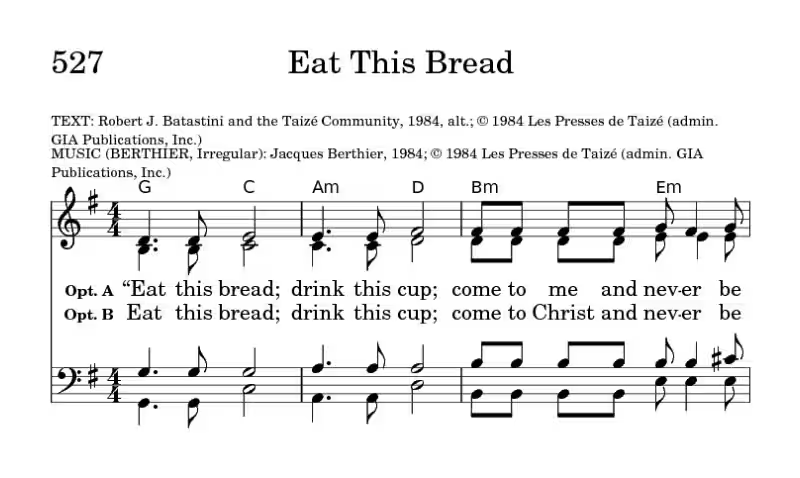
The phrase "drink this cup" appears repeatedly in the New Testament, carrying profound theological weight and sparking contemplation for centuries. It's a metaphor rich in symbolism, encompassing suffering, sacrifice, and the covenant between God and humanity. But what does it truly mean to “drink this cup”? Let's explore the multifaceted meaning behind this powerful image.
- The Cup in the Lord's Supper (1 Corinthians 11:25)
- The Cup as a Symbol of Suffering (Matthew 20:22)
- Fr. Jim's Homily: A Modern Interpretation
-
Frequently Asked Questions: Understanding "Drink This Cup"
- What does "the cup" symbolize in the Bible, particularly in the context of 1 Corinthians 11:25 and Matthew 20:22?
- What is the significance of "drinking the cup" in relation to Christian discipleship?
- How do different Bible translations impact the understanding of "Drink This Cup"?
- What is the connection between "drinking the cup" and the Eucharist (or Communion)?
- How does Fr. Jim's homily on Mark 10:35-45 relate to the concept of "drinking the cup"?
The Cup in the Lord's Supper (1 Corinthians 11:25)
1 Corinthians 11:25 describes Jesus' institution of the Lord's Supper, focusing on the significance of the cup of wine. This verse, central to Christian theology, speaks of a "new covenant" established through Jesus' sacrifice.
The exact wording varies across translations, highlighting the inherent difficulties in translating ancient texts. Yet, the core message remains consistent: the cup represents the new covenant ratified in Jesus' blood. This isn't just a symbolic representation; it's a solemn act linking us to Jesus' sacrifice and redemption. The act of "drinking this cup" is not merely a ritual; it's a participation in the covenant, a remembrance of Jesus' ultimate act of love. The repetition of the phrase "as often as you drink this" highlights the ongoing nature of this covenant and the importance of repeated remembrance.
This is why the act of communion is so important to so many Christians. It's a tangible connection to the sacrifice of Jesus, a moment of reflection and a renewal of our commitment to the covenant. It allows us to personally connect with the sacrifice, allowing us to naturally connect to the divine.
Understanding the Variations in Translation
The differences between translations, particularly around terms like "New Covenant" versus "New Testament," and variations in the phrasing of "in My blood," are important to note. While the words may differ slightly, the underlying meaning remains consistent: the cup signifies a binding agreement between God and humanity, secured by Jesus' sacrificial death. It’s a testament to the enduring power of God’s love and commitment to humanity.
These minor variations highlight the ongoing interpretative work involved in understanding and applying this pivotal passage to contemporary Christian life. It’s a reminder that the Bible is a living document, constantly being reinterpreted and applied to new generations.
The Cup as a Symbol of Suffering (Matthew 20:22)
Matthew 20:22 presents a different facet of the "cup" metaphor. Here, Jesus uses it to describe the suffering he would endure. James and John, in their ambition, misunderstand the significance of this suffering.
The "cup" in this context isn't a celebratory drink but a bitter draught, symbolizing the immense pain and sacrifice Jesus was about to face. Jesus's words, "Can you drink the cup that I drink?", serve as a warning and a test of their commitment. It's a call to understand the cost of discipleship, which isn't always easy or comfortable. It requires a willingness to embrace hardship and suffering alongside joy and triumph.
Understanding the Disciples’ Misunderstanding
James and John's confident "We can" reveals their naiveté. They haven't fully grasped the extent of Jesus' suffering, nor the implications of true discipleship. This highlights a common human tendency: to focus on the rewards without considering the sacrifices required.
This passage acts as a reminder to us to approach our faith with humility and a willingness to understand the challenges that may come. It challenges us to reflect on our own motivations and expectations. Are we truly prepared to "drink the cup" — to embrace both the joys and the sorrows of following Christ?
Fr. Jim's Homily: A Modern Interpretation
Fr. Jim's homily on Mark 10:35-45 provides a modern lens through which to understand the "cup" metaphor. He connects the disciples' request for positions of power with our own human tendency to prioritize personal desires over deeper understanding. Their misunderstanding of Jesus' suffering mirrors our own tendency to seek comfort rather than confronting difficult truths.
Fr. Jim's homily effectively links the "cup" to the totality of life's experiences – both the joyous and the painful. It's not just about suffering; it's about embracing the whole of life, both its blessings and its challenges. It’s about accepting the full measure of what it means to follow Christ, not just in the good times, but also in the difficult ones. This is a crucial aspect that many people struggle to understand, often focusing solely on the more positive aspects of faith.
The "Cup" as a Gift and a Challenge
The homily emphasizes that the "cup" is a gift – a gift of participation in Christ's life, his suffering, and ultimately, his glory. This is a powerful image, turning the concept of suffering into a form of participation in the divine. It’s a concept that may be difficult to understand, but it’s a testament to the power of faith and the importance of embracing the whole of life. By drinking from this cup, we participate in the very essence of Christ's sacrifice and ultimately, His victory.
In conclusion, the phrase "drink this cup" is far more than a simple invitation. It's a profound metaphor encompassing sacrifice, covenant, and the challenges and rewards of following Christ. Understanding its layered meanings requires careful consideration of the biblical context and a willingness to reflect on our own understanding of faith, suffering, and commitment. It’s a call to examine our own motivations, to embrace both the joys and the sorrows of life, and to participate fully in the rich tapestry of our faith.
Frequently Asked Questions: Understanding "Drink This Cup"
What does "the cup" symbolize in the Bible, particularly in the context of 1 Corinthians 11:25 and Matthew 20:22?
The "cup" in these passages holds multifaceted symbolic meaning. In 1 Corinthians 11:25, it represents the "new covenant in My blood," signifying the sacrificial death of Jesus Christ and the establishment of a new agreement between God and humanity. This covenant is ratified through Jesus' sacrifice, symbolizing atonement for sins. In Matthew 20:22, the cup takes on a more metaphorical meaning, representing the suffering, pain, and impending death Jesus would endure on the cross. It symbolizes the immense cost of following Jesus and the hardships inherent in his mission. In both instances, the cup points to a shared experience of suffering and sacrifice.
What is the significance of "drinking the cup" in relation to Christian discipleship?
Drinking the cup signifies a commitment to following Jesus, understanding that this commitment involves sharing in His suffering and sacrifice. It's not simply about passively accepting hardship, but actively participating in the life of faith, which inevitably includes both joys and sorrows. In Matthew 20:22, Jesus’ question, “Can you drink the cup that I drink?” serves as a profound challenge to the disciples (and to us today) to consider the true cost of discipleship. It calls for a deeper understanding of what it means to follow Christ, encompassing both the blessings and the challenges.
How do different Bible translations impact the understanding of "Drink This Cup"?
Variations in translation, particularly regarding terms like "New Covenant" versus "New Testament" in 1 Corinthians 11:25, highlight the complexities of translating ancient texts. While wording may differ slightly, the core message remains consistent: the cup symbolizes the new agreement established by Christ's sacrifice, and partaking of it is an act of remembrance. These variations underscore the ongoing interpretive work involved in understanding and applying this pivotal passage to Christian practice. The variations in phrasing surrounding Jesus's command to "do this in remembrance of Me" do not alter the essential act of commemoration.
What is the connection between "drinking the cup" and the Eucharist (or Communion)?
In the context of 1 Corinthians 11:25, the act of "drinking the cup" is directly linked to the institution of the Lord's Supper (Eucharist or Communion). The cup of wine symbolizes the blood of Christ shed for the forgiveness of sins, establishing a renewed covenant with God. Participating in the Eucharist is a continuing act of remembrance, reaffirming one's commitment to Christ and his sacrifice, and participating in the very act Jesus commanded. The cup, therefore, becomes a tangible symbol of our participation in Christ's life, including both his joy and suffering.
How does Fr. Jim's homily on Mark 10:35-45 relate to the concept of "drinking the cup"?
Fr. Jim's homily uses the narrative of James and John's request for positions of power to illustrate how often our own ambitions overshadow our understanding of the true cost of commitment. He connects this to the “cup,” emphasizing that life, like the cup, contains both joy and sorrow, blessings and challenges. “Drinking the cup” becomes a metaphor for embracing the entirety of life’s experiences—both the good and the bad—in the context of our relationship with God and our commitment to following Christ. This is ultimately connected to the Eucharist as a sharing in Christ's life, his suffering, and glory. He emphasizes the need for humility and service as the true path to greatness, reflecting the message of Jesus.