
Drink the Blood of Christ: Understanding John 6:53-58 and the Eucharist
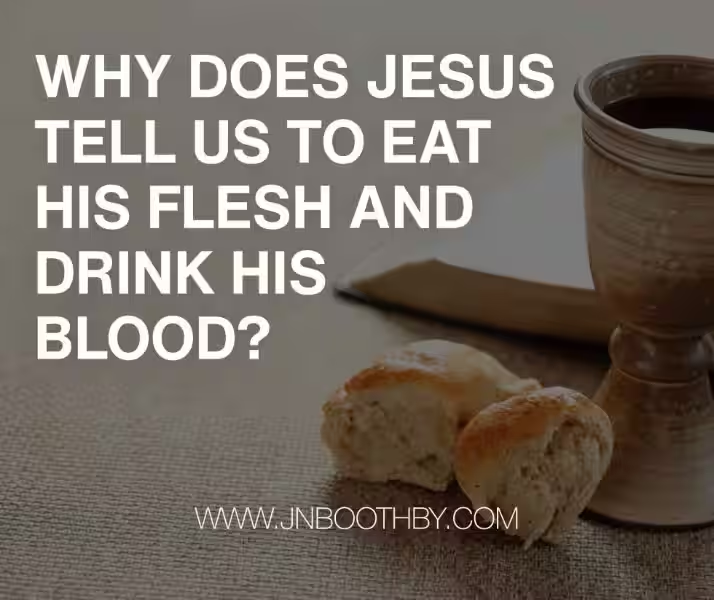
The phrase "drink the blood of Christ" often evokes strong reactions. Found in John 6:53-58, it presents a significant challenge to understanding Jesus' teachings and the Christian practice of communion. This article aims to clarify this passage and its implications for Christian faith and practice.
- The Context of John 6:53-58
- The Metaphorical Nature of "Eating His Flesh and Drinking His Blood"
- The Last Supper and the Eucharist: A Symbolic Act
- Drink the Blood of Christ: A Journey of Faith
-
Frequently Asked Questions: "Drink the Blood of Christ"
- What does Jesus mean when he says, "Unless you eat the flesh of the Son of Man and drink his blood, you have no life in you" (John 6:53)?
- Is this a literal command to consume human flesh and blood?
- How does the Last Supper relate to this passage?
- What are the different interpretations of the bread and wine in communion?
- Why do Christians participate in communion?
- When did the practice of consuming bread and wine as a ritual begin?
- How does John 6:53-58 relate to other biblical themes?
The Context of John 6:53-58
John chapter 6 recounts the miracle of the feeding of the 5,000. Following this miraculous event, the focus of Jesus' disciples remained on the physical bread. Jesus, however, shifts their attention towards a "food that endures to eternal life."
This pivotal moment introduces the profound concept of Jesus as the "bread of life," a spiritual sustenance far superior to the manna that sustained the Israelites in the desert. The manna, while providing physical sustenance, ultimately failed to provide eternal life. Jesus, in contrast, offers eternal life through a deeper, spiritual communion.
The following verses, where Jesus speaks of "eating his flesh and drinking his blood," are often interpreted literally, leading to misunderstanding and even offense. However, understanding the context of Jesus' teaching is crucial for proper interpretation.
The Metaphorical Nature of "Eating His Flesh and Drinking His Blood"
Jesus' words are not to be taken literally. He is using powerful metaphors to convey the profound spiritual truth of union with him. "Eating" and "drinking" symbolize a deep, committed faith in Jesus as the Son of Man, the one who came down from heaven to offer spiritual life.
This spiritual act of faith, not a physical consumption, is what grants eternal life. Jesus himself emphasizes this spiritual nature by stating, "The Spirit gives life; the flesh counts for nothing." This clearly distinguishes the spiritual essence of his message from any physical interpretation.
The Importance of Spiritual Nourishment
Just as our physical bodies require nourishment, our spiritual selves also need sustenance. Jesus, through his sacrifice and his teachings, offers this vital spiritual nourishment. This nourishment comes not through literal consumption but through a committed faith and a deep connection with him.
The individuals who misunderstood and clung to a literal interpretation missed the profound spiritual reality Jesus was communicating. Their focus remained fixed on the physical, preventing them from grasping the transformative power of faith.
The Last Supper and the Eucharist: A Symbolic Act
The Last Supper, where Jesus instituted communion, further illuminates the symbolic nature of "eating his flesh and drinking his blood." The bread and wine represent, but do not literally become, the body and blood of Christ.
This symbolic act represents a spiritual bond with Christ, strengthened through faith and signifying his sacrifice for the forgiveness of sins. The act is a powerful reminder of his love and his ultimate gift.
Different Interpretations of Communion
Different Christian denominations hold varying interpretations concerning the nature of the bread and wine in communion. Some, like the Catholic and Orthodox churches, believe in transubstantiation (the literal transformation of the bread and wine) or consubstantiation (the coexistence of the physical and spiritual).
However, the majority of Protestant traditions interpret the elements symbolically, understanding them as representations of Christ's sacrifice and spiritual union with believers through faith. The core understanding remains consistent: the act is one of spiritual communion, not physical consumption.
Drink the Blood of Christ: A Journey of Faith
The passage in John 6:53-58, and the practice of communion, ultimately emphasizes the importance of spiritual hunger and thirst for righteousness. This spiritual hunger is just as essential as our physical need for nourishment.
Jesus provides this nourishment through his sacrifice and our faith in him. The "drinking the blood of Christ" is an act of faith, a symbolic participation in his sacrifice, and a profound expression of spiritual intimacy with God. It is not a literal act but a powerful metaphor for spiritual nourishment and transformation.
The Evolution of Communion
The ritual of consuming bread and wine as a representation of Christ's body and blood didn't instantly emerge after Jesus' death. Its development was a gradual process, evolving through numerous theological interpretations and liturgical practices over decades. Early Christian writings, including Paul's epistles, mention a communal meal with symbolic significance, possibly linked to the Passover Seder.
This "breaking of bread" symbolized Christ's sacrifice and fellowship among believers, but it didn't immediately resemble the formalized Eucharist. Over time, distinct theological viewpoints emerged concerning the nature of the bread and wine. The Last Supper narrative, found in the Gospels, forms the foundational narrative, but the interpretation and ritual enactment varied across early Christian communities. The "why" behind this ritual stems from core Christian beliefs, representing communion with Christ and fellow believers, remembrance of his sacrifice, reaffirmation of faith, and participation in his continued presence. The consumption isn't a literal act of consuming God but a symbolic act of spiritual nourishment and union with Christ. It signifies participation in the new covenant established through Jesus' death and resurrection. This seemingly paradoxical act of “eating and drinking God” is ultimately a profound metaphor for spiritual intimacy and the transformative power of faith.
In conclusion, "drink the blood of Christ" should be understood within the rich context of John 6 and the evolving traditions of Christian communion. The emphasis remains on spiritual nourishment, deep faith, and a life-transforming relationship with Jesus Christ. It is a journey of faith, not a literal act of consumption.
Frequently Asked Questions: "Drink the Blood of Christ"
Here are some frequently asked questions about the biblical passage in John 6:53-58 and its relation to Christian practices:
What does Jesus mean when he says, "Unless you eat the flesh of the Son of Man and drink his blood, you have no life in you" (John 6:53)?
This passage from John 6 is often misunderstood as a literal command. Within the context of the chapter, Jesus is speaking metaphorically. He's contrasting physical sustenance with spiritual nourishment. The "eating" and "drinking" symbolize a deep, committed faith in Jesus as the Son of Man, the "bread of life" who came from heaven to give eternal life. This faith, a spiritual act, is what grants eternal life, not a physical consumption of Jesus' body. The verse emphasizes the spiritual nature of the relationship with Christ, not a literal cannibalistic act.
Is this a literal command to consume human flesh and blood?
Absolutely not. A literal interpretation is incorrect. Jesus clarifies this by stating that "the Spirit gives life; the flesh counts for nothing" (John 6:63), highlighting the spiritual, not physical, nature of his message. Many who misunderstood this initially literal interpretation left Jesus, demonstrating the importance of correct spiritual understanding.
How does the Last Supper relate to this passage?
The Last Supper and the institution of communion further illustrate the symbolic nature of "eating the flesh and drinking the blood." The bread and wine symbolize, but do not literally become, the body and blood of Christ. This symbolic act represents the spiritual bond with Christ through faith, signifying his sacrifice for the forgiveness of sins.
What are the different interpretations of the bread and wine in communion?
Different Christian traditions hold varying interpretations:
- Transubstantiation (Catholic and Orthodox): A belief that the bread and wine literally transform into the body and blood of Christ during the Eucharist.
- Consubstantiation (Lutheran): A belief that the body and blood of Christ coexist with the bread and wine.
- Symbolic Interpretation (Most Protestant denominations): The bread and wine are understood as symbols representing Christ's body and blood, signifying a spiritual union with him through faith.
Regardless of the interpretation, the central theme remains a spiritual communion with Christ and his sacrifice.
Why do Christians participate in communion?
Communion is a central act of Christian worship. It's a profound act of remembrance of Jesus’ sacrifice, a reaffirmation of faith, and a participation in his continuing presence. It strengthens the bond within the Christian community and symbolizes spiritual nourishment and union with Christ. It is not a literal consumption of God, but a symbolic act representing spiritual intimacy and the transformative power of faith.
When did the practice of consuming bread and wine as a ritual begin?
The ritual of consuming bread and wine, understood symbolically as the body and blood of Christ, didn't emerge immediately after Jesus' death. Its development is a complex process spanning several decades and evolving through theological interpretations and liturgical practices. Early Christian writings allude to communal meals with symbolic significance, but the formalized Eucharist evolved gradually over time.
How does John 6:53-58 relate to other biblical themes?
The passage aligns with other biblical themes, such as Jesus as the Word of God (John 1:14), the Word sustaining life (Matthew 4:4), and the Old Covenant's physical rituals foreshadowing the spiritual realities of the New Covenant (Hebrews 8 & 9). The "eating" and "drinking" ultimately represent a spiritual reception of Christ and his sacrifice, a vital act of faith leading to eternal life. It underscores the importance of spiritual hunger and thirst for righteousness.