
Unraveling the Mystery of Malki Tzedek: King of Righteousness and Beyond
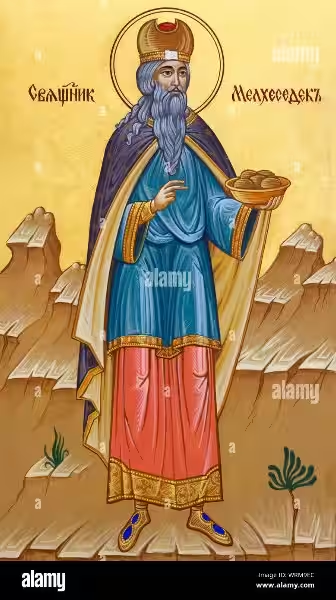
The enigmatic figure of Malki-ṣedeq (מלכי־צדק), often translated as Melchizedek, continues to fascinate and inspire debate across religious and scholarly circles. His brief appearances in the Hebrew Bible and his pivotal role in the New Testament's Epistle to the Hebrews leave a trail of intriguing questions about his identity, significance, and enduring legacy. This article delves into the multifaceted interpretations of Malki Tzedek, exploring his historical context, theological implications, and lasting impact on religious thought.
- The Enigma of Genesis 14: Who Was Malki Tzedek?
- Psalm 110 and the "Order of Malki Tzedek"
- Malki Tzedek in the New Testament: A Prefiguration of Jesus?
- Jewish Interpretations: Shem and the Davidic Lineage
- Malki Tzedek Beyond Judaism and Christianity: A Global Perspective
-
Malki Tzedek: Frequently Asked Questions
- Who was Malki Tzedek (Melchizedek)?
- What is the significance of the encounter between Malki Tzedek and Abraham?
- What are the different interpretations of Malki Tzedek's name and identity?
- How is Malki Tzedek portrayed in Psalm 110?
- What is the New Testament's perspective on Malki Tzedek?
- How is Malki Tzedek viewed in Jewish tradition?
- What is Malki Tzedek's significance in other religious contexts?
- What is the significance of Malki Tzedek's lack of genealogy?
- What is the connection between Malki Tzedek and the Eucharist?
- Is Malki Tzedek viewed as a historical figure?
The Enigma of Genesis 14: Who Was Malki Tzedek?
Genesis 14 introduces Malki-ṣedeq as the "king of Salem" and "priest of El Elyon" (God Most High). He encounters Abram (Abraham) after a victorious battle and blesses him, receiving a tithe in return. The ambiguity of this narrative has fueled centuries of scholarly discussion.
Some scholars propose that the Melchizedek narrative in Genesis is a later addition, perhaps inserted to legitimize the Second Temple priesthood, specifically the Zadokite priests' claim to superiority over the Levites. The etymology of his name itself is debated, with interpretations ranging from "King of Righteousness" – the most widely accepted view – to suggestions linking it to Canaanite deities. The absence of a genealogy, birth, or death further adds to the mystery surrounding this figure. The mainstream view emphasizes the symbolic significance of "King of Righteousness," focusing on the concept rather than specific historical details.
Psalm 110 and the "Order of Malki Tzedek"
Psalm 110:4, a passage heavily quoted in the New Testament, prophesies a priest "forever after the order of Malki-ṣedeq." This verse has generated diverse interpretations. Some scholars identify the psalm's subject as King David, others as Abram himself. Furthermore, Chazalic literature (rabbinic writings) frequently equates Malki-ṣedeq with Shem, the son of Noah. The Samaritan Pentateuch, reflecting potential sectarian interests, even offers a variant reading of "Salem," highlighting the diverse interpretations that arose even in ancient times. The enduring ambiguity of this Psalm underscores the ongoing relevance and complexity of Malki-ṣedeq's significance.
The Significance of a "Forever" Priesthood
The concept of an eternal priesthood, as hinted at in Psalm 110:4, carries profound theological weight. The traditional Levitical priesthood, tied to lineage and mortality, stands in contrast to this concept of an enduring, timeless priesthood. The implications of this "forever" aspect have been pivotal in shaping theological interpretations across various faiths.
The lack of a defined lineage for Malki-ṣedeq raises questions about the nature of priesthood itself. Does it rely solely on heredity, or can it transcend biological ties? This question continues to be debated and reinterpreted within different religious frameworks.
Malki Tzedek in the New Testament: A Prefiguration of Jesus?
The Epistle to the Hebrews utilizes Psalm 110:4 to establish a crucial connection between Jesus Christ and Malki-ṣedeq. Hebrews 7 presents Jesus as the High Priest "after the order of Malki-ṣedeq," implying a priesthood superior to the Aaronic lineage. This association, while developed within Second Temple Judaism before Christianity, was then firmly established by the New Testament.
The author of Hebrews highlights Malki-ṣedeq's roles as "king of righteousness" and "king of peace," directly connecting these attributes to Jesus' eternal priesthood. Interpretations within Christianity vary: some view Malki-ṣedeq as a historical figure and a type or archetype of Christ, others see him as a prefiguration or Christophany (a manifestation of Christ in the Old Testament). The Eucharist itself is sometimes viewed as a prefiguration of Malki-ṣedeq's offering of bread and wine. The debate regarding the historical vs. symbolic nature of Malki-ṣedeq continues to shape different theological interpretations within Christianity.
The Dual Roles of King and Priest
The unique combination of kingly and priestly authority in Malki-ṣedeq holds significant theological weight. Traditionally, these roles were separate in Judaism. Malki-ṣedeq's embodiment of both characteristics sets him apart and provides a framework for understanding Jesus' dual role as both King and High Priest in Christian theology.
This unusual combination challenges established hierarchies and provides a unique lens through which to examine the nature of authority and spiritual leadership. The convergence of secular and spiritual power in Malki-ṣedeq raises questions about the relationship between earthly governance and divine authority.
Jewish Interpretations: Shem and the Davidic Lineage
Jewish tradition, particularly in rabbinic literature and the Zohar (a foundational text of Kabbalah), often identifies Malki-ṣedeq with Shem, Noah's son. This interpretation emphasizes his role as a priest and his connection to the Davidic monarchy. Discussions frequently center on the ownership of Salem (Shem or Cham's descendants) and the order of blessings exchanged between Malki-ṣedeq and Abraham. Malki-ṣedeq's priesthood is generally viewed as predating, but distinct from, the Aaronic priesthood established later. The Jewish interpretations of Malki-ṣedeq demonstrate a rich and nuanced understanding of this enigmatic figure, highlighting his ongoing significance within Jewish thought.
Bridging the Gap: Malki-ṣedeq and the Davidic Covenant
The connection between Malki-ṣedeq and the Davidic covenant further adds to the complexities of his interpretation. His status as a priest-king, predating the more established priestly lineage, yet somehow connected to the Davidic monarchy through various interpretations, raises questions about the continuity and evolution of religious authority.
Some scholars see Malki-ṣedeq as representing an earlier, perhaps more universal, form of priesthood, implying a broader understanding of divine connection before the development of more formalized religious structures and hierarchies.
Malki Tzedek Beyond Judaism and Christianity: A Global Perspective
Malki-ṣedeq's influence extends beyond Judaism and Christianity. In Islam, he's sometimes connected to Khidr, a mystical figure associated with guidance and knowledge, or viewed as initiating Abraham into prophethood. The Book of Mormon also mentions Malki-ṣedeq, influencing the Latter-Day Saint movement's priesthood structure. The enduring presence of Malki-ṣedeq in literature and popular culture showcases his continued relevance and multifaceted interpretations across religious and secular spheres. This widespread acknowledgment of Malki-ṣedeq demonstrates the enduring power of his symbolism and the capacity for his story to resonate across diverse belief systems and cultural contexts.
A Symbol for All Ages
Malki-ṣedeq's story transcends specific religious dogma. His enduring appeal lies in his symbolic representation of righteousness, peace, and a priesthood that transcends earthly limitations. He serves as a powerful symbol for those seeking a deeper understanding of spiritual authority, divine connection, and the enduring quest for justice and peace. The ongoing exploration of Malki-ṣedeq's legacy will undoubtedly continue to enrich and challenge theological interpretations for generations to come.
Malki Tzedek: Frequently Asked Questions
Who was Malki Tzedek (Melchizedek)?
Malki Tzedek, whose name means "King of Righteousness," is a mysterious figure appearing in Genesis 14 and Psalm 110 of the Hebrew Bible. He is described as the king of Salem (often identified with Jerusalem) and priest of El Elyon ("God Most High"). He encountered Abraham, and the biblical account is ambiguous about whether Abraham gave him tithes or vice-versa. His origins and precise nature are subjects of ongoing scholarly debate.
What is the significance of the encounter between Malki Tzedek and Abraham?
The encounter between Malki Tzedek and Abraham is significant because it depicts a priest-king who predates the established Levitical priesthood. The act of offering bread and wine and the exchange of tithes highlight Malki Tzedek's authority and elevated status, even surpassing Abraham's. Scholars debate the meaning of this encounter, with some suggesting it reflects a later attempt to legitimize certain priestly lineages.
What are the different interpretations of Malki Tzedek's name and identity?
The etymology of "Malki-ṣedeq" is debated. While the mainstream interpretation is "King of Righteousness," some suggest a connection to the Canaanite deity Zedek. Various traditions identify him with different figures, such as Shem (Noah's son) in Jewish tradition, or connect him to prophethood in Islamic tradition.
How is Malki Tzedek portrayed in Psalm 110?
Psalm 110:4 prophesies a priest "forever after the order of Melchizedek." This verse is crucial because it establishes a priesthood separate from and seemingly superior to the Aaronic priesthood of the Levites. The identity of the Psalm's subject is itself debated, with possibilities including King David or Abraham.
What is the New Testament's perspective on Malki Tzedek?
The Book of Hebrews uses Psalm 110:4 to establish Jesus as the High Priest "after the order of Melchizedek," implying a priesthood superior to the Aaronic lineage. This interpretation connects Jesus' eternal kingship and priesthood to Malki Tzedek’s unique status. Different Christian interpretations exist, ranging from viewing Malki Tzedek as a historical figure, a prefiguration of Christ, or even a Christophany (a pre-incarnate appearance of Christ).
How is Malki Tzedek viewed in Jewish tradition?
Jewish tradition, particularly in rabbinic literature and the Zohar, often identifies Malki Tzedek with Shem, emphasizing his priestly role and connection to the Davidic monarchy. The discussions often revolve around Salem's ownership and the order of blessings exchanged between Malki Tzedek and Abraham. His priesthood is viewed as predating but separate from the later Aaronic priesthood.
What is Malki Tzedek's significance in other religious contexts?
Malki Tzedek's influence extends beyond Judaism and Christianity. In Islam, he is sometimes associated with Khidr (a prophet in Islamic tradition) or linked to Abraham's initiation into prophethood. The Book of Mormon also mentions him, influencing the priesthood structure of the Latter-Day Saint movement.
What is the significance of Malki Tzedek's lack of genealogy?
The absence of a genealogy for Malki Tzedek in the biblical text is a key element in the interpretation of his priesthood. This lack of a lineage is used in Hebrews to highlight the eternal nature of his priesthood, contrasting with the hereditary nature of the Aaronic priesthood.
What is the connection between Malki Tzedek and the Eucharist?
In some Christian interpretations, Melchizedek's offering of bread and wine is seen as a prefiguration of the Eucharist, the central sacrament of the Christian faith. This connection underscores the symbolism of the bread and wine in both contexts.
Is Malki Tzedek viewed as a historical figure?
The historicity of Malki Tzedek is debated. While some scholars believe him to be a historical figure, others view him as a symbolic or legendary figure whose primary significance lies in his theological implications rather than his existence as a verifiable individual.