
Three Hebrew: Understanding the Story of Hananiah, Mishael, and Azariah
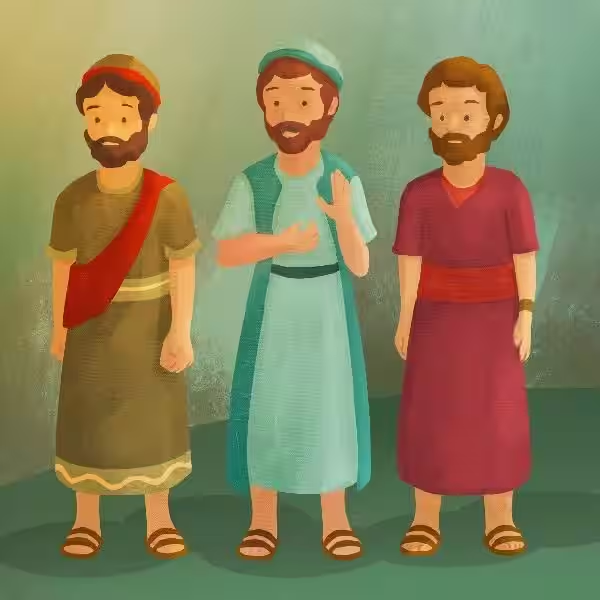
The dramatic tale of the three Hebrew youths in the fiery furnace is a powerful story of faith and resilience. But beyond the spectacle of divine intervention, lies a deeper understanding of their unwavering commitment to God, as seen through their names and actions. This article will delve into the story, exploring its historical context, theological significance, and the enduring message it holds for believers today.
- The Biblical Account: Defiance in the Face of Adversity
- The Significance of Their Hebrew Names: Hananiah, Mishael, and Azariah
- The Three Hebrew Youths: A Model for Modern Believers
-
Frequently Asked Questions: Shadrach, Meshach, and Abednego
- Who were Shadrach, Meshach, and Abednego?
- What happened to Shadrach, Meshach, and Abednego in the fiery furnace?
- What is the significance of their Hebrew names (Hananiah, Mishael, Azariah)?
- Why is the story of the three Hebrew youths considered important?
- Is the story of Shadrach, Meshach, and Abednego literally true?
- How does the story of Shadrach, Meshach, and Abednego relate to other stories in the Book of Daniel?
- What is the theological message of the story?
The Biblical Account: Defiance in the Face of Adversity
The Book of Daniel, chapter 3, recounts the harrowing experience of Shadrach, Meshach, and Abednego, better known by their Hebrew names: Hananiah, Mishael, and Azariah. These three young men, already holding prestigious positions in Nebuchadnezzar II's court, faced a seemingly impossible choice: worship a golden statue erected by the Babylonian king or face death by fiery furnace.
Their refusal stemmed from an unwavering faith in their God, a commitment that transcended the allure of power and the threat of death. The king, incensed by their defiance, ordered the furnace to be heated seven times hotter than normal, intending to make an example of them. Yet, in a miraculous turn of events, the three emerged unharmed, a demonstration of divine protection witnessed by the king himself. This experience profoundly impacted Nebuchadnezzar, leading him to acknowledge the power of their God and issue a decree protecting them and their faith.
This narrative isn't simply a historical account; it's a powerful metaphor for the struggles of faith in the face of overwhelming pressure. The intense heat of the furnace represents the trials and tribulations believers encounter in their lives, while the miraculous escape signifies God's unwavering protection and deliverance.
The Historical and Literary Context of the Narrative
The story of the three Hebrew children likely originated within the Babylonian Jewish community during the Persian or early Hellenistic periods (5th-3rd centuries BCE). Scholars debate the historicity of Daniel himself and the events described in the book. Some view Daniel as a legendary figure, suggesting that the stories within the book, including the tale of the three youths, are symbolic representations of faith and perseverance.
The narrative in Daniel 3 stands out as a unique episode, focusing solely on the three youths without the direct involvement of Daniel. This contrasts with other narratives in the book, which center on Daniel's experiences and wisdom. This narrative is structurally paired with Daniel's experience in the lion's den (Daniel 6), both emphasizing God's deliverance of the faithful despite overwhelming odds.
The Significance of Their Hebrew Names: Hananiah, Mishael, and Azariah
Beyond the dramatic events, the story gains profound meaning when we consider the Hebrew names of the three youths. These names aren't simply identifiers; they are powerful declarations of their faith and their relationship with God.
- Hananiah: Meaning "God is gracious," this name reflects their reliance on God's mercy and grace, even in the face of death.
- Mishael: Meaning "Who is like God?" or "One who belongs to God," this name emphasizes their complete belonging to God, their unwavering devotion, and the impossibility of any other allegiance.
- Azariah: Meaning "God helps," or "My help is God," this name perfectly encapsulates their unwavering trust in God's help and intervention, regardless of the outcome.
These names serve as powerful reminders of their faith's bedrock principles: grace, belonging, and divine assistance. Their courage wasn't merely a display of bravery but a reflection of their profound understanding of their identity in relationship with God.
Theological Implications and Enduring Legacy
The story of the three Hebrew children has profoundly impacted religious thought and practice across millennia. Its influence extends beyond Judaism, shaping Christian theological interpretations and inspiring generations of believers.
The Greek Septuagint, a Greek translation of the Hebrew Bible, includes additional deuterocanonical elements, such as the "Prayer of Azariah" and the "Song of the Three Holy Children," further enriching the narrative's theological depth. These additions have inspired numerous liturgical hymns and readings in various Christian churches, including Orthodox, Catholic, and Anglican traditions. The story's enduring impact is also evident in its numerous literary, musical, and cinematic interpretations.
The Three Hebrew Youths: A Model for Modern Believers
The tale of Hananiah, Mishael, and Azariah is not merely a historical anecdote; it's a timeless narrative that continues to resonate with believers today. Their unwavering faith in the face of adversity serves as a powerful example of courage, perseverance, and unwavering trust in God. Their story prompts us to consider our own response to pressures and challenges in modern life.
The three Hebrews' actions remind us that true faith isn't passive; it's an active, conscious choice to prioritize God's will above all else, even in the face of overwhelming pressure and potential consequences. Their unwavering commitment should inspire us to maintain our faith, even when faced with difficult situations. The story serves as a potent reminder of God's faithfulness and protection in the midst of adversity, offering hope and encouragement to those who struggle with their faith. Their unwavering devotion to God, even unto death, stands as a beacon of hope and inspiration. Their story challenges us to examine our own faith, our priorities, and our willingness to stand firm in our convictions.
Frequently Asked Questions: Shadrach, Meshach, and Abednego
Who were Shadrach, Meshach, and Abednego?
Shadrach, Meshach, and Abednego (whose Hebrew names were Hananiah, Mishael, and Azariah) were three young Hebrew men who lived during the Babylonian exile. They held high positions in the Babylonian court under King Nebuchadnezzar II. The biblical Book of Daniel (chapter 3) details their unwavering faith and defiance of the king's decree.
What happened to Shadrach, Meshach, and Abednego in the fiery furnace?
King Nebuchadnezzar erected a massive golden statue and commanded everyone to worship it. Shadrach, Meshach, and Abednego refused, prioritizing their faith in God. As a result, they were thrown into a furnace heated seven times hotter than normal. Miraculously, they survived unharmed, and the king witnessed a fourth figure, interpreted as a divine being, with them in the flames.
What is the significance of their Hebrew names (Hananiah, Mishael, Azariah)?
Their Hebrew names, Hananiah ("God is gracious"), Mishael ("Who is like God?"), and Azariah ("God is my help"), reflect their faith and are deeply connected to their actions and responses within the narrative. Their choice to use these names, even under duress in a foreign land, emphasizes their commitment to their Hebrew identity and religious beliefs. The meaning of their names, some scholars argue, foreshadowed their reliance on God's grace, power, and help in the face of adversity.
Why is the story of the three Hebrew youths considered important?
The story of Shadrach, Meshach, and Abednego is a powerful testament to unwavering faith in the face of extreme persecution. It highlights the importance of remaining faithful to one's beliefs, even when faced with the threat of death. The narrative has resonated across centuries, inspiring countless works of art, literature, and music, and holding significant religious importance in Christian and Jewish traditions. The story is also viewed as a powerful symbol of resistance against oppression and the triumph of faith over adversity.
Is the story of Shadrach, Meshach, and Abednego literally true?
The historical accuracy of the Book of Daniel, and this story in particular, is a subject of scholarly debate. Some scholars view the narrative as a legendary or symbolic story, emphasizing its theological message rather than strict historical accuracy. Others maintain its historical accuracy. The story's use of hyperbole (exaggeration) such as the furnace's extreme heat, is typical of legendary storytelling, adding to the debate. Regardless of its historical accuracy, its theological and symbolic weight remains significant.
How does the story of Shadrach, Meshach, and Abednego relate to other stories in the Book of Daniel?
The story of the three Hebrew youths is structurally paired with the story of Daniel in the lion's den (Daniel 6). Both narratives emphasize God's miraculous deliverance of faithful individuals who refuse to compromise their beliefs. While the settings and circumstances differ (Nebuchadnezzar vs. Darius, public vs. private devotion), both stories reinforce the theme of divine protection and the power of faith.
What is the theological message of the story?
The story's theological message centers on the unwavering faith, courage, and obedience to God demonstrated by Shadrach, Meshach, and Abednego. It underscores the idea that true faith transcends earthly power and that God's protection extends to those who remain steadfast in their devotion. It also serves as a potent reminder of the consequences of idolatry and the importance of prioritizing spiritual values over worldly pressures.