
Herod Pilate: Unraveling the Jurisdictional Tangled Web of Jesus' Trial
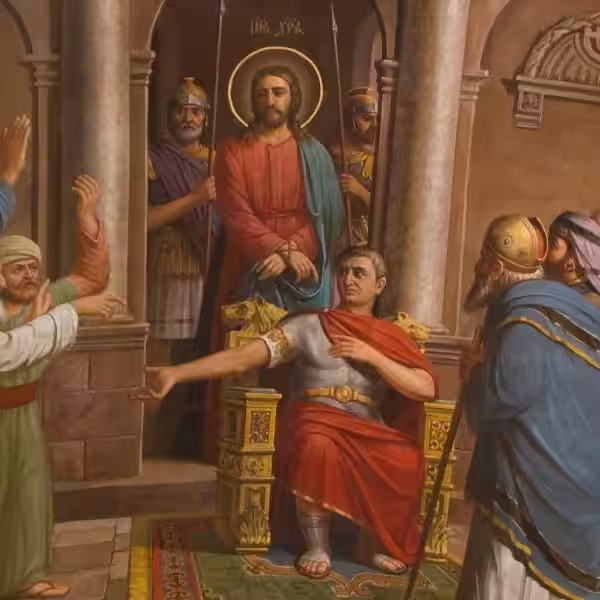
The trial of Jesus, a pivotal event in Christian history, involved a complex interplay of Roman and Jewish authorities. Understanding the roles of Pontius Pilate and Herod Antipas is crucial to grasping the political landscape of Judea at the time and the intricacies of Jesus' condemnation. This article will explore the jurisdictional differences between these two powerful figures, highlighting how their distinct powers intertwined during Jesus's trial.
- The Roman Prefect: Pontius Pilate's Authority
- The Tetrarch: Herod Antipas's Limited Reign
- The Overlapping Jurisdictions and Points of Friction
- Conclusion: A Complex Political Landscape
-
Frequently Asked Questions: Pontius Pilate and Herod Antipas
- What were the jurisdictional differences between Pontius Pilate and Herod Antipas?
- How did their overlapping authorities affect the political landscape of Judea?
- What was the significance of Pilate sending Jesus to Herod during Jesus' trial?
- What were the key differences in their powers and responsibilities?
- How did their relationship influence the events surrounding Jesus' trial?
Pontius Pilate, the Roman prefect of Judea, held ultimate authority within the Roman province. Appointed directly by the Roman Emperor, he served as a military governor, commanding Roman legions stationed in Judea. His power was absolute concerning Roman law and public order. He controlled the province's military might, collected taxes for Rome, and was responsible for suppressing any potential rebellion.
Pilate's jurisdiction primarily covered Judea proper, encompassing Jerusalem and its surroundings. While he generally avoided interfering in purely internal Jewish affairs, he had the power to intervene if these matters threatened Roman interests or public order. This overarching power meant even issues touching upon Jewish religious practices fell under his purview if they had broader implications for Roman rule. His authority extended to the ultimate power of life and death, the power to issue the death penalty.
The Tetrarch: Herod Antipas's Limited Reign
Herod Antipas, the Tetrarch of Galilee and Perea, ruled as a client king under Roman authority. Though a ruler in his own right, his power was significantly less extensive than Pilate's. His authority, granted by Rome, primarily covered internal administrative matters within Galilee and Perea, regions distinct from Judea proper.
Herod Antipas collected taxes within his territories, but ultimately these revenues contributed to the Roman coffers. He maintained internal order, enforced local laws and customs, but always under the overarching authority of the Roman prefect. He lacked the military might of the Roman legions and couldn't overrule Pilate on matters of Roman law or public order. His control was largely administrative, focused on the civil governance of his regions.
The Overlapping Jurisdictions and Points of Friction
The division of power between Pilate and Herod Antipas inevitably created friction. Pilate, as the superior Roman authority, could overrule Herod in matters concerning Roman interests. Conversely, Herod's authority within his tetrarchy was generally respected by Pilate unless it directly threatened Roman governance. The Gospels illustrate this complex relationship vividly, particularly during Jesus' trial.
The narrative of Jesus' trial vividly demonstrates this jurisdictional overlap. Pilate, upon questioning Jesus, sent him to Herod Antipas because Jesus hailed from Galilee, falling under Herod's jurisdiction. This action acknowledged Herod's authority over Galileans, yet it also underscored Pilate's ultimate power to transfer jurisdiction. The subsequent return of Jesus to Pilate for final judgment cemented Pilate's ultimate authority in capital cases. This interaction highlights the intricate interplay of power between these two rulers.
The Trial of Jesus: A Case Study in Jurisdictional Ambiguity
The trial of Jesus provides a compelling example of the tensions inherent in the divided jurisdiction. Pilate's initial reluctance to condemn Jesus, despite pressure from the Jewish authorities, underscores his attempts to avoid direct conflict while upholding Roman law. His decision to send Jesus to Herod, while seemingly a gesture of deference, ultimately reinforced his own supreme authority. He sought to shift responsibility, but the final decision remained his. The events of the trial illustrate the inherent ambiguities and potential for conflict within the system of overlapping Roman and local governance.
Herod Pilate and the Unlikely Alliance
The episode in Luke's Gospel details an unexpected consequence of this jurisdictional dance: an unlikely alliance between Pilate and Herod. After mocking Jesus, Herod sent him back to Pilate, leading to a reconciliation between the two rulers, previously considered enemies. This unexpected outcome highlights the unpredictable nature of political dynamics and the potential for shifting alliances even in the face of religious and political tensions. While the reasons for this alliance remain debated, it underscores the complex and often unforeseen consequences of the interactions between these two powerful figures.
Conclusion: A Complex Political Landscape
The relationship between Herod Antipas and Pontius Pilate exemplifies the complex political landscape of Judea during the first century. Their overlapping yet distinct jurisdictions, along with the interaction of Roman imperial power and local Jewish governance, created a context ripe with tension and ambiguity. The trial of Jesus serves as a powerful illustration of this complex political reality, showcasing the interplay between Roman authority, local rule, and the religious fervor of the time. Understanding this nuanced power dynamic is essential for interpreting the events surrounding Jesus' trial and death.
Frequently Asked Questions: Pontius Pilate and Herod Antipas
What were the jurisdictional differences between Pontius Pilate and Herod Antipas?
Pontius Pilate was the Roman prefect of Judea, appointed directly by the Roman emperor. He held ultimate authority in Judea, including Jerusalem, possessing military control and the power to enforce Roman law, including capital punishment. His jurisdiction covered matters of Roman law and public order, even if they touched upon Jewish religious practices, but he generally avoided interference in purely internal Jewish affairs unless they threatened Roman interests.
Herod Antipas, on the other hand, was the Tetrarch of Galilee and Perea, a client king ruling under Roman authority. His power was significantly less than Pilate's. He controlled the internal administration of his territories, including tax collection and enforcement of local laws, but lacked Pilate's military might and could not overrule the Roman prefect on matters of Roman concern.
The differing jurisdictions led to inevitable friction. Pilate, as the superior Roman authority, could overrule Herod. Conversely, Herod held considerable influence within his tetrarchy, and his decisions were generally respected by Pilate unless they threatened Roman governance. This tension is illustrated in the Gospels' account of Jesus' trial, where Pilate sends Jesus to Herod, acknowledging Herod's authority over Galileans while retaining ultimate decision-making power for capital cases.
What was the significance of Pilate sending Jesus to Herod during Jesus' trial?
Pilate's sending of Jesus to Herod, as depicted in Luke's Gospel, demonstrates an acknowledgment of Herod's authority over Galileans (Jesus being from Galilee). However, it also highlights Pilate's ultimate power to transfer jurisdiction. The subsequent return of Jesus to Pilate underscores Pilate's final authority in capital cases. This act reveals the complex interplay of Roman and local authority in Judea.
What were the key differences in their powers and responsibilities?
Pilate's power stemmed from the Roman Empire, characterized by military strength and the authority to impose capital punishment. Herod's authority was delegated by Rome and primarily focused on internal governance within a smaller geographic area, lacking the military force and absolute power of Pilate. While both operated under Roman rule, the hierarchical structure, with Pilate above Herod, is clear.
How did their relationship influence the events surrounding Jesus' trial?
The interaction between Pilate and Herod during Jesus' trial highlights the political complexities of the time. Herod's examination and subsequent mockery of Jesus, followed by Pilate's renewed declaration of Jesus' innocence, underscores the political maneuvering and attempts to avoid responsibility by both rulers. The unexpected reconciliation between Herod and Pilate after the event further emphasizes the political calculations surrounding the trial.