
Barabbas KJV: Understanding the Choice That Changed History
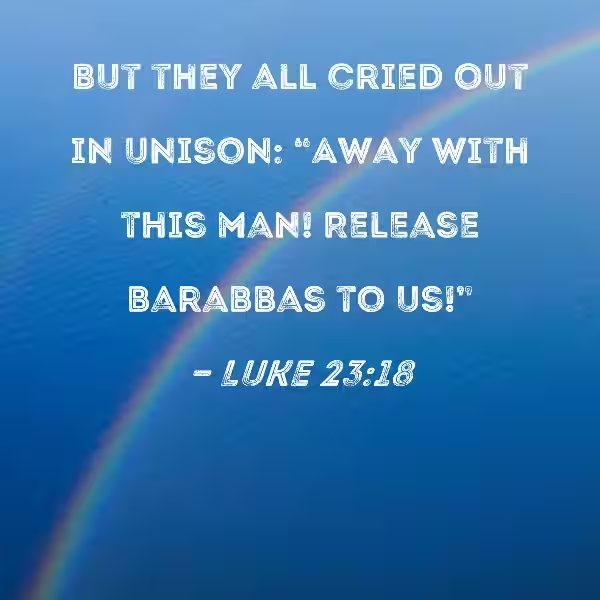
The story of Barabbas, as recounted in the King James Version (KJV) of the Gospels, presents a powerful and enduring lesson about human nature and the fragility of truth. The question many ponder is: why did the crowd choose Barabbas over Jesus? The answer lies in a complex interplay of political maneuvering, societal pressures, and the inherent fallibility of human judgment. Understanding this pivotal moment requires a closer look at the accounts in Matthew, Mark, Luke, and John.
- The Players and Their Motives in the Barabbas KJV Narrative
- The Crowd's Choice: Barabbas Over Jesus
-
The Enduring Legacy of the Barabbas KJV Account
- Who was Barabbas in the KJV account of the crucifixion?
- Why did Pilate offer the choice between Barabbas and Jesus?
- What role did the Jewish leaders play in the choice of Barabbas?
- Why did the crowd choose Barabbas over Jesus?
- What is the significance of the Barabbas narrative in the broader context of the Gospels?
- What does the choice of Barabbas reveal about the crowd?
- Does the Barabbas story have modern relevance?
The Players and Their Motives in the Barabbas KJV Narrative
The narrative centers around several key players: Pontius Pilate, the Roman governor; the Jewish chief priests and scribes; and the crowd itself. Each group played a crucial role in shaping the events leading to the release of Barabbas.
Pilate, a pragmatic politician, sought to avoid conflict and maintain order. Facing pressure from the Jewish leaders, he offered a choice between Jesus, accused of sedition and claiming to be king, and Barabbas, a notorious prisoner known for insurrection and murder. This calculated move reveals Pilate's attempt to appease the crowd, prioritizing political expediency over justice. He likely sensed Jesus' innocence, but ultimately succumbed to the pressure. His wavering between justice and self-preservation demonstrates the complexities of leadership under duress. The scene exemplifies the difficult choices often faced by those in power, forced to navigate conflicting demands and potential consequences.
The Jewish leaders, however, actively worked against Jesus. Driven by fear of his growing influence and the potential challenge to their authority, they manipulated the situation to ensure Jesus' condemnation. Their actions were deeply political, aiming to maintain the status quo and protect their power. They skillfully used their influence to sway public opinion, portraying Jesus as a threat to both Roman rule and Jewish religious tradition.
The Crowd's Choice: Barabbas Over Jesus
The crowd's choice of Barabbas over Jesus wasn't a random act. It was the result of a carefully orchestrated campaign by the Jewish leaders. They successfully exploited existing tensions and prejudices within the populace, framing Jesus as a threat to their established order. The crowd, susceptible to manipulation and lacking critical thinking, prioritized immediate gratification over justice. Their actions highlight the dangers of unchecked power and the vulnerability of truth when confronted with strong, persuasive narratives. The choice itself shows a susceptibility to emotional appeals and a disregard for a more nuanced understanding of the situation. This moment reveals a disturbing aspect of human nature, the tendency to favor immediate solutions over thoughtful consideration.
This lack of critical engagement with the situation ultimately allowed the carefully constructed narrative against Jesus to prevail. The crowd's reaction wasn't simply a display of irrationality but a consequence of deliberate manipulation and a lack of independent thought.
The Significance of Barabbas KJV in the Larger Narrative
The Barabbas KJV account serves as a powerful parable extending far beyond the confines of first-century Judea. It highlights the timeless dangers of unchecked power, manipulation, and the ease with which truth can be obscured by fear and prejudice. The narrative resonates with modern audiences, serving as a cautionary tale about mob mentality and the importance of critical thinking in the face of societal pressures. The choice of Barabbas is a stark reminder of the tragic consequences that arise when expediency and prejudice overshadow justice and truth. The implications are wide-ranging, demonstrating how easily groupthink can override individual conscience and critical thought.
The story of Barabbas, therefore, is not merely a historical account but a profound reflection on human nature and the enduring struggle between truth and manipulation. It compels us to examine our own susceptibility to prejudice, our willingness to engage in critical thinking, and our responsibility to resist the seductive power of orchestrated narratives. The account urges a constant vigilance against the forces that can easily distort reality and obscure justice.
The Enduring Legacy of the Barabbas KJV Account
The choice between Barabbas and Jesus remains a powerful symbol of the human capacity for both good and evil. It is a reminder of the dangers of unchecked power, the importance of critical thinking, and the enduring struggle between truth and manipulation. The story continues to resonate today, prompting us to reflect on our own roles in shaping society and upholding justice. The narrative challenges us to examine our own biases and to strive for a more nuanced understanding of complex situations. The significance of the Barabbas KJV narrative is not limited to a single historical event but persists as a crucial lesson for generations to come, prompting reflection on the human condition and the ever-present tension between justice and expediency. The story serves as a constant reminder of the consequences of unchecked power, the importance of critical thinking, and the enduring relevance of truth in the face of societal pressures.
Who was Barabbas in the KJV account of the crucifixion?
Barabbas, as depicted in the King James Version (KJV) of the Gospels (Matthew 27:15-26; Mark 15:6-15; Luke 23:13-25; John 18:38-19:16), was a notorious prisoner known for insurrection and murder. His inclusion in the narrative is crucial because he represents a stark contrast to Jesus, highlighting the crowd's choice between perceived immediate threat and a potential leader offering a different kind of revolution.
Why did Pilate offer the choice between Barabbas and Jesus?
Pontius Pilate, the Roman governor, offered the choice between Barabbas and Jesus as a political maneuver to appease the Jewish crowds. Facing pressure from the Jewish leadership, who saw Jesus as a threat to their authority and potentially to Roman rule, Pilate attempted to avoid the responsibility of condemning an innocent man. The juxtaposition highlighted the perceived threat of both men, but in very different ways.
What role did the Jewish leaders play in the choice of Barabbas?
The Jewish chief priests and scribes actively worked to ensure Jesus' condemnation and Barabbas' release. Driven by fear of Jesus' growing influence and the potential disruption to their established religious and political order, they manipulated the crowd, exploiting existing tensions and prejudices to frame Jesus as a greater threat. Their actions demonstrate the powerful influence of religious and political agendas on a populace.
Why did the crowd choose Barabbas over Jesus?
The crowd's decision wasn't a random act, but a consequence of the Jewish leaders' manipulation. They successfully played on the crowd's fear of Roman retribution and ingrained hostility towards those perceived as challenging the existing order. The crowd's choice reveals a susceptibility to manipulation, a lack of critical thinking, and a preference for immediate gratification (releasing a known criminal) over a potentially more challenging, long-term solution (accepting Jesus' message).
What is the significance of the Barabbas narrative in the broader context of the Gospels?
The narrative serves as a powerful parable illustrating several critical concepts: the nature of human judgment, the influence of authority figures, and the ease with which truth can be obscured by prejudice and fear. The choice of Barabbas represents a collective failure to discern justice, opting for an immediate, albeit violent, solution to perceived threats, rather than a thoughtful consideration of the situation. It highlights the destructive power of mob mentality and the fragility of truth when confronted with powerful, orchestrated narratives. The narrative continues to resonate today as a cautionary tale against unchecked power, manipulation, and the importance of critical thinking.
What does the choice of Barabbas reveal about the crowd?
The crowd's choice reveals a susceptibility to manipulation, a lack of critical thinking, and a willingness to prioritize immediate gratification and the appeasement of their anxieties over justice and truth. Their decision underscores the dangers of unchecked power and the fragility of truth in the face of widespread fear and skillfully orchestrated narratives. They represent the potential for human fallibility and the destructive consequences of unchecked mob mentality.
Does the Barabbas story have modern relevance?
Absolutely. The story of Barabbas acts as a timeless cautionary tale reflecting ongoing struggles against manipulation, unchecked power, and the erosion of truth within societies. The narrative's themes of societal pressure, the influence of powerful figures, and the dangers of mob mentality continue to resonate, reminding us of the importance of critical thinking, independent judgment, and actively resisting the spread of misinformation and prejudice.