
What Happened to the Roman Soldiers Who Crucified Jesus?
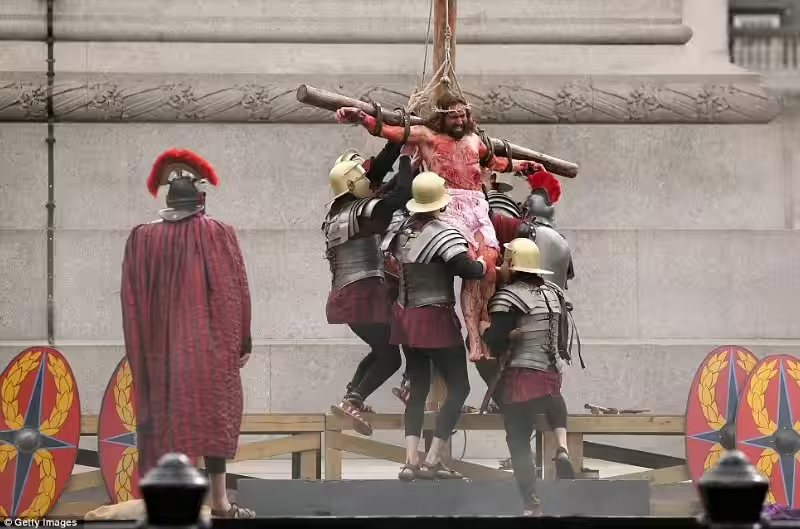
The crucifixion of Jesus is a pivotal event in Christian history, and the question of what happened to the Roman soldiers involved naturally arises. While the Gospels don't directly detail the soldiers' fates after the crucifixion, we can glean some insights from the accounts and explore the broader context of Roman military life and the implications of their actions.
- The Role of the Roman Soldiers in the Crucifixion
- The Aftermath: Unknown Destinies
-
Frequently Asked Questions: The Roman Soldiers and the Crucifixion of Jesus
- What happened to the Roman soldiers who crucified Jesus?
- Did the Roman soldiers face any consequences for their actions?
- What does the Bible say about God's judgment on the soldiers?
- Did any of the soldiers convert to Christianity after the crucifixion?
- What is the theological significance of the soldiers' actions?
The Role of the Roman Soldiers in the Crucifixion
The Roman soldiers weren't simply bystanders; they were the direct instruments of Jesus' execution. Their role was to carry out the sentence handed down by Pontius Pilate, the Roman governor. The process of crucifixion, a uniquely Roman form of capital punishment, was brutal and designed to inflict maximum suffering. The Gospels depict the soldiers' involvement in several key moments:
- The Arrest: The soldiers, likely belonging to the cohort stationed in Jerusalem, participated in Jesus' arrest, likely under the command of a centurion.
- The Scourging: Before crucifixion, Jesus was likely flogged by Roman soldiers, a process meant to weaken and humiliate the condemned.
- The Carrying of the Cross: The Gospels suggest Jesus carried his own crossbeam, but the soldiers would have been present, ensuring he reached the execution site.
- The Crucifixion: The actual act of nailing Jesus to the cross was carried out by the Roman soldiers.
- The Division of Garments: Matthew 27:35-36 details the soldiers casting lots for Jesus' garments, highlighting the casual brutality and lack of regard they showed.
- The Mocking: The soldiers mocked Jesus, adding insult to the already immense suffering.
These actions highlight the soldiers’ role as active participants in a horrific act, showcasing the casual cruelty frequently associated with Roman military life. Their actions weren't solely dictated by blind obedience; their mockery and gambling suggest a level of disregard and indifference to the suffering they inflicted.
The Significance of their Actions
The soldiers' actions weren't merely procedural; they contributed to the fulfillment of prophecy and the larger narrative of Jesus' sacrifice. Their involvement underscores the human element in the divine plan. While they were the instruments of death, their actions didn't negate the voluntary nature of Jesus' sacrifice. He willingly offered himself, demonstrating an ultimate act of love and forgiveness.
The Gospels, however, record varied responses from those present at the crucifixion. Some soldiers remained callous and unmoved by the spectacle. Others, such as the centurion mentioned in Matthew 27:54, were deeply affected. This centurion, witnessing the earthquake and the darkness that accompanied Jesus' death, declared, "Truly this man was the Son of God." This statement, while not explicitly a conversion, suggests a profound impact from the extraordinary events surrounding the crucifixion. Did this centurion's faith alter his future actions or career within the Roman army? The Gospels leave us to wonder.
The Aftermath: Unknown Destinies
Unfortunately, the Gospels don't provide detailed information about the long-term fate of the Roman soldiers involved in the crucifixion. We are left to speculate based on what we know about Roman military life and the implications of their participation.
What might have happened to these soldiers? Given the vastness of the Roman Empire and the anonymity of individual soldiers within such a large military machine, it is unlikely we can find a specific historical record of their fates. However, several possibilities exist:
- Continued Service: Most soldiers simply continued their military service, their involvement in the crucifixion remaining an unrecorded detail in their careers within the Roman legions.
- Promotion or Punishment: Depending on their superiors' views and the events surrounding the crucifixion, some might have been promoted or punished. However, it’s unlikely that their actions regarding Jesus' crucifixion would have been the sole factor in any promotion or demotion.
- Spiritual Transformation: The Gospels indicate that, at least for the centurion, the events surrounding the crucifixion had a significant impact. This suggests the possibility of some soldiers experiencing a spiritual transformation, although this would be a purely personal and likely unrecorded event.
The Broader Context: Roman Justice and Mercy
It's essential to remember that Roman soldiers operated within a specific system of justice characterized by both brutality and efficiency. Their actions, while harsh, were consistent with the methods of Roman authority. The Roman empire was not known for its mercy; crucifixion was a common punishment, and soldiers were trained to carry out their duties without hesitation. While the soldiers acted within the system, their actions don't diminish the significance of Jesus' sacrifice or the profound message of forgiveness He offered.
Jesus' prayer of forgiveness, "Father, forgive them, for they do not know what they are doing" (Luke 23:34), is central to understanding the events surrounding his crucifixion. This prayer speaks to the overarching theme of redemption and the capacity for even the most culpable individuals to receive forgiveness. This forgiveness, central to Christian belief, transcends the immediate actions of the Roman soldiers and extends to all humanity.
Ultimately, what happened to the Roman soldiers who crucified Jesus remains unknown. The Gospels offer glimpses into their actions and the varied responses to the events surrounding Jesus' death but do not detail their subsequent lives. Their story serves as a reminder of the complex interplay of human agency, divine plan, and the enduring power of forgiveness. The focus, however, remains on the significance of Jesus' sacrifice and the message of redemption it offers to all, including those who unwittingly participated in his suffering.
Frequently Asked Questions: The Roman Soldiers and the Crucifixion of Jesus
Here are some frequently asked questions regarding the Roman soldiers involved in the crucifixion of Jesus, based on historical and theological interpretations:
What happened to the Roman soldiers who crucified Jesus?
The Gospels offer limited details about the long-term fate of the Roman soldiers involved in Jesus' crucifixion. While some sources describe their mocking and gambling behavior, there's no record of specific punishments or rewards they received for their actions. Their actions are presented as part of the larger narrative of Jesus' sacrifice and the subsequent events surrounding his death and resurrection.
Did the Roman soldiers face any consequences for their actions?
There's no historical evidence suggesting the soldiers faced immediate legal consequences. Crucifixion was a standard Roman form of execution, and the soldiers were simply carrying out their orders. However, the accounts suggest a spectrum of responses to the events. Some soldiers mocked Jesus, indicating a lack of remorse, while the centurion's declaration, "Truly this man was the Son of God," suggests a possible shift in perspective. The ultimate consequences, spiritual or otherwise, are left to interpretation.
What does the Bible say about God's judgment on the soldiers?
The Bible doesn't explicitly detail God's judgment on the Roman soldiers. Jesus' own words, "Father, forgive them, for they do not know what they are doing," highlight a theme of forgiveness and redemption. This suggests that while their actions were part of a tragic event, the possibility of forgiveness and reconciliation remains open. The emphasis is on the broader idea that all humanity shares some degree of responsibility in Jesus' death, and that this is ultimately overcome through his sacrifice. The focus shifts from individual retribution to universal redemption.
Did any of the soldiers convert to Christianity after the crucifixion?
The Gospels mention a centurion who witnessed Jesus' death and declared him "the Son of God." Whether this represents a conversion to Christianity is a matter of interpretation. It could be seen as a recognition of Jesus' exceptional nature, or a genuine declaration of faith. The text leaves this open to interpretation, showcasing the complexities of faith and belief even within the immediate context of the crucifixion. There's no further information about the centurion's life or the faith of the other soldiers involved.
What is the theological significance of the soldiers' actions?
Theologically, the soldiers' actions serve to highlight the human element within the divine plan of salvation. They were instruments of Jesus' death, but their actions are presented within a larger narrative of God's plan for redemption. Jesus' willingness to be crucified, despite his power to prevent it, underscores the nature of his sacrifice and the offer of forgiveness. The soldiers' actions, regardless of their intent, became a part of this redemptive plan. The story emphasizes the concept of forgiveness extended even to those who unwittingly or willingly participated in the crucifixion.