
Understanding the Intriguing World of Mano Vendado: A Deep Dive
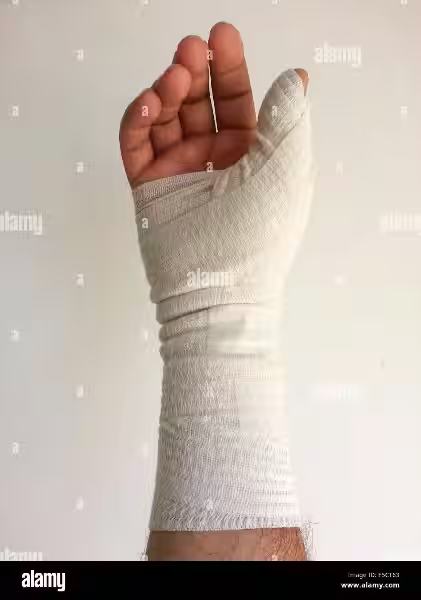
The term "mano vendado" might sound mysterious to those unfamiliar with its origins and meaning. It's a term rich in history and cultural significance, often appearing in contexts related to traditional practices and folklore. This article aims to shed light on the various interpretations and applications of "mano vendado," exploring its nuances and potential misunderstandings. While there is no readily available, universally agreed-upon definition, we can explore its contextual usage to build a comprehensive understanding.
The Literal Meaning and its Limitations
At its most basic level, "mano vendado" translates directly from Spanish to "bandaged hand." This literal meaning, however, only scratches the surface of its broader significance. Simply translating the words doesn't capture the cultural weight often associated with the term. The image of a bandaged hand can evoke various feelings depending on the context – injury, protection, concealment, or even ritual.
The ambiguity of the literal translation highlights the need to consider the cultural contexts where "mano vendado" is used. It's often found in narratives and descriptions that go beyond a simple physical injury; the bandaged hand might symbolize something deeper, something metaphorical. Understanding this metaphorical application is key to apprehending its full meaning.
Mano Vendado in Folklore and Mythology
In certain cultural traditions, the "mano vendado" might represent a specific character, object, or event within a myth or legend. The bandaged hand could symbolize a powerful figure, a hidden truth, or a significant historical event. The specific meaning would, of course, vary greatly depending on the specific folklore or mythology in question. This contextual understanding is essential to avoid misinterpretations.
Researching specific folklore traditions that utilize "mano vendado" as a symbolic element would offer valuable insights into its cultural significance. For example, examining the use of the motif in traditional storytelling, songs, or artwork could unveil hidden layers of meaning and unlock the rich tapestry of its cultural roots.
Examples of Symbolic Interpretations
- The Hidden Power: A bandaged hand might represent hidden strength or power, concealed beneath a seemingly vulnerable exterior.
- The Burden of Knowledge: The bandage could symbolize the weight of a heavy secret or the burden of knowledge too painful to bear openly.
- The Price of Sacrifice: In some contexts, a "mano vendado" might represent a sacrifice made, a price paid for a greater good.
These are just a few possibilities; the actual meaning would depend heavily on the specific narrative or tradition. The ambiguity itself is often a crucial part of its symbolic power, allowing for multiple interpretations.
Mano Vendado in Contemporary Usage
While its origins are rooted in historical and cultural contexts, "mano vendado" might find its way into modern literature, art, or even everyday conversation. In these instances, the term could retain some of its historical weight or be used in a completely new, figurative sense. Its application remains flexible, allowing for creative interpretations.
Consider, for example, a contemporary novel employing the image of a "mano vendado" to represent a character grappling with a past trauma. The bandaged hand, in this context, wouldn't necessarily be literal but might symbolize the character's emotional wounds and their attempts at healing or concealment. The interpretation would depend heavily on the specific context within the narrative.
Potential Misunderstandings and Clarifications
It's crucial to avoid assuming that "mano vendado" always carries the same meaning across different contexts. The lack of a single, established definition necessitates careful attention to the surrounding narrative or cultural setting. Jumping to conclusions based on the literal translation alone could lead to significant misunderstandings.
To avoid misinterpretations, always consider the broader context in which the term is used. Look for clues within the narrative, the cultural background, and the overall tone to better understand the intended meaning. Understanding the cultural background of the author or the origin of the text is also crucial for proper interpretation.
Further Research and Exploration
The investigation of "mano vendado" opens doors to deeper explorations into cultural traditions, folklore, and symbolic language. Further research into specific historical and cultural contexts where this term appears is needed for a more complete understanding.
This could involve exploring various historical archives, studying folklore collections, and analyzing artistic representations featuring the "mano vendado" motif. Cross-cultural comparisons could also reveal fascinating insights into the diverse ways this term has been utilized and interpreted throughout history. The more we explore, the richer our understanding of "mano vendado" will become. By understanding the various contexts in which "mano vendado" is found, we can appreciate the complexity and depth of its meaning and unlock the intriguing stories it holds.
It's impossible to create an FAQ section about "mano vendado" (bandaged hand) based solely on the provided copyright information. That information only tells us who owns the copyright to the name "iStock," not anything about bandaged hands. To create a helpful FAQ, I need information about the context of "mano vendado." Is it referring to:
- A medical condition? (e.g., types of hand injuries requiring bandages, treatment options)
- A piece of art or photography? (e.g., where to find it, its artistic style, its meaning)
- A cultural reference? (e.g., its symbolism in a specific culture)
- Something else entirely?
Please provide the relevant context or information about "mano vendado" so I can generate a useful FAQ.
For example, if "mano vendado" refers to a specific photograph on iStock, I would need the description and details of that image to answer questions about it. Without that context, any FAQ would be pure speculation and potentially inaccurate.