
Ezekiel 33 NLT: Understanding the Watchman's Role
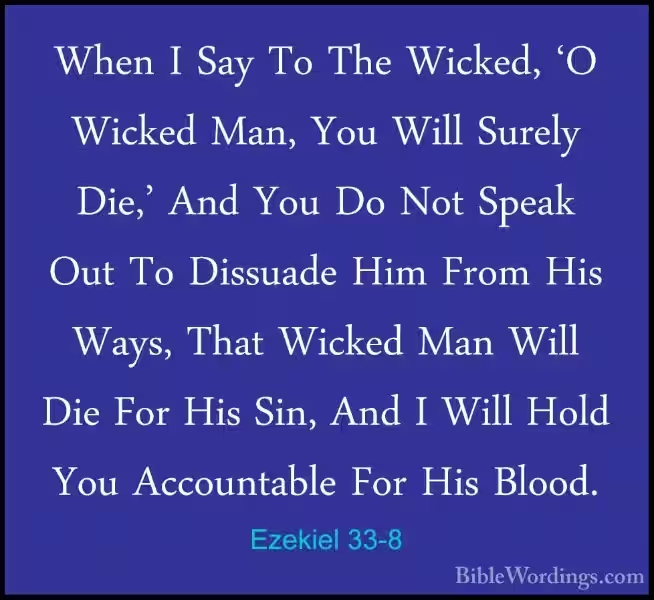
What does it mean to be a watchman for God, and what are the consequences of fulfilling or failing that critical role? Ezekiel 33, in the New Living Translation (NLT), provides a powerful and relevant answer to this question, one that resonates even today. This chapter delves into the weighty responsibility of prophetic ministry and the profound implications of faithfulness or negligence in delivering God's message.
- The Divine Appointment: Ezekiel as Watchman
- The Consequences of Faithful and Negligent Ministry
- Ezekiel 33 NLT and its Modern Relevance
-
Ezekiel 33 NLT: Frequently Asked Questions
- What is the central theme of Ezekiel 33?
- What is the significance of Ezekiel's role as a "watchman"?
- What happens if Ezekiel fails to warn the wicked?
- What happens if Ezekiel faithfully warns the wicked, but they refuse to repent?
- Does Ezekiel 33 promise salvation to all righteous people?
- How does Ezekiel 33 address the issue of false repentance?
- What is the difference between Ezekiel's role as a watchman and judging the people?
- What is the overall message of Ezekiel 33?
The Divine Appointment: Ezekiel as Watchman
Ezekiel 33:7, in the NLT, clearly states God's appointment of Ezekiel as a watchman for the house of Israel. This isn't a symbolic title; it represents a divinely mandated role with life-or-death consequences. The prophet's task wasn't merely to predict the future, but to actively intervene, to sound the alarm, and to warn the people of the impending judgment if they continued in their wickedness. This active intervention was not optional; it was a command directly from God, underscoring Ezekiel's personal accountability.
The weight of this responsibility is not to be underestimated. The passage doesn't shy away from the severe consequences of neglecting this divine duty. The responsibility to warn is not just a suggestion; it impacts the watchman's own eternal destiny.
The Consequences of Faithful and Negligent Ministry
The NLT rendering of Ezekiel 33:6 paints a stark picture: if Ezekiel fails to warn the wicked, their blood is on his hands. This isn't arbitrary punishment; it's a consequence of his moral responsibility. By withholding the warning, Ezekiel becomes complicit in their destruction. Conversely, verse 9 assures us that if he faithfully delivers the message, and the wicked still refuse to repent, their blood is on their own heads, freeing Ezekiel from guilt. This crucial distinction emphasizes the importance of fulfilling the prophetic mandate. The watchman's task is to deliver the message, not to guarantee its acceptance.
This section highlights the profound difference between the watchman's actions and the ultimate outcome. It’s not about controlling the outcome but about the faithfulness of the message delivery. God's justice and mercy are distinct, but the watchman is a critical part of this divine plan.
The Righteous and the Impending Judgment
The phrase, "the righteous will be delivered," often interpreted as a comforting promise, is deeply intertwined with the watchman's role. It's not a guarantee of individual salvation divorced from action but a reinforcement of the watchman's responsibility. Righteous individuals might still face consequences, but the watchman's fidelity ensures their awareness of the impending danger, which is crucial for making informed decisions. The emphasis remains squarely on the watchman's actions, not the ultimate outcome for each individual.
This doesn't guarantee a painless outcome for the righteous. It's about having the information to make informed choices. It is about the watchman's faithful execution of duty, not about dictating the results.
Dealing with Superficial Repentance
Ezekiel 33 also addresses the complexity of the watchman's task by acknowledging the potential for the wicked to feign repentance to escape judgment. This emphasizes the unwavering nature of the message—it must be rooted solely in God's truth, regardless of the recipient's response. Ezekiel's role is not to judge the sincerity of the repentance, but to consistently deliver God's warning; the judgment remains God's prerogative.
The prophet is not tasked with assessing the authenticity of repentance. His role is about delivering the message, letting the people choose their response.
Warning versus Judging: A Crucial Distinction
The chapter makes a crucial distinction: warning the wicked is different from judging them. Ezekiel doesn't possess the authority to determine who is righteous or wicked; his role is solely to deliver the message. The emphasis remains on the process of warning, the faithful execution of the divine commission, and the subsequent accountability associated with it.
This is an important distinction: a watchman's role is not to judge, it is to warn. He is the messenger, not the judge.
Ezekiel 33 NLT and its Modern Relevance
The principles laid out in Ezekiel 33 NLT remain profoundly relevant today. For those in positions of spiritual leadership, particularly those who preach or teach God's word, this chapter serves as a powerful reminder of their weighty responsibilities. The call to faithfully deliver God's message, regardless of the consequences or the response of the audience, is a challenging but necessary call. It highlights the importance of clear, unambiguous communication and the personal accountability that comes with speaking on God's behalf. The legacy of Ezekiel 33 NLT is a call to faithful ministry and a warning against complacency and the dangers of withholding God's truth. It is a reminder that true ministry is not about popularity or acceptance, but about unwavering obedience to God’s command. The consequences of neglecting this responsibility are far-reaching, extending beyond the temporal realm into eternity.
Ezekiel 33 NLT: Frequently Asked Questions
What is the central theme of Ezekiel 33?
Ezekiel 33 centers on the prophet's role as a divinely appointed watchman for the house of Israel. It emphasizes his responsibility to warn the people of impending judgment for their wickedness and the severe consequences of neglecting this duty. The chapter explores the implications of both faithful and negligent prophetic ministry, highlighting God's desire for repentance and the ultimate accountability of both the watchman and the people.
What is the significance of Ezekiel's role as a "watchman"?
Ezekiel's role as a watchman is not merely metaphorical; it's a direct commission from God. He is tasked with delivering a clear and unambiguous warning of impending judgment to the Israelites. This is not optional; it's a direct command with significant moral implications. His actions directly impact the spiritual well-being and ultimate fate of the people.
What happens if Ezekiel fails to warn the wicked?
If Ezekiel fails to warn the wicked, their blood is on his hands (Ezekiel 33:6). This underscores the serious moral responsibility associated with his prophetic ministry. His failure to deliver the warning makes him complicit in their destruction. This is not arbitrary punishment but a consequence of his neglecting a divinely mandated duty.
What happens if Ezekiel faithfully warns the wicked, but they refuse to repent?
If Ezekiel faithfully delivers the warning and the wicked refuse to repent, their blood is on their own heads (Ezekiel 33:9). This clarifies that Ezekiel’s responsibility lies in delivering the message, not ensuring its acceptance. His faithfulness absolves him of guilt for their ultimate fate.
Does Ezekiel 33 promise salvation to all righteous people?
No, the chapter doesn't guarantee individual salvation. While it mentions "the righteous will be delivered," this doesn't imply an automatic or unconditional escape from all consequences. Instead, it emphasizes the watchman's responsibility to ensure that righteous individuals are aware of impending dangers, enabling them to make informed choices. The focus is on the watchman's actions, not the ultimate outcome for each individual.
How does Ezekiel 33 address the issue of false repentance?
The chapter acknowledges the possibility of the wicked feigning repentance to escape judgment. This highlights the complexity of Ezekiel's task. His message must remain unwavering, based solely on God's truth, regardless of the recipient's sincerity. Ezekiel's role is to deliver the warning; judging the authenticity of repentance rests with God.
What is the difference between Ezekiel's role as a watchman and judging the people?
Ezekiel's role is strictly to deliver God's message, not to judge who is righteous or wicked. He is not given the authority to determine individual fates. His responsibility is the faithful execution of his divine commission, the process of warning, and the accountability that comes with it. The judgment itself remains God's prerogative.
What is the overall message of Ezekiel 33?
Ezekiel 33 underscores the profound importance of faithful prophetic ministry and the weighty consequences of neglecting one's divinely appointed role. The watchman's actions are central to God's plan of justice and mercy. The chapter emphasizes the responsibility entrusted to those who speak on God's behalf and the vital necessity of both faithful warning and genuine repentance.