
Understanding Yahweh Shammah: God's Ever-Present Promise
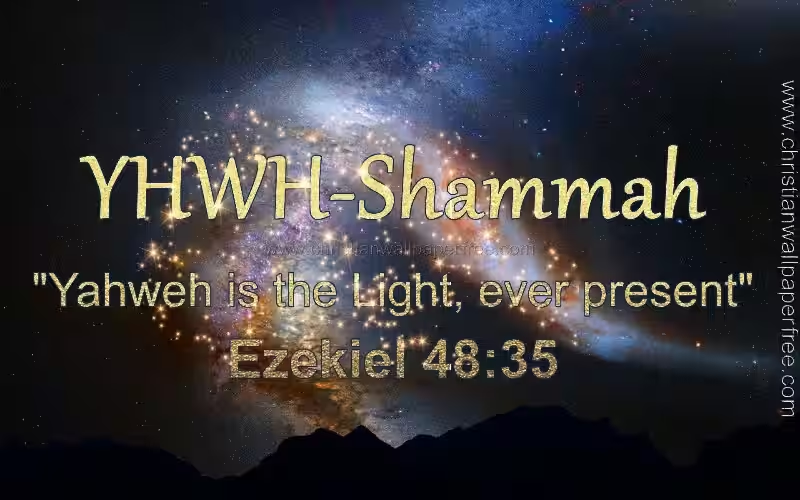
What does it mean when the Bible speaks of God’s presence, not just as an abstract concept, but as a tangible reality? The name Yahweh Shammah, a powerful declaration found within the prophetic vision of Ezekiel, offers a profound and deeply personal answer. This article delves into the meaning, significance, and lasting impact of this divine name, exploring its implications for both ancient Israel and contemporary believers.
- The Unveiling of Yahweh Shammah in Ezekiel
- Connecting Yahweh Shammah to Immanence and Immediacy
- Yahweh Shammah: A Legacy in Christian Thought and Practice
-
Frequently Asked Questions about Jehovah-Shammah
- What does Jehovah-Shammah mean?
- Where is Jehovah-Shammah found in the Bible?
- What is the significance of Jehovah-Shammah in Ezekiel's vision?
- How does Jehovah-Shammah relate to the New Jerusalem in Revelation?
- What is the theological significance of Jehovah-Shammah?
- How is Jehovah-Shammah relevant to Christians today?
- How has Jehovah-Shammah impacted Christian tradition?
The Unveiling of Yahweh Shammah in Ezekiel
The name Yahweh Shammah, meaning "the Lord is there," appears only once in the entire Old Testament: Ezekiel 48:35. This single occurrence, however, holds immense theological weight. It’s not merely a geographical designation; it’s a profound revelation of God's nature and His relationship with His people. The verse describes the name of one of the gates of the restored Jerusalem, a city envisioned by Ezekiel during the long and arduous years of the Babylonian exile.
The context is crucial. The Israelites were far from their homeland, living in captivity, likely feeling abandoned by their God. Ezekiel's vision of a restored Jerusalem, a city explicitly named Jehovah-Shammah, served as a beacon of hope, a promise of God's ultimate return and abiding presence. This wasn't just a physical return to a geographical location; it signified a restoration of God's relationship with His people, a renewed covenant of love and faithfulness.
Connecting Yahweh Shammah to Immanence and Immediacy
Christian theology largely interprets Yahweh Shammah as a powerful illustration of God's immanence—His presence within creation and in the lives of His people. It counters the idea of a distant, uninvolved deity. Instead, it paints a picture of a God who is intimately involved, actively present in every circumstance, both joyous and sorrowful.
This immediacy is further emphasized by the name's very structure. "Shammah" derives from the Hebrew word "sham," meaning "there" or "in that place." This isn't a distant, ethereal presence, but a God who is "there," right in the midst of His people, sharing their struggles and celebrating their triumphs. It's a powerful counterpoint to the feelings of isolation and abandonment that often accompany hardship.
Yahweh Shammah in the New Jerusalem
The echoes of Yahweh Shammah resonate strongly in the New Testament, particularly in the Book of Revelation's description of the New Jerusalem. The parallels between Ezekiel's restored city and John's vision are striking: both feature a square design, twelve gates corresponding to the twelve tribes of Israel, and a clear and explicit presence of God himself. This suggests that John's vision is a fulfillment, a culmination, of the promise first unveiled in Ezekiel. The New Jerusalem, with its divine dwelling, stands as the ultimate realization of Yahweh Shammah.
Many commentators see a clear connection between Ezekiel’s vision and the heavenly city depicted in Revelation. The square city, the twelve gates, the divine measurement—these elements suggest a deliberate continuity, hinting that the restored city of Ezekiel is a foreshadowing of the ultimate heavenly city, the place where God will fully dwell among His redeemed people for eternity.
Yahweh Shammah: A Legacy in Christian Thought and Practice
The impact of Yahweh Shammah extends far beyond scholarly interpretation. Its profound message has permeated Christian hymnody and sermons for centuries. William Cowper's hymn, "Jehovah-Shammah," for instance, serves as a testament to the enduring power and relevance of this divine name.
This consistent presence in Christian worship underscores the timeless significance of the promise. The phrase is not relegated to dusty theological texts; it's a living affirmation of God's unwavering commitment to His people, a source of comfort and strength that continues to resonate deeply with believers today. It’s a reminder that even in the face of adversity, God's presence is a constant, a rock of unwavering support.
Practical Application of Yahweh Shammah
The name Yahweh Shammah isn't just a historical or theological curiosity; it's deeply personal and practical. It's a powerful reminder that God is with us in every moment, in every circumstance. Whether facing illness, making difficult decisions, experiencing loneliness, enduring temptation, or celebrating joy, the knowledge that "the Lord is there" provides incredible comfort and strength.
The repeated affirmation of this truth, through prayer, meditation, and reflection on scripture, can foster a deeper, more intimate relationship with God. It's a declaration of faith, a recognition of God's active presence in our lives, and a source of unwavering hope. Knowing that Yahweh Shammah—God is present—transforms our perspective, offering solace and strength in even the most challenging times.
In conclusion, Yahweh Shammah is more than just a name; it's a powerful theological statement that speaks to the heart of God's relationship with His people. It’s a promise of restoration, a declaration of immanence, and a source of enduring hope for believers throughout history and into the future. Its ongoing resonance in Christian thought and practice serves as a testament to its enduring power and profound significance.
Frequently Asked Questions about Jehovah-Shammah
What does Jehovah-Shammah mean?
Jehovah-Shammah is a transliteration of the Hebrew יְהוָה שָׁמָּה (Yahweh šāmmāh), which translates to "Jehovah is there" or "The Lord is there." It's not simply a statement of God's existence, but a powerful declaration of His active and immanent presence, particularly in times of difficulty or despair.
Where is Jehovah-Shammah found in the Bible?
The name Jehovah-Shammah appears only once in the Old Testament, in Ezekiel 48:35. It's the name given to the city in Ezekiel's vision of the restored and perfected Israel, a vision of hope following the Babylonian exile.
What is the significance of Jehovah-Shammah in Ezekiel's vision?
In the context of Ezekiel's prophecy, Jehovah-Shammah represents the ultimate fulfillment of God's promise to be with His people. It signifies a restoration of His presence amongst Israel, a tangible manifestation of His covenant faithfulness, and a powerful counterpoint to the despair and alienation experienced during the exile.
How does Jehovah-Shammah relate to the New Jerusalem in Revelation?
Christian theology often connects Jehovah-Shammah to the New Jerusalem described in Revelation 21-22. Similarities between Ezekiel's vision and John's vision (square city, twelve gates, divine presence) suggest that the New Jerusalem represents the ultimate realization of the promise inherent in Jehovah-Shammah – God's complete and abiding presence with His redeemed people.
What is the theological significance of Jehovah-Shammah?
Jehovah-Shammah emphasizes God's immanence – His presence within creation and within the lives of His people. It speaks to His intimate involvement in human affairs, His unwavering commitment to His covenant, and the ultimate hope of a future where His presence is fully and eternally experienced. It's a cornerstone of Christian theology, conveying comfort, assurance, and a profound sense of God's nearness.
How is Jehovah-Shammah relevant to Christians today?
The promise of Jehovah-Shammah remains profoundly relevant for believers today. It offers comfort and strength in the face of adversity, reminding us that God is always present, even in times of hardship, loss, or uncertainty. It's a call to trust in God's unfailing presence and unwavering faithfulness, regardless of our circumstances.
How has Jehovah-Shammah impacted Christian tradition?
The phrase Jehovah-Shammah has resonated deeply within Christian tradition. Its appearance in hymns (such as William Cowper's "Jehovah-Shammah"), its frequent use in sermons, and its continued theological discussion all testify to its enduring power and spiritual significance as a reminder of God's abiding presence and unwavering covenant.