
Understanding Men and Fire: Lessons from Mann Gulch
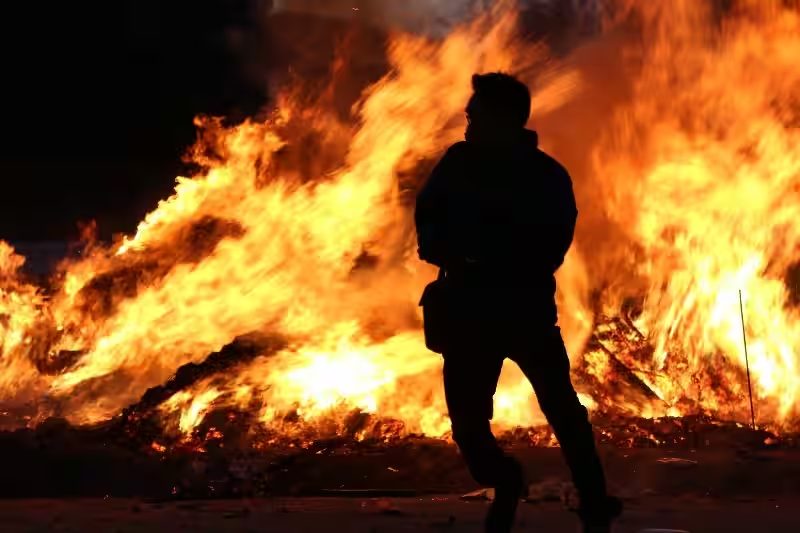
The story of the Mann Gulch fire, as told in Norman Maclean's Young Men and Fire, is more than just a recounting of a tragedy; it's a profound exploration of human nature, the power of the natural world, and the complex relationship between men and fire. This article delves into the book's key themes and explores the enduring lessons it offers about wildfire, leadership, and the human condition.
The Mann Gulch Fire: A Devastating Blowup
Maclean's narrative masterfully reconstructs the events of August 5, 1949, when a seemingly manageable wildfire in Montana's Mann Gulch unexpectedly exploded into a deadly inferno. The book meticulously details the minute-by-minute progression of the fire, from its initial manageable state to its sudden, catastrophic "blowup." This section vividly portrays the sheer power and unpredictability of wildfire, leaving the reader with a visceral understanding of the danger faced by the smokejumpers.
The initial descriptions of the fire's behavior, seemingly under control, build suspense before the horrifying escalation. The sudden shift in wind direction and intensity created a terrifying maelstrom of flames and smoke, trapping the firefighters in a deadly situation. This detailed account of the fire's unpredictable behavior serves as a stark reminder of the inherent risks associated with wildfire suppression.
The Escape Fire Controversy and Wag Dodge's Decision
The central focus of Maclean's investigation centers on the controversial decision by foreman Wag Dodge to ignite an escape fire. This act, intended to create a safe zone for his crew, became a point of contention among the families of the victims who tragically perished in the blaze. Maclean's meticulous investigation utilizes modern fire science to reconstruct the events, analyzing wind patterns, vegetation, and the fire's behavior to determine the validity of the accusations levelled against Dodge.
Maclean's investigation goes beyond simply assigning blame. It explores the limitations of knowledge and the pressure-cooker environment faced by Dodge in those critical moments. Through his research, Maclean reveals that prevailing assumptions about wind direction were incorrect, highlighting the inherent difficulties in accurately predicting and combating the unpredictable nature of wildland fires, particularly in challenging terrain. The complexity of the situation and the limitations of the technology available at the time are key factors considered in the narrative.
Beyond the Facts: Exploring Themes of Fate, Hubris, and Mortality
Young Men and Fire is not simply a factual account; it transcends the genre to become a powerful exploration of human themes. Maclean explores the interplay of fate, human error, and the limitations of human understanding in the face of overwhelming natural forces. The courage and perhaps hubris of these young men, who volunteered for the dangerous job of smokejumping, are portrayed with both admiration and a sense of poignant understanding.
The book delves into the individual stories of the smokejumpers, painting a picture of their lives, personalities, and motivations. Maclean uses this personal approach to further humanize the tragedy, emphasizing the profound loss suffered by families and the community. The inclusion of Maclean's own reflections on aging, mortality, and the search for meaning in the face of tragedy adds a deeply personal and resonant layer to the narrative.
Lessons Learned and Lasting Impact
The Mann Gulch fire remains a pivotal event in the history of wildland firefighting, serving as a stark reminder of the inherent dangers of the profession and the importance of preparedness, training, and effective leadership. The book’s legacy extends beyond its detailed account, fostering a deeper understanding of the complexities of wildfire behavior and the need for continuous improvement in firefighting strategies.
The insights gained from Maclean's investigation have led to significant advancements in fire science and wildland firefighting techniques. The book serves as a valuable resource for firefighters and fire scientists alike, providing a case study of a catastrophic event and offering lessons that continue to inform modern firefighting practices, including escape fire strategies and improved communication protocols.
The Enduring Power of Storytelling
Maclean's ability to weave together scientific detail, personal reflection, and evocative prose is a testament to the power of storytelling. He transforms a tragic event into a compelling narrative that explores profound human themes and leaves a lasting impression on the reader. The book's continued relevance lies not only in its historical significance but also in its enduring ability to connect with readers on an emotional and intellectual level.
The book offers poignant reflections on loss, grief, and the human quest for meaning in the face of tragedy. Maclean's skillful blending of factual reporting with deeply personal introspection creates a powerful and moving narrative that resonates with readers long after they finish the final page. The impact of this book extends far beyond the specific events it describes; it serves as a testament to the power of storytelling in understanding and confronting life's most difficult challenges.
In conclusion, Young Men and Fire is more than a historical account of a devastating wildfire; it's a timeless exploration of the complexities of the human condition in the face of overwhelming natural forces. The book’s enduring power lies in its ability to weave together a meticulous account of a tragic event with profound reflections on life, death, and the enduring search for meaning. The legacy of these men and the fire that claimed their lives serves as a powerful reminder of the respect that must be afforded to the unpredictable power of nature, and the crucial importance of continuous learning in the field of wildland firefighting.
Frequently Asked Questions about Young Men and Fire
What is Young Men and Fire about?
Young Men and Fire by Norman Maclean is a non-fiction account of the 1949 Mann Gulch fire in Montana, which tragically killed thirteen experienced smokejumpers. The book meticulously reconstructs the events leading up to the disaster, the fire itself, and its aftermath, exploring the human and environmental factors that contributed to the tragedy. It's not just a recounting of facts; it's a deep dive into the decision-making processes, the human toll, and the enduring questions surrounding the event.
What makes the Mann Gulch fire so significant?
The Mann Gulch fire is significant due to its sudden and intense "blowup," a rapid escalation of the fire's intensity that overwhelmed the firefighters. This unexpected behavior highlighted the unpredictable nature of wildfires and the limitations of firefighting techniques at the time. The tragedy also sparked crucial discussions about wildfire management strategies, leadership in crisis situations, and the inherent risks faced by wildland firefighters.
What role did Wag Dodge play in the Mann Gulch fire?
Wag Dodge was the foreman of the smokejumper crew. His controversial decision to ignite an escape fire became a central point of contention and investigation in Maclean's book. Initial blame fell upon Dodge, with some families of the victims holding him responsible for contributing to their deaths. However, Maclean's investigation, using modern fire science, ultimately concluded that Dodge's escape fire was not the primary cause of the fatalities. The unexpected fire behavior and convergence of wind patterns were ultimately identified as the key factors.
What did Maclean's investigation reveal about the fire?
Maclean's thorough investigation, involving on-site research, witness testimonies, and modern fire science, revealed crucial details previously unknown. He discovered that the prevailing assumptions about wind direction were inaccurate. A unique convergence of winds within Mann Gulch, combined with specific vegetation patterns, created a deadly trap that the firefighters couldn't escape despite their expertise.
What are the broader themes explored in the book?
Beyond the factual account, Young Men and Fire explores several significant themes, including:
- Human fallibility and the limits of human understanding: The book highlights how even experienced professionals can be overwhelmed by the unpredictable forces of nature.
- Courage and sacrifice: It pays tribute to the bravery of the smokejumpers and the profound sacrifices they made.
- Grief and loss: Maclean poignantly depicts the lasting impact of the tragedy on families and the firefighting community.
- The search for meaning in the face of tragedy: The book grapples with the question of how to make sense of a seemingly senseless event.
- The evolution of wildfire management: More recent critiques of the book have placed it within the context of changing wildfire understanding and the ongoing challenges of wildfire suppression in the face of climate change.
Is Young Men and Fire just a factual account?
While based on real events, Young Men and Fire is more than a straightforward factual account. It blends elements of a detective story, a scientific treatise, and an autobiography, enriching the narrative with personal reflections and exploring the deeper meanings behind the tragedy. Maclean's evocative prose and storytelling elevate the book beyond a simple recounting of facts, making it a powerful and moving read.