
Elijah Running: Fact, Faith, and the Flight from Jezreel
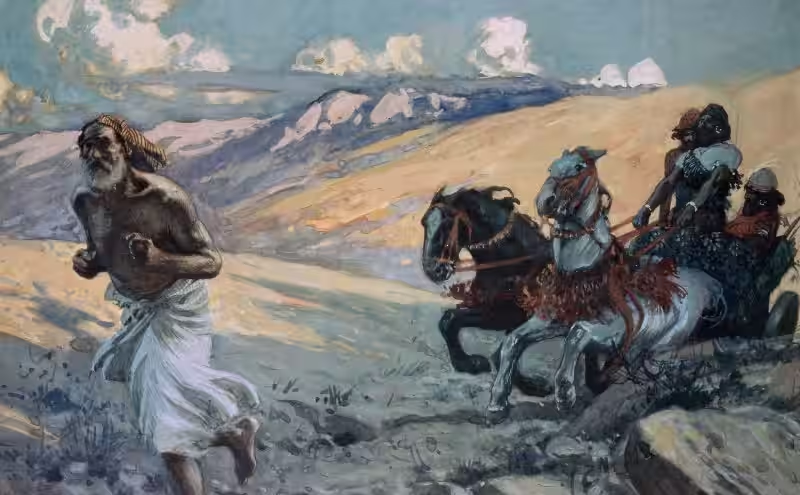
The story of Elijah’s flight is often reduced to a simple question: How fast did Elijah run to Jezreel? While the image of Elijah running is powerful, the biblical text actually offers a far richer and more complex narrative than a mere speed calculation. This article will delve into the story of Elijah running, exploring the biblical account, its various interpretations, and the deeper spiritual significance behind this pivotal moment in the prophet's life.
- Understanding Elijah's Flight: More Than Just a Race
- The Supernatural Element in Elijah Running
- Beyond the Speed: The Spiritual Significance of Elijah Running
- Elijah Running: A Lesson for Today
-
Frequently Asked Questions: Elijah's Journey
- How fast did Elijah run to Jezreel?
- What was the distance of Elijah's run to Jezreel?
- Why did Elijah run so fast?
- What was Elijah's physical state during the run?
- What is the significance of Elijah's fast run in the broader biblical context?
- Are there significant variations in how different Bible translations describe Elijah's run?
Understanding Elijah's Flight: More Than Just a Race
The narrative of Elijah's dramatic escape, primarily found in 1 Kings 18:46, doesn't focus on precise measurements of time and distance. Instead, it emphasizes the divine empowerment and the urgency of his situation. The speed of his journey is secondary to the profound spiritual context.
Elijah's flight wasn't a simple sprint; it was a desperate act driven by fear and exhaustion. Having just witnessed a stunning victory over the prophets of Baal on Mount Carmel, Elijah faced the wrath of Queen Jezebel. Her threat of death hung heavy in the air, fueling his urgent need to escape. The text highlights the intervention of God, providing the prophet with the superhuman strength needed to outrun Ahab's chariot. This wasn't just physical prowess; it was divine intervention, a demonstration of God's protection and empowerment in the face of mortal danger.
The act of "girding up his loins," a common biblical idiom for preparing for strenuous activity, suggests Elijah's physical preparation for the arduous journey. He wasn't simply running; he was bracing himself, both physically and mentally, for a race against time and against the potential consequences of his actions. This preparation underscores the intensity and urgency of the situation.
The Supernatural Element in Elijah Running
The consistent mention of the "hand of the Lord" is paramount. This signifies that Elijah's incredible speed wasn't solely due to his own physical ability. It was a direct manifestation of God's power, a divine gift allowing him to escape a perilous situation. The supernatural element is central to this narrative, highlighting God's unwavering protection and guidance.
The various translations of 1 Kings 18:46 reveal subtle differences in wording but maintain a consistent thematic core: divine empowerment and remarkable speed. Whether the translation uses "cloak" or "mantle," "outran" or "ran before," the underlying message remains the same. God's hand was upon Elijah, granting him the strength and speed necessary to outpace the royal chariot.
Divine Intervention and Human Effort
It's important to emphasize the interplay between divine intervention and human effort. While God provided the supernatural empowerment, Elijah still took action. He prepared himself physically, demonstrating his reliance on both divine assistance and personal resolve. This balance is telling; God's grace doesn't negate personal responsibility, but rather enhances and empowers it. This is a crucial aspect to understanding Elijah’s journey. He was not simply passive; he actively participated in his escape.
Beyond the Speed: The Spiritual Significance of Elijah Running
While the physical act of Elijah running is striking, the deeper significance resides in its spiritual dimension. The narrative reveals Elijah's vulnerability, his despair, and his dependence on God. His flight isn't merely a physical escape; it's a symbolic representation of his spiritual crisis. He's not only running from Jezebel but also from the weight of his responsibilities and the apparent failure of his mission.
The story doesn't end with Elijah's arrival in Jezreel. His journey continues, leading to a period of profound spiritual exhaustion and a crucial encounter with God. This subsequent encounter in the wilderness marks a turning point in his life, demonstrating God's unwavering support and compassion.
Elijah's Emotional State and Spiritual Journey
The narrative highlights Elijah's emotional state. He's weary, despondent, and overwhelmed by the threat of Jezebel's vengeance. His flight is motivated by fear and a sense of inadequacy. The speed of his run becomes a symbol of his desperate attempt to escape a situation he feels powerless to handle. His journey thus becomes a metaphor for the spiritual struggles many face, highlighting the need for faith, perseverance, and divine intervention in times of crisis. The Elijah running narrative is not simply about physical endurance but also about spiritual endurance and resilience. The fleeing prophet's swift journey becomes a symbol for the urgent need for spiritual replenishment and restoration.
Elijah Running: A Lesson for Today
The story of Elijah running offers several lessons for contemporary readers.
- God's empowerment: Even in seemingly impossible situations, God can empower us beyond our natural abilities.
- The importance of prayer: Elijah's flight underscores the need for prayer and reliance on God during times of adversity.
- Spiritual vulnerability is okay: Elijah's despair and exhaustion are not portrayed as weaknesses but as honest expressions of human frailty. It's okay to feel overwhelmed, to admit our limitations, and to seek God's help.
- God's unwavering support: God's intervention and subsequent care for Elijah reiterate his unwavering love and support for his people, even in their darkest moments.
The question "How fast did Elijah run?" is ultimately a distraction from the true meaning of the narrative. Instead of focusing on speed, we should consider the spiritual journey, the divine intervention, and the profound lessons embedded within this compelling story of faith, fear, and divine empowerment. The emphasis should be on the spiritual transformation of Elijah, rather than the precise metrics of his incredible feat of Elijah running.
Frequently Asked Questions: Elijah's Journey
How fast did Elijah run to Jezreel?
The biblical text (1 Kings 18:46) doesn't provide enough information to calculate Elijah's speed. The narrative focuses on the fact of his swift journey, empowered by God, rather than the precise speed. Attempting to assign a numerical speed distorts the theological significance of the passage. The emphasis is on divine intervention and the urgency of his situation, not a precise measurement of his pace.
What was the distance of Elijah's run to Jezreel?
The text doesn't specify the exact distance between Elijah's starting point and Jezreel. While the narrative highlights the impressive speed at which Elijah traversed the distance, surpassing Ahab's chariot, the exact kilometers or miles remain unknown. The focus is on the miraculous nature of his journey, not its precise geographical parameters.
Why did Elijah run so fast?
Elijah's rapid journey to Jezreel was driven by a combination of factors. The text emphasizes divine empowerment ("the hand of the Lord" was upon him), which enabled his extraordinary speed. Additionally, there was a significant sense of urgency; he was likely fleeing Jezebel’s wrath and attempting to alert the authorities in Jezreel, further motivating his swift movement.
What was Elijah's physical state during the run?
While the text states Elijah "girded up his loins," indicating preparation for exertion, it doesn't detail his physical condition during the run itself. The description emphasizes the supernatural aspect of his speed, enabled by God's power, rather than the physical strain on Elijah.
What is the significance of Elijah's fast run in the broader biblical context?
Elijah's swift journey to Jezreel is a powerful demonstration of God's intervention and protection. It underscores the supernatural element within the narrative, showcasing God's power to empower his prophets in times of peril. The event serves as a testament to God's faithfulness and his ability to act decisively on behalf of those who trust in him. It also highlights the urgency of the situation and the importance of Elijah’s actions in the larger context of the narrative.
Are there significant variations in how different Bible translations describe Elijah's run?
Yes, various translations present minor variations in word choice and phrasing ("hand of the Lord," "power of the Lord," "cloak," "mantle," etc.). However, the core message remains consistent across translations: Elijah received divine empowerment, ran incredibly fast, and outpaced Ahab's chariot on his journey to Jezreel. These variations are primarily stylistic and don't alter the fundamental narrative.