
Lessons from Revelation 5: Unveiling the Worthiness of the Lamb
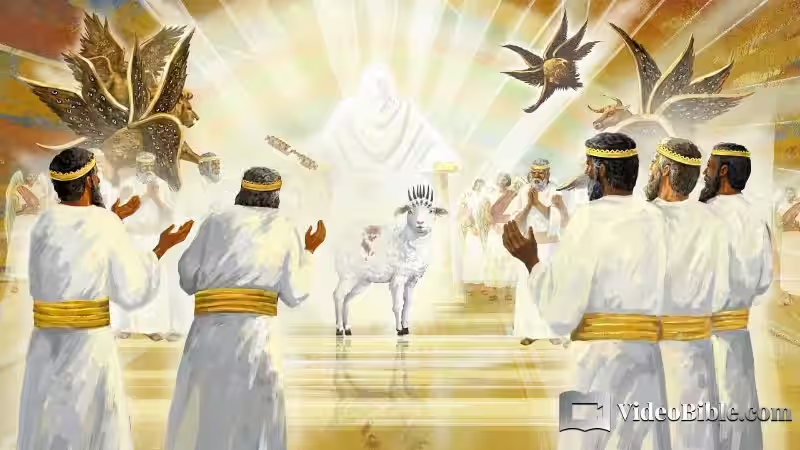
What would you do if you witnessed a scene of cosmic significance, a moment where the fate of the universe hung precariously in the balance? This is precisely the scenario John encounters in Revelation 5, a chapter brimming with profound theological implications and practical lessons for believers today. Let's delve into this pivotal passage and uncover the transformative truths it reveals.
- The Impasse: A Scroll No One Can Open
- The Resolution: The Lamb Who Is Worthy
- The Response: Worship from All Creation
- Lessons for Today: Embracing the Lamb's Worthiness
-
Frequently Asked Questions: Lessons from Revelation 5
- What is the significance of the sealed scroll in Revelation 5?
- Why does John weep in Revelation 5?
- Who is the Lamb described in Revelation 5, and what is its significance?
- What is the meaning of the Lamb's seven horns and seven eyes?
- Why is worship offered to the Lamb in Revelation 5?
- Who participates in the worship of the Lamb in Revelation 5, and what does this signify?
- What is the significance of the incense offered in Revelation 5?
- What is the overall message of Revelation 5?
The Impasse: A Scroll No One Can Open
Revelation 5 opens with a powerful image: a scroll sealed with seven seals, held in the right hand of God. This scroll isn't just any document; it represents God's ultimate plan for the universe, the culmination of His divine purpose, and the unfolding of history itself. Naturally, the opening of this scroll is a matter of immense significance.
The scene immediately establishes a sense of urgency and profound weight. No one, not even the mightiest of heavenly beings – angels, archangels, or any other celestial entity – is found worthy to open the scroll. This reveals the inherent limitations of created beings, no matter how powerful or exalted they may seem. John's anguished weeping underscores the gravity of this impasse, highlighting the desperate need for a divine intervention. This isn't just a bureaucratic roadblock; it's a cosmic crisis.
The Significance of the Sealed Scroll
The seven seals on the scroll symbolize the comprehensive and complete nature of God's plan. They represent a totality that cannot be partially understood or accessed. The inability of any created being to open the scroll reinforces the profound mystery and majesty of God's sovereign will. It also emphasizes the unbridgeable gap between humanity's fallen state and the holiness of God. Only someone perfectly aligned with God's holiness could unlock the mysteries within.
The Resolution: The Lamb Who Is Worthy
The seemingly insurmountable obstacle is resolved with the appearance of the Lamb, identified as the Lion of the tribe of Judah and the Root of David – Jesus Christ. This is no ordinary lamb; the imagery is deeply symbolic. While one might expect a powerful lion to take center stage, John witnesses a Lamb, "as though it had been slain," yet possessing seven horns (symbolizing power) and seven eyes (symbolizing omniscience).
This powerful image beautifully encapsulates the paradoxical nature of Christ. He is both the sacrificial Lamb, bearing the weight of humanity's sins, and the victorious Lion, possessing supreme authority and power. The Lamb's ability to open the scroll is not due to inherent might, but directly stems from His atoning sacrifice, a sacrifice eternally valid before God.
The Lamb's Sacrifice: A Source of Power
The Lamb's sacrifice is not a symbol of weakness, but rather, a demonstration of transformative power. His willingness to endure suffering and death on the cross is the very foundation of His ability to open the scroll. It is through this act of selfless love and obedience that He bridges the gap between humanity and God, making redemption possible. This underscores that true strength lies not in dominance, but in sacrificial love.
The Response: Worship from All Creation
The Lamb's act of taking the scroll triggers an overwhelming response of worship. The four living creatures and the twenty-four elders, representing celestial beings and redeemed humanity, launch into a new song of praise. This is no mere ritualistic act; it's a spontaneous outpouring of adoration stemming from the profound realization of what the Lamb has accomplished.
The song emphasizes the Lamb's worthiness, directly attributable to His redemptive sacrifice. He has redeemed humanity from every nation, transforming them into kings and priests who will reign with Him on earth. The imagery of harps and incense bowls enhances the celestial worship, with the incense representing the prayers of the saints. Importantly, this passage clarifies that the elders' offering of incense doesn't imply intercession; Christ's role as mediator is unique and irreplaceable.
Universal Worship: A Reflection of the Lamb's Divinity
This initial praise is amplified by a countless host of angels, and then extends to all creation – heavenly, earthly, and aquatic. All join in a unified declaration of blessing, honor, glory, and power to God on the throne and to the Lamb, forever. This universal worship is not merely a sentimental display; it's a powerful affirmation of the Lamb's divinity. It highlights the fact that true worship requires acknowledging Jesus Christ as God, the only worthy object of adoration. The concluding act of prostration before the eternally living God reinforces the absolute sovereignty and eternal reign of the divine being.
Lessons for Today: Embracing the Lamb's Worthiness
The lessons of Revelation 5 extend far beyond the confines of the heavenly realm. They provide profound insights into the nature of God, the significance of Christ's sacrifice, and the call to worship.
- Embrace the sacrificial nature of true power: The Lamb's sacrifice demonstrates that true power isn't found in dominance, but in selfless love and humility.
- Understand the centrality of Christ in redemption: He alone is worthy to open the scroll representing God's plan, highlighting His unique role as mediator and redeemer.
- Participate in the universal worship of God: The scene calls for a response of heartfelt adoration and praise, acknowledging Christ's divine nature and work of redemption.
- Live as kings and priests: We are called to reign with Christ, living lives that reflect His love and justice in the world.
Revelation 5 is not just a historical account; it's a living message, calling us to recognize the worthiness of the Lamb and to embrace the transformative power of His sacrifice. It naturally leads us to a deeper understanding of God's love, His plan for humanity, and our role in His kingdom.
Frequently Asked Questions: Lessons from Revelation 5
What is the significance of the sealed scroll in Revelation 5?
The sealed scroll in God's hand represents God's ultimate plan for the universe, often interpreted as His will for the culmination of history in Christ's return. It symbolizes the divine plan for redemption and judgment, a plan that requires a worthy opener to initiate. The seven seals likely represent the conditions for rightful ownership of the earth and initiation of God's judgment.
Why does John weep in Revelation 5?
John weeps because no heavenly being or earthly creature is found worthy to open the scroll and initiate God's plan. This signifies the utter inability of creation to bridge the gap between humanity's fallen state and God's perfect holiness; humanity's failure to reclaim dominion lost in the Garden of Eden. His tears represent humanity's collective sorrow and despair at the seeming impossibility of redemption.
Who is the Lamb described in Revelation 5, and what is its significance?
The Lamb is Jesus Christ, identified as the Lion of the tribe of Judah and the Root of David. The "Lion" imagery connects to His power and kingship, while the "Lamb" represents His sacrificial nature, referencing the Passover lamb and His atoning death for humanity's sins. This paradoxical imagery perfectly captures the Messiah's dual nature: powerful and yet sacrificially humble. His worthiness to open the scroll stems directly from His atoning sacrifice, eternally valid before God.
What is the meaning of the Lamb's seven horns and seven eyes?
The seven horns symbolize the Lamb's complete power and authority, while the seven eyes represent His omniscience and perfect understanding of God's plan. Together, these images depict Christ's absolute authority and complete knowledge, establishing Him as the only worthy one to open the scroll and initiate God's plan.
Why is worship offered to the Lamb in Revelation 5?
Worship is offered to the Lamb because only He is worthy. His sacrificial death and subsequent victory over death have made redemption possible. The worship highlights His unique role as mediator, bridging the gap between God and humanity, making possible access to God's plan. The act of opening the scroll demonstrates His authority and divinely appointed role in God's plan.
Who participates in the worship of the Lamb in Revelation 5, and what does this signify?
The worship is universal, encompassing the four living creatures (representing celestial beings), the twenty-four elders (representing redeemed humanity), a countless host of angels, and ultimately, all of creation (heavenly, earthly, and aquatic). This widespread participation emphasizes the Lamb's universal significance and the all-encompassing nature of His redemptive work. It demonstrates that true worship requires acknowledging Jesus Christ as God.
What is the significance of the incense offered in Revelation 5?
The incense offered by the elders does not represent intercession, but rather represents the prayers and praises of the saints ascending before God. This reinforces the unique role of Christ as the sole mediator between God and humanity. Their worship is a response to the Lamb's actions, not an attempt to influence God through their own efforts.
What is the overall message of Revelation 5?
The overarching message of Revelation 5 is the absolute necessity of Jesus Christ for salvation and the fulfillment of God's plan. Only through His sacrificial death and resurrection can the chasm between God and humanity be bridged. It underscores the centrality of Christ in true worship and highlights His divine authority and power. The passage emphasizes that access to God's plan is solely through the Lamb's atoning sacrifice.