
Names of Jesus in the Bible: From Genesis to Revelation
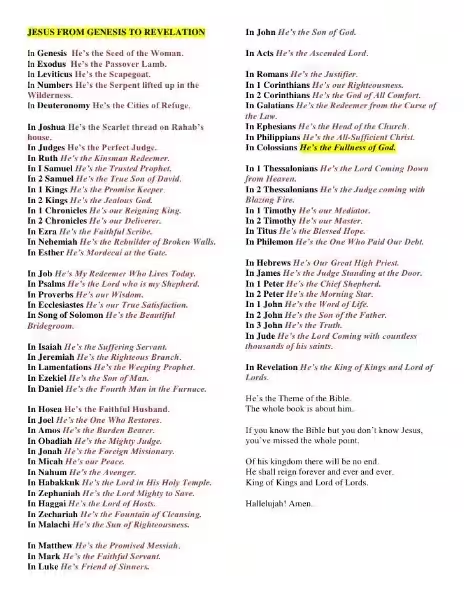
Many wonder about the multitude of names and titles given to Jesus throughout the Bible. Are they simply different ways of saying the same thing, or do they reveal deeper aspects of his multifaceted nature? This article explores the diverse names of Jesus found in the King James Version of the Bible, from Genesis to Revelation, offering glimpses into his identity and significance. It's not an exhaustive theological treatise, but rather an invitation to appreciate the richness of scripture in portraying the Son of God.
- Deity and Authority: Names Reflecting Divine Power
- Messianic Roles and Actions: Savior, Redeemer, and Lamb of God
- Relationships and Attributes: Good Shepherd, Light of the World, and more
- Creator and Sustainer: Author and Finisher of our Faith
-
Frequently Asked Questions: Names of Jesus in the Bible
- What are some of the names and titles of Jesus emphasizing his deity and authority?
- How does the Bible portray Jesus's messianic roles and actions?
- What titles reveal Jesus's relationship with humanity and his attributes?
- What titles highlight Jesus' role as Creator and Sustainer?
- Are there Old Testament foreshadowings of Jesus?
The Bible frequently asserts Jesus' divine nature and supreme authority. He is explicitly called God in Isaiah 40:3, "The voice of him that crieth in the wilderness, Prepare ye the way of the LORD, make straight in the desert a highway for our God." This verse shows Jesus, the one preparing the way, identified as God.
This identification with God is further reinforced by titles like Almighty (Revelation 1:8), "I am Alpha and Omega, the beginning and the ending, saith the Lord, which is, and which was, and which is to come, the Almighty." Here, the "Almighty" directly connects Jesus with God's power and omnipotence. Other titles like Alpha and Omega (Revelation 1:8), highlighting his eternity and boundless nature, and the "beginning of the creation of God" (Revelation 3:14), showcasing his role in creation, solidify his divine identity.
King of Kings, Lord of Lords, and the Only Begotten Son
The titles King of Kings and Lord of Lords (1 Timothy 6:15) emphasize his ultimate sovereignty over all creation, while "the only begotten Son" (John 1:18) reveals his unique relationship with the Father.
The "I AM" (John 8:58), echoing God's self-revelation in Exodus, further underscores his divine identity and authority. Jesus' use of this phrase isn't simply a statement of existence; it’s a declaration of his oneness with God, a powerful assertion of his divine being.
Messianic Roles and Actions: Savior, Redeemer, and Lamb of God
Many names and titles point to Jesus' role as the promised Messiah. He was explicitly called Messiah (John 1:41), Christ (Luke 9:20), and King of the Jews (Matthew 2:2), fulfilling Old Testament prophecies.
These titles aren't just labels; they describe his actions and purpose. The "Lamb of God" (John 1:29) signifies his sacrificial atonement for humanity's sins. As Savior (Luke 2:11) and Redeemer (Job 19:25 – a prophetic reference interpreted in the New Testament), he rescues humanity from the consequences of sin. His role as Captain of Salvation (Hebrews 2:10) highlights his leadership in achieving this salvation. The title Judge (Micah 5:1) points towards his future role in dispensing justice.
Deliverer and Prince of Peace
The name Deliverer (Romans 11:26) emphasizes his role in freeing humanity from spiritual bondage.
His title Prince of Peace (Isaiah 9:6) speaks to the peace and reconciliation he offers to a world fractured by sin. He is not just a powerful ruler; he is the one who brings lasting peace and harmony. He isn't just a deliverer from physical oppression but from the greater oppression of sin, death, and the devil himself.
Relationships and Attributes: Good Shepherd, Light of the World, and more
Jesus' names also reveal his relationship with humanity and his characteristics. The "Good Shepherd" (John 10:11) illustrates his care and protection of his followers. As Advocate (1 John 2:1), he intercedes for believers before God.
He is the "Bread of Life" (John 6:32), providing spiritual nourishment, and the "Light of the World" (John 8:12), illuminating the path to truth and salvation. The titles "Beloved Son" (Matthew 12:18) and "Man of Sorrows" (Isaiah 53:3) reveal both his divine sonship and his human experience of suffering. The "Cornerstone" (Psalm 118:22) highlights his central role in God's plan of salvation.
Illustrating Jesus' Intimate Relationship with Humanity
These titles reveal the depth of Jesus' relationship with humankind. He isn't just a distant deity; he is a compassionate shepherd, a loving advocate, and a suffering servant who understands our weaknesses.
His intimate relationship with humanity is further captured in his actions and teachings, making his titles not simply abstract concepts but expressions of his tangible love and grace.
Beyond his role as savior, the Bible also presents Jesus as the Creator (John 1:3), involved in the creation of the universe. This title emphasizes his divine power and authority. Furthermore, he is the "Author and Finisher of our faith" (Hebrews 12:2) and the "Author of eternal salvation" (Hebrews 5:9).
These titles show his active role not only in the creation of the universe but also in the spiritual creation and sustenance of believers. He is the architect and completer of our faith journey, leading us to ultimate salvation. His role as creator and sustainer underlines his complete and total involvement in every aspect of human existence.
In conclusion, the numerous names of Jesus throughout the Bible reveal a rich tapestry of his character and purpose. They point to his divine nature, his messianic role, his compassion for humanity, and his ultimate authority over all creation. By exploring these names, we gain a deeper understanding and appreciation of the multifaceted nature of Jesus Christ.
Frequently Asked Questions: Names of Jesus in the Bible
Here are some frequently asked questions about the names and titles of Jesus Christ found throughout the Bible, from Genesis to Revelation. This FAQ focuses on the multifaceted nature of Jesus as revealed through these various appellations.
The Bible bestows upon Jesus numerous titles that highlight his divine nature and supreme authority. He is called God (Isaiah 40:3), emphasizing his divine essence. Titles like Almighty (Revelation 1:8), Alpha and Omega (Revelation 1:8), the beginning of the creation of God (Revelation 3:14), and the Everlasting Father (Isaiah 9:6) underscore his eternal existence and power over all creation. His authority is further emphasized by titles such as King of Kings (1 Timothy 6:15) and Lord of Lords (1 Timothy 6:15). The declaration "I AM" (John 8:58) directly echoes God's self-revelation in Exodus, reinforcing his divine identity. Finally, his title as the only begotten Son (John 1:18) points to his unique relationship with God the Father.
How does the Bible portray Jesus's messianic roles and actions?
Many names and titles highlight Jesus's role as the promised Messiah. He is explicitly called Messiah (John 1:41) and Christ (Luke 9:20), confirming his fulfillment of Old Testament prophecies. Titles like King of the Jews (Matthew 2:2) and Deliverer (Romans 11:26) directly relate to his messianic mission. His sacrificial nature is emphasized through titles such as the Lamb of God (John 1:29), Savior (Luke 2:11), and Redeemer (Job 19:25). He is also presented as the Captain of Salvation (Hebrews 2:10), leading believers to salvation. His role as Judge (Micah 5:1) points to his future judgment and the establishment of justice.
What titles reveal Jesus's relationship with humanity and his attributes?
Several names depict Jesus's intimate relationship with humanity and his compassionate character. He is referred to as the Good Shepherd (John 10:11), caring for and guiding his followers. As Advocate (1 John 2:1), he intercedes on behalf of believers. Titles such as Bread of Life (John 6:32) and Light of the World (John 8:12) speak to his life-giving and illuminating presence. He is also called the Prince of Peace (Isaiah 9:6), promising peace and reconciliation. Titles like Beloved Son (Matthew 12:18) and Man of Sorrows (Isaiah 53:3) emphasize his human nature and his suffering for humanity. The Cornerstone (Psalm 118:22) highlights his central role in the Christian faith.
What titles highlight Jesus' role as Creator and Sustainer?
Jesus's role in creation and sustenance is revealed through titles like Creator (John 1:3), demonstrating his involvement in the origin of all things. He is also the Author and Finisher of our Faith (Hebrews 12:2) and the Author of Eternal Salvation (Hebrews 5:9), highlighting his role in guiding believers to salvation and ensuring its completion. These titles underscore his active role not only in the beginning of creation but also in its ultimate purpose—the salvation of humanity.
Are there Old Testament foreshadowings of Jesus?
Yes, the Old Testament contains numerous foreshadowings and prophecies of Jesus. Figures like Melchizedek, Isaac, Joseph, and David are often seen as types of Christ, prefiguring aspects of his life and ministry. Events like the Passover lamb, the bronze serpent, and the exodus from Egypt all contain symbolic prefigurations of Jesus' sacrifice and deliverance. Numerous prophetic passages in books like Isaiah, Jeremiah, and Daniel directly point to the coming Messiah, whose identity is revealed in the New Testament as Jesus Christ. The entire Old Testament narrative can be seen as a progressive revelation leading to the ultimate fulfillment in Jesus.