
Navigating Worldly Things: Finding Balance Between Earthly Life and Spiritual Values
This article explores the complexities of engaging with "worldly things," examining both the challenges and opportunities presented by our earthly existence, drawing on both literary and spiritual perspectives. We'll explore how to navigate the tensions between personal experiences, societal injustices, and a deeper spiritual life.
- Understanding "Worldly Things" in Different Contexts
- The Poetry of Worldly Things: A Literary Perspective
- A Spiritual Perspective on Worldly Things
- Integrating Worldly and Spiritual Aspirations
-
Frequently Asked Questions about Michael Kleber-Diggs's Worldly Things
- What is the central theme of *Worldly Things*?
- What kind of experiences does the book explore?
- How does the book address systemic injustice?
- What is the poet's proposed path forward?
- What makes the book's style unique?
- What kind of recognition has the book received?
- Is the book solely focused on negativity?
Understanding "Worldly Things" in Different Contexts
The phrase "worldly things" carries diverse meanings depending on the context. In the secular world, it often refers to material possessions, social status, and career achievements – essentially, the elements that shape our lives within the societal framework. We strive for financial security, social acceptance, and professional success, all of which are considered integral aspects of our earthly experience. These are not inherently negative; they contribute to our well-being and allow us to participate fully in life.
However, a spiritual perspective often presents a different view. Many religious traditions caution against an overemphasis on material wealth and social status, urging a focus on spiritual growth and service to others. The pursuit of "worldly things" in this context can be seen as a distraction from our true purpose and a potential source of suffering. The balance lies in recognizing the value of both worldly and spiritual pursuits, finding a way to integrate them in a way that enriches our lives rather than creating conflict.
The Poetry of Worldly Things: A Literary Perspective
Michael Kleber-Diggs' Worldly Things, a powerful collection of poems, beautifully illustrates the complex interplay between the personal and the political. The book doesn't shy away from the harsh realities of systemic racism and gun violence, portraying the devastating impact on individuals and communities. Images of grief and loss, such as the death of a loved one, are starkly juxtaposed with moments of profound love and tenderness, like teaching a daughter to drive.
This juxtaposition is what makes Kleber-Diggs' work so compelling. It forces us to confront the uncomfortable truth that even amidst the beauty of everyday life, the shadow of injustice looms large. This is a powerful reminder that our personal experiences are inextricably linked to the broader social and political landscape. The book doesn't simply lament these injustices; it also champions the power of community and mutual support as a path forward, offering a vision of hope and collective action. The evocative line, "Let's create folklore side-by-side," embodies this spirit of shared aspiration and resistance.
Kleber-Diggs masterfully weaves together deeply personal experiences with the larger social context. He achieves this by showcasing the ordinary alongside the extraordinary, reminding us that even amidst profound sorrow, there’s space for joy, love, and community. The book’s strength lies in this ability to simultaneously acknowledge the brutal realities of systemic racism and celebrate the enduring power of love and community. The everyday moments, the intimate interactions, become powerfully meaningful when viewed in the context of systemic injustice. This perspective helps us understand that even in the face of profound loss, we can find beauty and resilience.
A Spiritual Perspective on Worldly Things
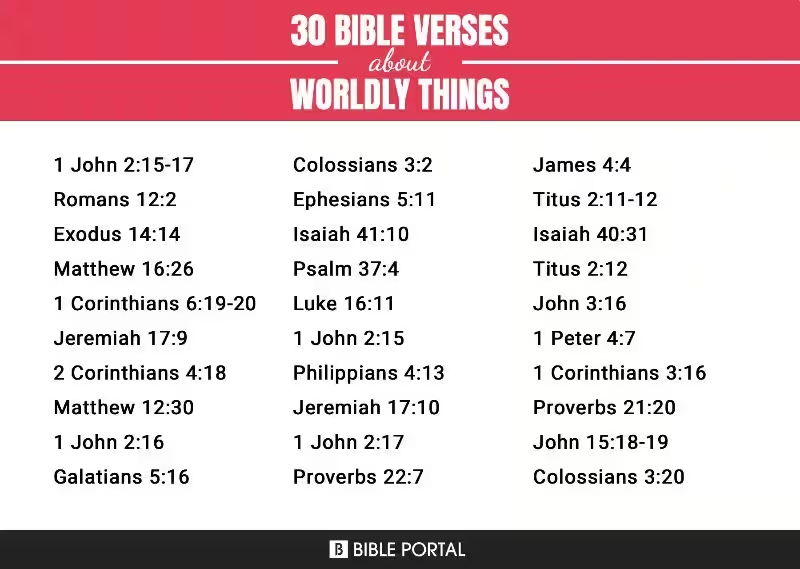
The Bible, particularly certain passages in the New Testament, offers a perspective on "worldly things" that cautions against prioritizing material possessions and earthly pleasures above a relationship with God. The concept of "loving the world" is contrasted with "loving God," suggesting that an over-attachment to earthly pursuits can lead to spiritual detachment.
The Dangers of Worldly Attachments
Passages like 1 John 2:15-17 warn against the "lusts of the flesh, the lusts of the eyes, and the pride of life," highlighting the potential dangers of excessive materialism and worldly ambition. These desires are presented as fleeting and ultimately destructive, in contrast to the eternal rewards of obedience to God's will. This doesn't advocate for asceticism or rejection of earthly life, but rather for a balanced approach, where spiritual values guide our choices and actions.
Finding Balance: Spiritual Guidance
The Bible also provides guidance on navigating worldly pressures. It encourages believers to discern God's will, to avoid "unfruitful works of darkness," and to trust in God's strength and provision. These passages offer a framework for making ethical choices and finding inner peace even amidst the challenges of earthly life. The emphasis is on seeking God's kingdom first, understanding that true fulfillment comes from a deeper connection with the divine rather than from material success. The ultimate warning, however, is the risk of gaining the world but losing one's soul – a powerful reminder of the importance of spiritual priorities.
Integrating Worldly and Spiritual Aspirations
The key to navigating "worldly things" lies in finding a harmonious balance between our earthly experiences and our spiritual values. Neither should be disregarded; rather, they should complement and enrich one another. The poems in Worldly Things highlight the importance of engaging with the world fully, acknowledging its complexities and injustices, while simultaneously celebrating the power of love, community, and resilience.
Similarly, a spiritual perspective can provide a framework for ethical decision-making, reminding us that true fulfillment comes from a life lived with purpose and integrity. By integrating these perspectives, we can strive to create a life that is both meaningful and fulfilling, a life where we can participate fully in the world while remaining grounded in our spiritual values. This involves actively working towards social justice, fostering community, and pursuing a life that reflects our deepest values – a life that embraces both the joys and challenges of our earthly journey. This is the path towards finding true meaning and lasting peace, transcending the superficial allure of worldly things to discover a deeper and more enduring fulfillment.
Frequently Asked Questions about Michael Kleber-Diggs's Worldly Things
Here are some frequently asked questions about Michael Kleber-Diggs's poetry collection, Worldly Things:
What is the central theme of *Worldly Things*?
The central theme of Worldly Things is the complex interplay between joy and grief within the context of systemic American injustices. Kleber-Diggs masterfully weaves together deeply personal experiences of love and loss with the harsh realities of racial violence and systemic oppression. The collection doesn't just lament these injustices; it actively proposes a path forward, advocating for a radical shift towards kindness and collective action to create a more just and equitable society.
What kind of experiences does the book explore?
The poems in Worldly Things explore a wide range of deeply personal experiences, including the joys of fatherhood (teaching his daughter to drive), intimate moments with loved ones, and the profound sorrow of loss. These personal narratives are interwoven with the larger societal context of racial violence and systemic oppression, including the traumatic experience of a father's death by gun violence, the mourning of children, and the tragic death of Freddie Gray. Even seemingly safe spaces like dreams are shown to be affected by the pervasive presence of injustice.
How does the book address systemic injustice?
Worldly Things directly confronts the systemic failures of America, documenting how marginalized communities are disproportionately affected by violence and oppression. The collection highlights the pervasive shadow of injustice that hangs over everyday life, even in moments of joy and love. However, it's not solely a work of protest; it's also a call for positive change and collective action.
What is the poet's proposed path forward?
Kleber-Diggs advocates for a radical shift towards kindness and a socially responsible poetics. He urges readers to actively participate in creating a more just and equitable society through collective action and mutual support. The vision presented is one of community built on mutual prosperity and tenderness, symbolized by the evocative line, "Let's create folklore side-by-side." This signifies a shared aspiration for "our share of light, and just enough rainfall," representing basic human needs for joy and sustenance.
What makes the book's style unique?
The poems in Worldly Things are characterized by a sonorous and measured style. Kleber-Diggs carefully balances moments of profound love and devastating loss, creating a powerful and moving reading experience. The accessibility of the collection is further enhanced by the availability of an audiobook narrated by the poet himself.
What kind of recognition has the book received?
Worldly Things has received significant critical acclaim, winning the Max Ritvo Poetry Prize and being a finalist for the Minnesota Book Award in Poetry. It has also been selected as a Reader’s Digest selection and an Indie Next selection, demonstrating its relevance to contemporary social conversations and its significant contribution to contemporary poetry.
Is the book solely focused on negativity?
While Worldly Things unflinchingly confronts difficult truths about systemic racism and its impact, it is not solely a lament. It is a powerful testament to the enduring human spirit and the power of love and community in the face of adversity. The book offers a message of hope and a call to action, urging readers to work towards a more just and compassionate future.