
Broken Cistern: Finding True Fulfillment Beyond Fleeting Pleasures
The human heart relentlessly seeks fulfillment. We chase after things, relationships, and achievements, hoping to quench our inner thirst. But what happens when our chosen sources prove inadequate? What happens when the well runs dry? This is the essence of the problem with trusting broken cisterns.
- Understanding the Metaphor of the Broken Cistern
- The Allure and the Failure of Broken Cisterns
- The Living Water: A Source of True Fulfillment
-
Identifying and Abandoning Your Broken Cisterns
- What is a "broken cistern" in the context of the reflection?
- How does the metaphor of a broken cistern relate to the biblical story of Jeremiah?
- What are some examples of "broken cisterns" in modern life?
- How can I identify my own "broken cisterns"?
- What is the solution offered in the reflection for overcoming reliance on broken cisterns?
Understanding the Metaphor of the Broken Cistern
The term "broken cistern" is a powerful image, drawn from Jeremiah 2:13 in the Bible. It describes the spiritual state of God's people who, instead of relying on God, created their own inadequate sources of satisfaction. These "cisterns" represent the things we often turn to for fulfillment: wealth, career success, popularity, even certain kinds of religious practices. They appear promising, but they ultimately fail to deliver lasting joy.
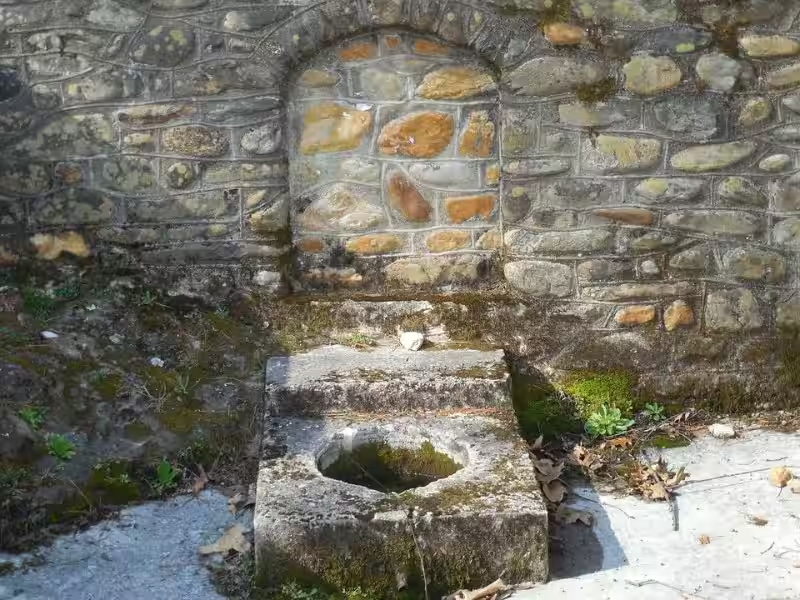
Imagine a cracked cistern, slowly leaking precious water – that's the perfect analogy for the fleeting nature of worldly pleasures. No matter how much you pour into these broken cisterns, they can't hold the water. They can't provide the enduring satisfaction your heart craves. The feeling is one of emptiness, of a thirst that remains unquenched. You're left with a nagging sense that something is still missing.
The Allure and the Failure of Broken Cisterns
Why do we constantly gravitate towards these broken cisterns? They offer immediate gratification. A new car, a promotion, a popular social media post – these things provide a temporary boost, a momentary feeling of contentment. However, this is superficial, a mere distraction from the deeper longing within us.
The dangers of broken cisterns are threefold:
- Disappointment: The inherent nature of these cisterns is to disappoint. Their inability to sustain genuine happiness leads to disillusionment and a deepening sense of emptiness.
- Addiction: The fleeting satisfaction often leads to an addictive cycle of chasing the next "fix," perpetuating the cycle of seeking fulfillment in the wrong places.
- Distraction: The pursuit of broken cisterns distracts from the true source of lasting fulfillment, leaving us spiritually parched and disconnected from God.
The Living Water: A Source of True Fulfillment
The good news is that there is a source of water that never runs dry – the "living water" spoken of in John 4:13-14 and John 7:37-38. This refers to Jesus Christ and the relationship we can have with God. This is not a metaphorical well; it is a vibrant, overflowing source of love, grace, forgiveness, and unending life.
Unlike the broken cisterns, this source offers:
- Enduring satisfaction: The love of God is an inexhaustible wellspring of joy, peace, and purpose, filling the deepest longings of the human heart.
- True security: God's love provides unshakable security and hope, even in the face of life's challenges.
- Transformative power: The relationship with God transforms us from the inside out, shaping our character and empowering us to live a life of purpose and meaning.
Identifying and Abandoning Your Broken Cisterns
Recognizing our reliance on broken cisterns is the first step towards finding true fulfillment. This requires honest self-reflection and a willingness to confront the areas of our lives where we're placing our trust in anything other than God. Are you placing your hope in career advancement? Financial security? Relationships? Popularity? These, like a broken cistern, offer temporary satisfaction but can not fill the deep spiritual void within.
Jeremiah 1:19b reassures us: "I am with you and will rescue you, declares the Lord." This promise offers comfort and strength as we embark on the journey of turning away from broken cisterns and towards the living water.
This journey requires:
- Confession: Acknowledging our reliance on broken cisterns and admitting our need for God's grace.
- Repentance: Turning away from our reliance on these inadequate sources and committing to seeking fulfillment in God alone.
- Faith: Trusting in God's promise to provide for our needs and guide us on our path.
Turning from broken cisterns to the living water is not a one-time event but a continuous process. It involves daily prayer, seeking fellowship with other believers, and actively seeking God's guidance in every aspect of our lives. The journey may be challenging, but the reward—a life overflowing with love, joy, and purpose—is beyond measure. We must actively seek the living water, rejecting the empty promises of a broken cistern.
What is a "broken cistern" in the context of the reflection?
A "broken cistern," as used in the reflection, is a metaphor for anything we rely on for fulfillment and satisfaction that ultimately fails to deliver. These are inadequate substitutes for a true relationship with God. Examples include material possessions, social status, achievements, relationships with people (expecting them to fulfill our deepest needs), or even religious practices done out of obligation rather than genuine faith. These things might offer temporary satisfaction, but they inevitably leave us feeling empty and unfulfilled because they are not designed to quench our spiritual thirst.
How does the metaphor of a broken cistern relate to the biblical story of Jeremiah?
The reflection uses the biblical story of Jeremiah and his message to the Israelites as a parallel to our modern lives. The Israelites repeatedly turned away from God, choosing instead to rely on powerless idols and earthly pursuits – their "broken cisterns." Jeremiah’s message, echoing Jeremiah 2:13, highlights the futility of this choice, emphasizing that only God, the "spring of living water," can truly satisfy our deepest needs. Just as the Israelites' cisterns could not hold water, these worldly pursuits ultimately fail to provide lasting fulfillment.
What are some examples of "broken cisterns" in modern life?
Modern examples of broken cisterns are numerous and can vary from person to person. They often include an overreliance on:
- Material wealth: Believing that accumulating possessions will bring happiness.
- Career success: Defining self-worth solely by professional achievements.
- Social status and popularity: Seeking validation and fulfillment through external approval.
- Perfect relationships: Expecting another person to complete us or meet all our emotional needs.
- Religious legalism: Focusing on rules and rituals rather than a genuine relationship with God.
These are all examples of placing our faith and hope in things that ultimately cannot satisfy our deepest spiritual longing.
How can I identify my own "broken cisterns"?
Identifying your own "broken cisterns" requires honest self-reflection and prayer. Consider what you turn to for comfort, security, or fulfillment when facing challenges or feeling insecure. Ask yourself: What am I relying on more than God? What brings me temporary pleasure but leaves me feeling empty afterward? Journaling, meditation, and prayer can be helpful tools in this process of self-examination. Seeking guidance from a trusted spiritual advisor or friend can also provide valuable insights.
What is the solution offered in the reflection for overcoming reliance on broken cisterns?
The reflection emphasizes the importance of turning away from broken cisterns and towards God, the "living water." This involves confession – acknowledging our reliance on these inadequate sources – and repentance – turning away from them and embracing a deeper relationship with God. The reflection points to Jesus Christ as the source of this "living water," offering grace, forgiveness, and abiding love. It encourages prayer, seeking community support, and trusting in God's promise to be with us and rescue us (Jeremiah 1:19b). The ultimate solution is a conscious shift in focus from earthly pursuits to a relationship with God, allowing Him to fill the deepest longings of our hearts.