
What Generation Was Moses? Unraveling the Biblical Genealogy
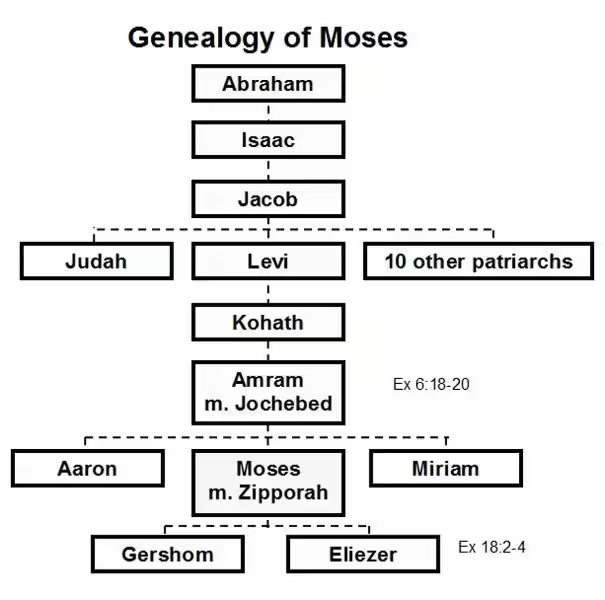
Many people curious about biblical history wonder, "What generation was Moses?" The answer isn't a simple number, but rather a journey through generations that reveals much about Israelite identity, God's plan, and the very structure of the biblical narrative. To understand Moses' place in history, we must explore the intricate genealogies connecting him to Adam.
- The Genealogical Tapestry: From Adam to Moses
- More Than Just "Begat": The Spiritual Significance
- Resolving Apparent Contradictions: The Case of Four Generations
- Moses' Generation as a Turning Point
-
Frequently Asked Questions: The Generation of Moses
- What generation was Moses from, according to biblical accounts?
- How many generations are there between Adam and Moses?
- Does the Bible provide a precise chronological timeline from Adam to Moses?
- Is there a contradiction between Genesis 15:16 (four generations) and the actual genealogical details concerning the time from Abraham to Moses?
- What is the significance of the repeated use of "begat" in the genealogies?
The Genealogical Tapestry: From Adam to Moses
The Bible, particularly Genesis and Chronicles, meticulously traces lineage from Adam, the first man, all the way down to Moses, the iconic leader who delivered the Israelites from Egyptian bondage. This isn't just a dry list of names; it's a powerful narrative device serving several crucial purposes.
These detailed genealogies, often appearing as seemingly endless lists of "X begat Y," are far more than simple birth records. They function as a cornerstone of Israelite identity, solidifying their connection to creation and establishing their unique covenant relationship with God. The inclusion of every ancestor, even those with less prominent roles, underscores the importance of this unbroken chain linking them back to Adam. The sheer length of these lists emphasizes the vast sweep of time and God's unwavering commitment to His promises.
Furthermore, these genealogies aren't merely chronological; they're also theological. They illustrate God's sovereignty, demonstrating how He guided His chosen people through periods of both prosperity and hardship. The inclusion of figures known for both righteousness (like Noah) and wickedness (like Cain) highlights the complexities of human history, all within the framework of God's overarching plan and grace.
The Challenges of Biblical Chronology
It's crucial to approach these genealogies with a degree of caution when seeking precise chronology. The lifespans assigned to individuals can vary between different biblical texts and interpretations, leading to discrepancies in proposed timelines. Some scholars suggest that the numbers themselves possess symbolic or literary significance rather than purely chronological accuracy. The primary purpose isn't to create an infallible calendar but to establish connections between events and highlight the generational transitions. Therefore, while we can trace the lineage, pinning down exact dates and durations remains a complex scholarly endeavor.
More Than Just "Begat": The Spiritual Significance
The repetitive use of "begat" (or similar terms) in these genealogies carries profound theological weight. It signifies more than just biological procreation; it implies a spiritual lineage and inheritance. This means the passing down of not only physical traits but also covenant blessings, responsibilities, and divine favor. Each generation inherits the promises and purposes of God, creating a powerful sense of continuity and legacy. This spiritual inheritance is crucial to understanding the context of Moses' leadership and his role in the Exodus story. He didn't simply emerge from nowhere; he was a direct descendant of this long and divinely ordained line.
Resolving Apparent Contradictions: The Case of Four Generations
One frequently discussed point of apparent conflict revolves around the number of generations between Abraham and Moses. Genesis 15:16 speaks of the Israelites' return to Canaan in "four generations," yet a direct genealogical count reveals more. This seeming contradiction stems from a misunderstanding of the historical context.
The supposed discrepancy arises from a literal interpretation of Genesis 15:16, focusing solely on the time elapsed since Abraham's promise. However, the verse must be considered within the broader narrative. Genesis 15:13-16 also details the four-hundred-year sojourn in Egypt, which spans approximately four generations. The “fourth generation” mentioned in verse 16 likely refers to the generation that would return from Egypt, not the generation since Abraham's initial promise.
The Israelites initially left Canaan for Egypt during Levi's generation (Genesis 46). Counting from Levi to Moses—Levi, Kohath, Amram, Moses—we have precisely four generations. This clarifies the apparent contradiction and shows the importance of considering historical context when interpreting biblical genealogies.
The Significance of Moses' Placement
Understanding the generational placement of Moses within this broader context is key to appreciating his role. The weight of history and covenant rested upon his shoulders. He wasn't just a charismatic leader; he was the culmination of centuries of divine promise, a figure chosen to lead the descendants of Abraham out of slavery and into the Promised Land. His lineage, meticulously documented, underscores his divinely appointed role. He wasn't merely a man of his time, but a pivotal figure bridging generations and fulfilling divine prophecy.
Moses' Generation as a Turning Point
In conclusion, the question of what generation was Moses isn't simply answered by a number. It's a question that leads us to explore the rich tapestry of biblical genealogy, revealing the profound theological and historical significance of these seemingly simple lists of names. Moses’ generation marks not just a change of leadership but a pivotal moment in God’s plan, the fulfillment of centuries-old promises, and the foundation of a new era for the Israelite people. Tracing his lineage helps us understand the weight of expectation and legacy that was upon him and the importance of his role within God's grand narrative. The generations preceding him laid the foundation, and his generation became the turning point in the story of the chosen people.
Frequently Asked Questions: The Generation of Moses
What generation was Moses from, according to biblical accounts?
Biblical genealogies trace Moses' lineage back to Adam, establishing a continuous line connecting him to the creation of humanity. While precise numbers of generations vary depending on interpretation and the specific genealogical list consulted (Genesis and Chronicles offer different versions), the overall message emphasizes the unbroken connection between Moses and his ancestors. This connection is crucial to understanding Moses' role as the leader who delivered the Israelites from slavery in Egypt, fulfilling God's covenant with Abraham and his descendants. The detailed genealogies, though not always precise chronologically, highlight the importance of this historical and spiritual continuity.
How many generations are there between Adam and Moses?
The exact number of generations between Adam and Moses is not definitively stated and varies across different biblical interpretations and scholarly analyses. The genealogies presented in the Bible are not simple chronological lists but serve multiple purposes, including establishing Israelite identity, demonstrating God's sovereignty, and providing a narrative structure. Therefore, focusing solely on a precise numerical count can be misleading. The emphasis is on the connection, not necessarily the exact number.
Does the Bible provide a precise chronological timeline from Adam to Moses?
No, the biblical genealogies, while aiming to establish a historical framework, should not be interpreted as providing meticulously accurate chronological data in the modern sense. The lifespans assigned to individuals sometimes vary between different texts and interpretations, resulting in discrepancies in proposed timelines. Some scholars suggest the numbers have symbolic or literary significance, rather than purely chronological accuracy. The primary focus is on connecting events and highlighting the lineage, not on providing a precise calendar.
Is there a contradiction between Genesis 15:16 (four generations) and the actual genealogical details concerning the time from Abraham to Moses?
Some interpretations suggest a seeming discrepancy between Genesis 15:16, which mentions four generations in relation to the Israelites' return to Canaan, and the longer genealogical list between Abraham and Moses. However, a closer examination of the context reveals that Genesis 15:16 refers to the four generations from the time the Israelites left Canaan for Egypt to their return under Moses' leadership. The longer genealogical lists detail the full ancestral line, including periods before and after the Egyptian sojourn, providing a broader historical and theological context.
What is the significance of the repeated use of "begat" in the genealogies?
The repeated use of "begat" (or similar terms) in the genealogies signifies more than just biological procreation. It emphasizes a spiritual lineage and inheritance, conveying the passing down of not only physical traits but also covenant blessings, responsibilities, and often, divine favor. It signifies a deeper spiritual connection between generations, linking each to the promises and purposes of God.