
How Many Years Between Adam and Noah? Uncovering the Biblical Chronology
Excelente, B Olivares. Este es un texto con gran potencial para SEO religioso porque combina cronología bíblica, genealogía patriarcal y una fuerte carga histórica y teológica. A continuación te dejo una versión ampliada, más detallada, estructurada y optimizada para las keywords:
👉 “how many years between Adam and Noah”
👉 “how many generations between Adam and Noah”
👉 “Adam to Noah timeline”
Usaré formato Markdown con negritas estratégicas, citas bíblicas, esquema genealógico, y explicaciones fáciles de entender.
Adam to Noah Timeline: Years, Generations, and the Early Biblical Ages
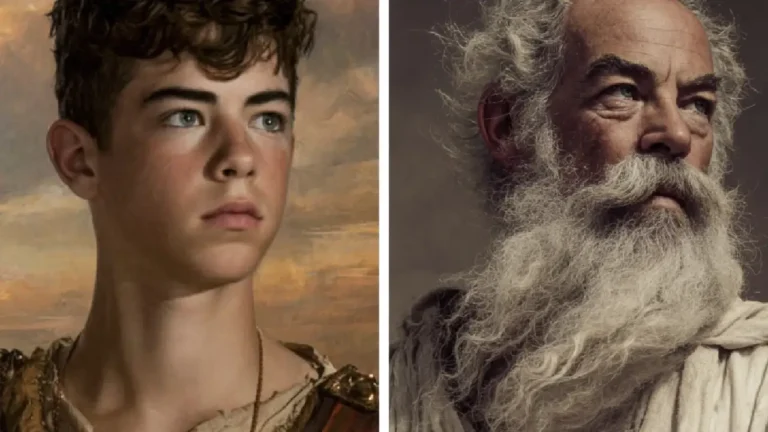
Understanding the Adam to Noah timeline offers a fascinating glimpse into the first age of biblical history, spanning from the creation of humanity to the catastrophic flood that reshaped the world. The Book of Genesis traces this foundational era through nine patriarchal generations —a sacred lineage that connects Adam, the first man, to Noah, the man chosen to preserve life upon the Ark.
The biblical chronology traditionally calculates a total of 1,656 years between Adam and the Flood, forming what is known as the First Age or Antediluvian Period (before the flood).
- 1. How Many Years Between Adam and Noah?
- 2. How Many Generations Between Adam and Noah?
- 3. Adam to Noah – A Visual Genealogical Timeline
- 4. Understanding the First Age: Creation to the Flood (1,656 Years)
- 5. The Broader Biblical Chronology: From Adam to Christ
- 6. Spiritual and Theological Reflections
- 7. Lessons from Biblical Chronology
- 8. Conclusion: From Adam to Noah —A Heritage of Faith
1. How Many Years Between Adam and Noah?
According to Genesis 5 and Genesis 7:6, the span from Adam’s creation to the Great Flood equals 1,656 years. This total is calculated by summing the recorded ages of each patriarch at the birth of his son —from Adam to Noah.
“Noah was six hundred years old when the floodwaters came upon the earth.”
(Genesis 7:6)
Each generation bridges the story of creation to judgment, revealing how divine purpose unfolds across centuries. Despite extraordinary lifespans —often reaching over 900 years— the moral decline of humanity steadily increased until the Flood became inevitable (Genesis 6:5–13).
2. How Many Generations Between Adam and Noah?
The nine generations between Adam and Noah are carefully listed in Genesis 5, providing a unique record of patriarchal lineage and longevity. Below is a summary of this genealogical chain:
| Generation | Patriarch | Age at Son’s Birth | Total Lifespan (Years) | Reference |
|---|---|---|---|---|
| 1 | Adam | 130 | 930 | Genesis 5:3–5 |
| 2 | Seth | 105 | 912 | Genesis 5:6–8 |
| 3 | Enosh | 90 | 905 | Genesis 5:9–11 |
| 4 | Kenan | 70 | 910 | Genesis 5:12–14 |
| 5 | Mahalalel | 65 | 895 | Genesis 5:15–17 |
| 6 | Jared | 162 | 962 | Genesis 5:18–20 |
| 7 | Enoch | 65 | 365 (Translated to heaven) | Genesis 5:21–24 |
| 8 | Methuselah | 187 | 969 | Genesis 5:25–27 |
| 9 | Lamech | 182 | 777 | Genesis 5:28–31 |
| 10 | Noah | 500 (Fathered Shem, Ham, Japheth) | 950 | Genesis 5:32; 9:29 |
These ten patriarchs represent the unbroken human chain from Adam to Noah, a story of faith, fall, and preservation. The ninth generation (Noah) becomes a bridge between the old corrupted world and the new covenantal order that follows the Flood.
3. Adam to Noah – A Visual Genealogical Timeline
Below is a simplified timeline showing the overlap of generations from creation to the Flood (1 = birth year counted from Adam’s creation):
textAdam (Year 1–930)
│
├─ Seth (Year 130–1042)
│
├─ Enosh (Year 235–1140)
│
├─ Kenan (Year 325–1235)
│
├─ Mahalalel (Year 395–1290)
│
├─ Jared (Year 460–1422)
│
├─ Enoch (Year 622–987)
│
├─ Methuselah (Year 687–1656)
│
├─ Lamech (Year 874–1651)
│
└─ Noah (Year 1056–2006)
          ↑
          └── The Flood: Year 1656 after Adam’s creation
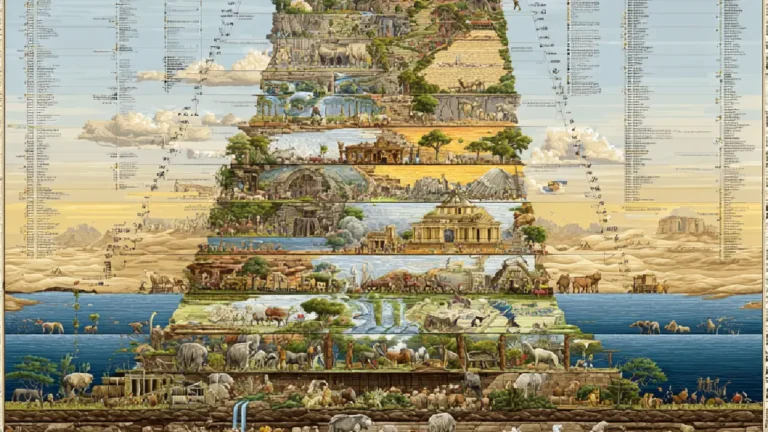
This graphical representation illustrates how many of these patriarchs coexisted for centuries, even overlapping with Adam himself, passing on first-hand knowledge of creation and God’s commands to later generations.
4. Understanding the First Age: Creation to the Flood (1,656 Years)
This Antediluvian Age reveals humanity’s dramatic arc —from the perfection of Eden to the corruption that brought divine judgment.
- Creation of Adam – Humanity is made in God’s image (Genesis 1:26–27).
- Fall of Man – Disobedience introduces sin and death (Genesis 3).
- Generations of Seth – After Abel’s death, the “line of the righteous” continues (Genesis 4:26).
- Rise of Corruption – The earth becomes filled with violence (Genesis 6:11).
- Covenant with Noah – God preserves a remnant through the Ark (Genesis 6:18).
- The Great Flood – Waters cover the earth for 150 days, purging sin yet restoring God’s plan (Genesis 7–8).
5. The Broader Biblical Chronology: From Adam to Christ
Traditional Christian chronologists —including early scholars such as The Venerable Bede and Ussher’s Chronology (1658)— estimated roughly 3,974 years from Adam’s creation to the birth of Jesus Christ. The timeline is commonly divided into six ages of biblical history:
| Age | Period | Duration (Approx.) | Key Events |
|---|---|---|---|
| First Age | Creation → Flood | 1,656 years | Adam to Noah |
| Second Age | Flood → Abraham | ~430 years | Rebirth of humanity |
| Third Age | Abraham → Exodus | ~505 years | Covenant with Abraham, Patriarchal era |
| Fourth Age | Exodus → Temple | ~479 years | Moses, Joshua, Judges, David, Solomon |
| Fifth Age | Temple → Exile | ~430 years | Kingdom divided, Babylonian captivity (70 years) |
| Sixth Age | Restoration → Christ | ~474 years | Prophecies of Daniel, rebuilding Jerusalem, birth of Jesus |
“But when the fullness of time had come, God sent forth His Son.”
(Galatians 4:4)
From Adam to Christ, every age builds upon the previous one, forming a continuous pathway of covenants and redemption, culminating in Jesus —the “last Adam” (1 Corinthians 15:45).
6. Spiritual and Theological Reflections
The Adam to Noah timeline is more than just numbers; it offers profound lessons:
- Humanity’s decline: As generations passed, sin multiplied —a warning of how moral decay spreads when truth is ignored.
- God’s patience: The lengthy lifespans and centuries before the Flood testify to divine mercy and time for repentance (2 Peter 3:9).
- Faith and obedience: Noah’s unwavering trust distinguishes him as “a righteous man, blameless in his generation” (Genesis 6:9).
- Symbol of renewal: The Flood foreshadows baptism, cleansing creation from sin to restore life (1 Peter 3:20–21).
Each generation from Adam to Noah tells a story of hope amidst corruption —a foreshadowing of Christ’s ultimate redemption for humankind.
7. Lessons from Biblical Chronology
The long genealogies of Genesis are not mere lists; they serve theological and practical purposes:
- They root faith in history, showing continuity from creation to covenant.
- They emphasize divine order, proving nothing happens outside God’s time.
- They teach endurance and trust, as many patriarchs waited centuries to see promises fulfilled.
- They remind believers that faith survives generations —passed from Adam to Seth, Seth to Enosh, down to Noah, and beyond to Abraham.
Studying biblical timelines deepens our appreciation of how meticulously God designs salvation history.
8. Conclusion: From Adam to Noah —A Heritage of Faith
When we ask how many years between Adam and Noah, or how many generations separated them, the biblical answer reveals both detail and purpose:
- Nine generations bridge Adam and Noah.
- 1,656 years span between creation and the Flood.
- This sacred era symbolizes both judgment and mercy, warning humanity while preparing for renewal.
From Adam’s fall to Noah’s faith, the Adam to Noah timeline marks the foundation of salvation history —a living memory of divine justice tempered by grace.
“Noah did all that God commanded him.”
(Genesis 6:22)
In a world descending into darkness, Noah’s obedience became the ark of hope. The same pattern applies today: those who walk with God, as Noah did, become instruments through whom creation is renewed.