
The Mount of Olives Split in Two: Understanding Zechariah 14:4 and Its Historical Fulfillment
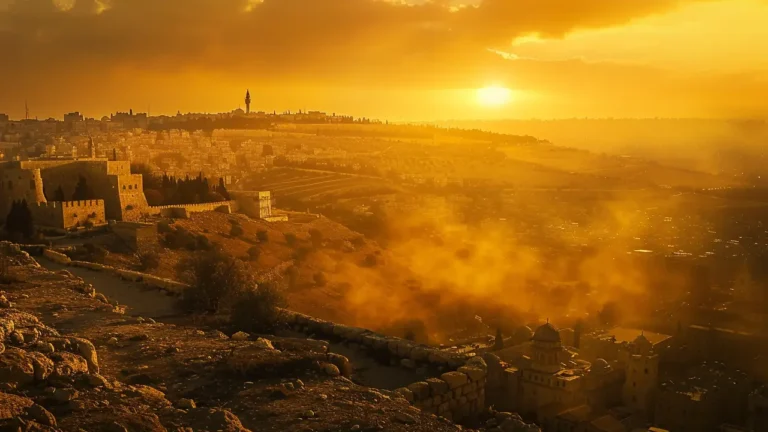
The prophecy in Zechariah 14:4, describing how “the Mount of Olives will split in two from east to west, forming a very great valley”, has long fascinated theologians, archaeologists, and prophecy scholars alike.
For many Christians, this verse foreshadows a future apocalyptic event tied to the Second Coming of Christ, when the mountain will physically divide as the Lord returns in glory. Yet, an alternative and historically grounded perspective suggests that “the Mount of Olives is splitting in half” may not refer to a future cataclysm but rather to a literal and symbolic fulfillment in the first century, during the First Jewish–Roman War (66–73 AD)—a time of divine judgment and transition in biblical history.
This expanded interpretation combines archaeology, history, and biblical symbolism to reveal a rich and coherent picture connecting prophecy, geography, and historical fulfillment.
- The Mount of Olives Split in Two: A Re-examination of Zechariah 14:4
- 1. Zechariah 14:4 – The Prophecy and Its Traditional Reading
- 2. A Historical Alternative: The Roman Road That Divided the Mount of Olives
- 3. The Shekinah Glory: Theological and Symbolic Depth
- 4. The Exodus Parallel: God Making a Way of Escape
- 5. Reinforcing Evidence: Matthew 24:15–20
- 6. Symbolism in the Book of Revelation
- 7. Reframing Eschatology: From Future Fear to Historical Fulfillment
- 8. Conclusion: A Renewed Perspective on Zechariah 14:4
-
Frequently Asked Questions: The Splitting of the Mount of Olives
- What does Zechariah 14:4 actually say about the Mount of Olives?
- Is the splitting of the Mount of Olives a literal or symbolic event?
- When did the Mount of Olives split according to the text?
- What is the significance of the Shekinah's presence on the Mount of Olives?
- How does this interpretation relate to Matthew 24:15-20?
- Does this interpretation contradict the idea of a future rapture?
- What is the evidence presented to support this first-century interpretation?
- Are there other interpretations of Zechariah 14:4?
The Mount of Olives Split in Two: A Re-examination of Zechariah 14:4
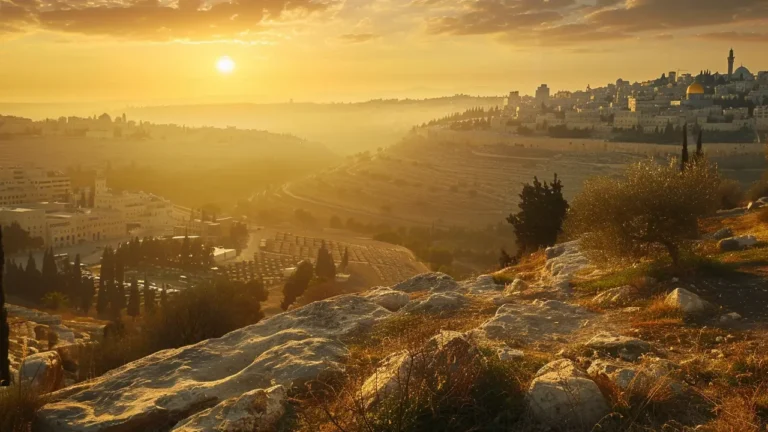
1. Zechariah 14:4 – The Prophecy and Its Traditional Reading
“On that day His feet will stand on the Mount of Olives, east of Jerusalem,
and the Mount of Olives will be split in two from east to west,
forming a very great valley, with half of the mountain moving north and half south.”
(Zechariah 14:4)
Traditional Christian eschatology reads this verse literally and futuristically. According to this view, at the end of days, Christ will physically descend upon the Mount of Olives, which will split in two to create a valley of refuge for His people. This interpretation aligns it with passages like Acts 1:11–12, which describe Jesus ascending from the same mountain and promising to return in the same manner.
While this perspective captures the eschatological grandeur of the text, it often overlooks the first-century historical setting in which prophetic imagery like Zechariah’s could also serve symbolic and immediate purposes tied to Israel’s own history.
2. A Historical Alternative: The Roman Road That Divided the Mount of Olives
In the groundbreaking work Secrets of Golgotha, scholar Ernest L. Martin proposed a stunning archaeological and historical reinterpretation: that the Mount of Olives split in two—literally—through the construction of a Roman military roadway during the Jewish–Roman War.
Evidence shows that Roman engineers cut a deep passage through the Mount of Olives, creating a “valley-like” division that matched Zechariah’s description. The path connected the Roman camps east of Jerusalem with the siege stronghold overlooking the city.
Although detailed excavation records are scarce today, historical topography supports the existence of such a road system during the Roman occupation. This adds empirical weight to the idea that the prophecy was physically fulfilled in the same generation that witnessed Jerusalem’s destruction (70 AD)—a time Jesus Himself foretold in Matthew 24.
In this reading, the Mount of Olives is splitting in half not as a future cataclysm but as a sign of divine transition during the fall of the Second Temple—an intersection between earthly warfare and heavenly judgment.
3. The Shekinah Glory: Theological and Symbolic Depth
Beyond geography, Martin and other scholars connect this event with the departure of the Shekinah Glory—the visible manifestation of God’s presence.
According to Jewish tradition, the Shekinah resided above the Holy of Holies in the Temple. But in prophetic vision (cf. Ezekiel 10–11), the Glory of the Lord departs from the Temple and stops on the Mount of Olives, symbolizing God's withdrawal of His protective presence from Jerusalem.
Martin argues this pattern re-emerged in 66 AD, when divine presence figuratively “rested” on the Mount for three and a half years—until the final Roman assault. During this same period, the Roman path was carved, physically “splitting” the Mount, paralleling the spiritual division of Israel as the old covenant gave way to the new.
Thus, the split in the mountain represents far more than geology:
it becomes a metaphor for God’s departure, the fracture between sacred and profane, the visible world mirroring an invisible reality.
This dual fulfillment—historical and symbolic—transforms Zechariah’s imagery from mere apocalyptic warning into a theological drama of exile and divine judgment.
4. The Exodus Parallel: God Making a Way of Escape
The symbolism of the Mount of Olives splitting recalls one of Scripture’s most defining deliverances:
“Then Moses stretched out his hand over the sea, and the Lord drove the sea back … and the Israelites went through on dry ground.” (Exodus 14:21–22)
Just as the Red Sea split to allow Israel’s escape from Egypt, the Mount of Olives split in two—creating a “very great valley” (Zechariah 14:4)—to provide a way of escape from Jerusalem during its siege in 70 AD.
Contemporary Jewish historians like Josephus mention groups of people fleeing Jerusalem as the Romans closed in. Under this lens, Zechariah’s prophecy can be seen as both a warning and a mercy: God opening a symbolic path of deliverance amid destruction.
This connection bridges Exodus typology with First-Century eschatology, implying that history repeated its redemptive pattern: judgment on oppressive systems, deliverance for the faithful remnant.
5. Reinforcing Evidence: Matthew 24:15–20
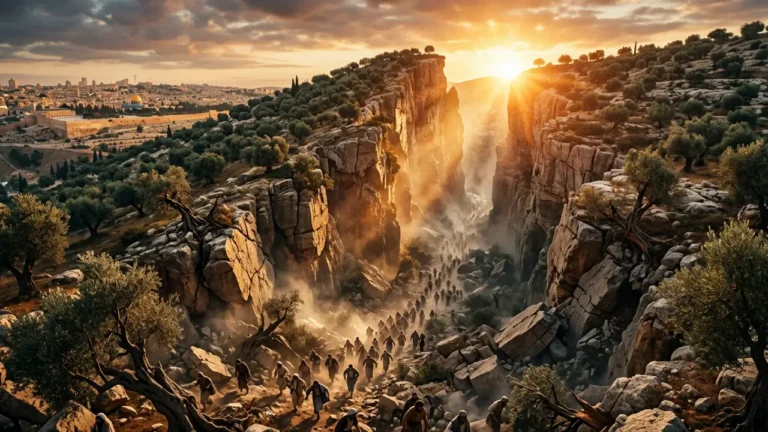
Jesus’ warning in Matthew 24:15–20—“Let those who are in Judea flee to the mountains”—is often interpreted through a futuristic “rapture” lens. Yet when read historically, it corresponds perfectly to the events of 70 AD.
Many early Christians, aware of this prophecy, reportedly fled Jerusalem before its final siege, escaping through the mountainous routes eastward toward Pella—routes that would have involved or skirted the very region of the Mount of Olives.
Thus, Zechariah 14:4 and Matthew 24 align thematically and geographically: both reference divine intervention and deliverance amid judgment. Together, they paint a consistent narrative of God providing a way of escape in times of crisis, through both literal and symbolic terrain.
6. Symbolism in the Book of Revelation
Later apocalyptic literature, especially the Book of Revelation, continues this motif of divine separation and transformation. The splitting mountain becomes a symbol of God’s decisive act, dividing what is holy from what is corrupt, redeeming the faithful while judging wicked systems (Revelation 16 and 18).
In this broader framework, the Mount of Olives split in two stands as the Old Covenant’s final rupture—the moment history and theology pivoted from Temple Judaism to the universal Church.
Understanding Zechariah’s prophecy this way enriches both historical realism and spiritual symbolism, demonstrating how biblical prophecy often works on multiple levels—literal, symbolic, and theological.
7. Reframing Eschatology: From Future Fear to Historical Fulfillment
The popular futurist expectation that the Mount of Olives will split in half during a yet‑to‑come apocalypse may overlook the historical, fulfilled dimension of the prophecy.
Recognizing a first‑century fulfillment does not diminish divine power—it highlights God’s faithfulness in history. The physical division of the mountain, paired with the symbolic withdrawal of the Shekinah and the Exodus parallels, shows a God who acts decisively in time to judge, deliver, and transform.
This preterist-centered understanding reframes eschatology as a completed act of redemption rather than only an awaited catastrophe. It harmonizes the motions of earth, empire, and spirit into a single redemptive narrative—where prophecy and history reach resolution.
8. Conclusion: A Renewed Perspective on Zechariah 14:4
When viewed through both the lens of archaeology and theology, the prophecy of Zechariah 14:4 unfolds as a multilayered message:
- Historically, evidence suggests the Mount of Olives split in two through Roman engineering during Jerusalem’s fall, creating a literal “valley.”
- Spiritually, the event mirrors the departure of the Shekinah and the splitting of Israel’s covenantal history.
- Symbolically, it echoes the Red Sea’s parting, offering God’s people a way through trial toward renewal.
Therefore, the phrase “the Mount of Olives is splitting in half” should not be read solely as an end‑times prediction but as a fulfilled sign of God’s past intervention, rich with theological meaning and historical depth.
By grounding Zechariah’s vision in its first‑century context, we rediscover a prophecy that speaks not only of cosmic upheaval but of divine continuity—a mountain divided once to reveal a path of escape, faith, and transformation.

Frequently Asked Questions: The Splitting of the Mount of Olives
What does Zechariah 14:4 actually say about the Mount of Olives?
Zechariah 14:4 describes a dramatic event where a divine figure's presence causes the Mount of Olives to split in two, from east to west, creating a large valley. One half of the mountain moves northward, and the other southward. The exact wording varies slightly between translations, but the core message remains consistent: a significant geological transformation of the Mount of Olives accompanies a divine arrival.
Is the splitting of the Mount of Olives a literal or symbolic event?
Interpretations vary. Some believe it's a literal, future event, while others, as presented in the referenced text, argue for a historical fulfillment during the First Jewish-Roman War (66-73 AD). This interpretation points to a Roman road constructed during that period which bisected the Mount of Olives as a literal fulfillment of the prophecy. The symbolic interpretation connects the splitting of the mountain to the parting of the Red Sea in Exodus, representing a division of kingdoms (the Roman conquest of Jerusalem mirroring the Israelites' liberation from Egypt).
When did the Mount of Olives split according to the text?
The text argues for a first-century fulfillment during the First Jewish-Roman War. It proposes that the construction of a Roman road through the Mount of Olives, creating a valley, is the literal fulfillment of Zechariah's prophecy. This interpretation is supported by the author's reference to a historical photograph of the road.
What is the significance of the Shekinah's presence on the Mount of Olives?
The author connects the splitting of the Mount of Olives to the Shekinah (God's presence) leaving the Temple in 66 AD and resting on the Mount of Olives for three and a half years before ascending to heaven. This period of the Shekinah's presence is presented as the fulfillment of the prophecy.
How does this interpretation relate to Matthew 24:15-20?
The author links this historical interpretation to Matthew 24:15-20, suggesting that the "flight" mentioned in this passage refers to the actual escape from Jerusalem during the siege of 70 AD, not a future rapture.
Does this interpretation contradict the idea of a future rapture?
Yes, this interpretation directly contradicts the common eschatological interpretation of Zechariah 14:4 which connects the splitting of the Mount of Olives to a future rapture event. The author argues that the prophecy was fulfilled historically in the first century.
What is the evidence presented to support this first-century interpretation?
The main evidence includes the existence of a Roman road bisecting the Mount of Olives during the First Jewish-Roman War, interpreted as the literal fulfillment of the prophecy; the symbolic connection to the parting of the Red Sea; and the interpretation of the Shekinah's presence on the Mount of Olives during that period. The author also utilizes interpretations of Revelation to support the Exodus symbolism surrounding the Jewish War.
Are there other interpretations of Zechariah 14:4?
Yes, many interpretations exist, ranging from a literal, future event to various symbolic readings. The most common interpretation associates the splitting of the Mount of Olives with a future apocalyptic event connected to the second coming of Christ. This text presents only one alternative viewpoint.