
Unraveling the Mystery: What Animal is the Shaphan?
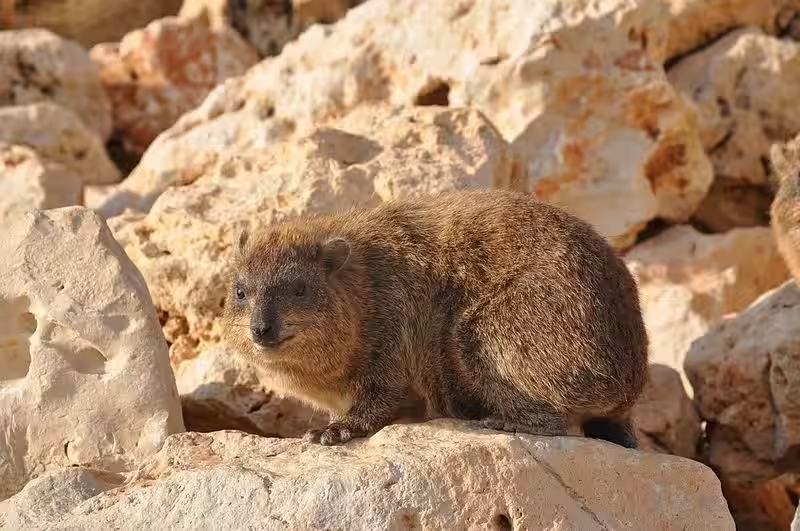
The shaphan, a creature mentioned several times in the Bible, has long presented a challenge to translators and Bible scholars. Its description often seems contradictory, leading to centuries of debate over its true identity. This article will explore the historical interpretations and the current scientific consensus surrounding this enigmatic animal.
- The Biblical Descriptions and Early Misinterpretations
- The Hyrax: A Likely Candidate
- Dismissing Alternative Explanations
- The Shaphan in History and Culture
-
Frequently Asked Questions about the Shaphan
- What is a Shaphan?
- Why was the identification of the Shaphan so controversial?
- What are the key arguments for identifying the Shaphan as a Hyrax?
- Were there any alternative theories about the shaphan's identity?
- What is the significance of accurately identifying the Shaphan?
- How does the Shaphan relate to the story of Shaphan the scribe?
The Biblical Descriptions and Early Misinterpretations
The shaphan is mentioned in four books of the Bible: Leviticus 11:5, Deuteronomy 14:7, Psalm 104:18, and Proverbs 30:26. The descriptions are consistent, portraying an animal that "chews the cud" but lacks cloven hooves – a seemingly impossible combination in the animal kingdom. This apparent paradox has led to a multitude of interpretations throughout history.
Early translations, such as the King James Version, often rendered the Hebrew word "shaphan" as "coney," which at the time referred to the European rabbit. However, this interpretation is problematic: wild rabbits weren't indigenous to the Holy Land during biblical times. This highlights a key issue – the limitations of relying on translations that lack a deep understanding of the specific fauna of the region.
The Hyrax: A Likely Candidate
The most widely accepted scientific identification of the shaphan today is the rock hyrax (Procavia capensis). This small, furry mammal is abundant throughout Israel, inhabiting rocky areas as described in Psalm 104. Its habitat aligns perfectly with the biblical descriptions, and its behavior, while not technically “chewing the cud” in the ruminant sense, exhibits a rhythmic jaw movement during its constant sniffing that could be misinterpreted as such by ancient observers.
The hyrax's close relative, the tree hyrax, also shares a similar appearance and behavior, making it another possible candidate for the shaphan. The crucial point is that both species are indigenous to Israel and their physical characteristics and habits would have been well-known to the people of that time and place. Therefore, the shaphan, in all probability, is one of these hyrax species.
Why the Confusion?
The confusion surrounding the shaphan's identity stems from a combination of factors: a lack of understanding of the nuances of ancient Hebrew, the limitations of early translations and the relative obscurity of the hyrax to those outside its native range. The biblical description, written for an audience familiar with the animal's behavior, may have used terminology that doesn't translate directly to modern scientific classifications.
Dismissing Alternative Explanations
Various other animals have been proposed as the shaphan over the years, including extinct ruminants. However, these claims are often not substantiated by sufficient paleontological evidence. The fossil record of the region is remarkably complete, and the absence of any extinct animal fitting the description of the shaphan makes these alternative theories highly unlikely.
The process of elimination is crucial in this debate. Rodents are excluded due to their biblical classification as "creeping things." Similarly, hares and pikas are ruled out due to inconsistencies in their habitats, behaviour, or presence in the region during the relevant time period. Even the hedgehog, a distinct animal that is mentioned separately in the biblical text, is excluded from consideration.
The Importance of Context
Understanding the shaphan requires a contextual approach. We must consider the geographical and ecological context of ancient Israel. The biblical texts should be interpreted within their historical and cultural setting, not through a modern lens that might favor animals not present in the environment described.
The Shaphan in History and Culture
Beyond its biblical significance, the shaphan holds a place in the historical narrative of ancient Israel. Shaphan, meaning "Rock Hyrax," was the name of a prominent scribe during the reign of King Josiah. The Book of Kings and Chronicles recount how Shaphan, during the repair of the Jerusalem Temple, played a crucial role in the rediscovery of the Book of the Law. This historic event triggered significant religious reforms within the kingdom.
Shaphan's family, including his son Ahikam and grandson Gedaliah, continued to hold positions of power and influence. Ahikam's protection of Jeremiah, the prophet, showcases the family's standing. Gedaliah's subsequent appointment as governor of Judah further underlines the family's importance during a pivotal, tumultuous period in Israelite history.
This connection between the animal and the human "Shaphan" highlights how deeply embedded this small creature was within the cultural fabric of the ancient Judean society. Its presence in biblical texts, both figuratively and literally, speaks to its significance in the religious and political landscape of the ancient world.
The identification of the shaphan as the hyrax offers a compelling solution to a centuries-old puzzle. To understand the biblical descriptions accurately, a thorough comprehension of the ancient Israelite environment, its fauna, and the historical context is paramount. The ongoing debate highlights the importance of considering the linguistic, cultural, and ecological factors when interpreting ancient texts, leading to a more nuanced and accurate understanding of the past. The story of the shaphan serves as a case study in the need for responsible and contextually aware translation and interpretation.
Frequently Asked Questions about the Shaphan
What is a Shaphan?
The shaphan is an animal mentioned several times in the Hebrew Bible (specifically in Leviticus 11:5; Deuteronomy 14:7; Psalm 104:18; Proverbs 30:26). For centuries, its identity was debated due to conflicting descriptions and inaccurate translations. While older translations often identified it as a coney (rabbit) or badger, modern scholarship overwhelmingly identifies the shaphan as the rock hyrax ( Procavia capensis). This small, furry mammal is common to rocky areas of Israel and the surrounding region.
Why was the identification of the Shaphan so controversial?
The biblical description of the shaphan presents a seeming paradox: it "chews the cud" but lacks cloven hooves—a characteristic that doesn't fit any known animal. This led to various interpretations and translations, many of which were based on a lack of knowledge about the specific fauna of ancient Israel. The earlier misidentifications as a rabbit or badger stemmed from applying familiar European animals to a Middle Eastern context, ignoring the actual wildlife of the region.
What are the key arguments for identifying the Shaphan as a Hyrax?
Several lines of evidence support the hyrax identification:
- Geographical Distribution: Hyraxes are abundant in the rocky regions of Israel, matching the biblical descriptions of the shaphan's habitat.
- Behavioral Mimicry: The hyrax's constant rhythmic movements of its mouth resemble chewing, potentially explaining the biblical mention of "chewing the cud."
- Etymology: The Arabic word for Hyrax, "taphan," bears a close etymological resemblance to the Hebrew "shaphan."
- Fossil Record: The fossil record of the region supports the presence of hyraxes during biblical times.
- Absence of Alternatives: Extensive research fails to identify any other animal that fits the biblical description and is native to the region during the relevant period.
Were there any alternative theories about the shaphan's identity?
Yes, some scholars, particularly creationists, have proposed alternative theories, such as suggesting an extinct species of ruminant that lacked cloven hooves. However, these theories lack significant supporting evidence from the fossil record or other reliable sources. The burden of proof rests on those proposing such alternative candidates to provide substantial, verifiable evidence.
What is the significance of accurately identifying the Shaphan?
Accurately identifying the shaphan highlights the importance of careful and contextually aware biblical translation. Misinterpretations based on cultural assumptions or outdated knowledge can lead to inaccurate understandings of the text. Understanding the shaphan within its proper geographical and ecological context enriches our understanding of the biblical text and the ancient world it describes.
How does the Shaphan relate to the story of Shaphan the scribe?
The biblical Shaphan, a prominent scribe during the reign of King Josiah, is unrelated to the animal shaphan. The name Shaphan is a common Hebrew name, and their shared name is simply a coincidence. Shaphan the scribe plays a significant role in the story of the discovery of the Book of the Law in the Temple, which initiated significant religious reform under King Josiah.