
Understanding Passover Lambs: A Journey Through History and Symbolism
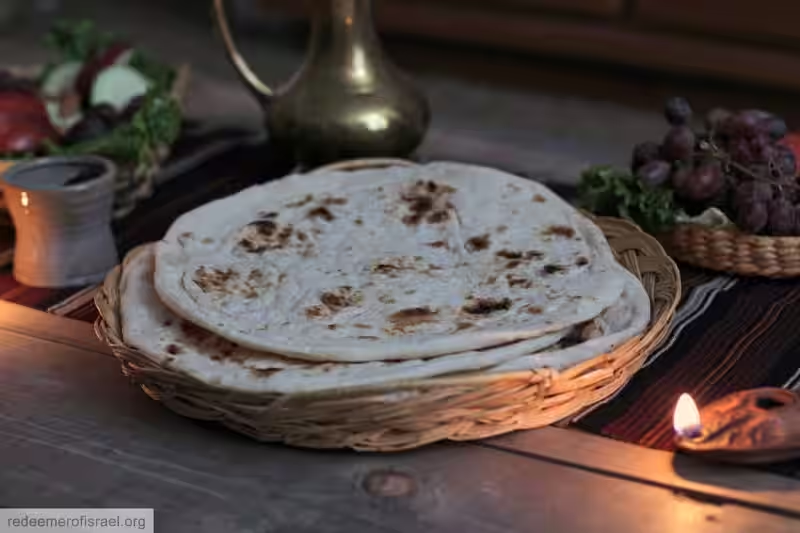
The Passover Seder, a vibrant celebration of freedom and redemption, is deeply intertwined with the historical practice of sacrificing Passover lambs. But what exactly were these lambs, and what significance do they hold today? Understanding their role is key to appreciating the richness of Passover traditions.
- The Passover Lamb in Ancient Israel
- From Temple Sacrifice to Modern Observance
- Passover Lambs and Their Significance Today
-
Frequently Asked Questions about Passover Lambs
- What was the Passover lamb?
- When was the Passover lamb sacrificed?
- Who sacrificed the Passover lamb?
- What happened to the Passover lamb after it was sacrificed?
- What was the significance of the Passover lamb?
- Why is the Passover lamb sacrifice no longer practiced by most Rabbinic Jews?
- Who still practices the Passover lamb sacrifice?
- What about modern attempts to revive the Passover lamb sacrifice?
- What is the significance of the Passover lamb in Christianity?
- What is the significance of the shank bone in modern Passover Seders?
The Passover Lamb in Ancient Israel
The Passover sacrifice (Qorban Pesaḥ), meticulously detailed in Exodus 12, was the centerpiece of the ancient Passover observance. This wasn't simply a matter of slaughtering any old sheep; the Torah provided precise instructions. Only a male lamb, one year old and without blemish, could be used. This emphasis on perfection symbolized the purity and holiness required for the offering.
The ritual involved careful preparation and execution. The lamb was slaughtered on the eve of Passover, and its blood was meticulously applied to the doorposts of Israelite homes. This act served as a powerful visual marker, a sign to the angel of death to "pass over" those dwellings, sparing their firstborn from the tenth plague.
The timing was crucial, directly linked to the impending exodus from Egypt. The Passover lamb wasn't just a sacrifice; it was a symbol of imminent freedom, a tangible representation of God's intervention and the Israelites' deliverance from slavery. The roasted lamb then became the centerpiece of the celebratory meal, a powerful reminder of their liberation.
From Temple Sacrifice to Modern Observance
While the ritual sacrifice of Passover lambs was central to the Passover observance during the periods of the First and Second Temples in Jerusalem, the destruction of the Second Temple in 70 CE brought an end to this practice for most Rabbinic Jews. Rabbinic interpretations, particularly those from Rashi, suggest that the sacrifice in the wilderness was only performed once. The annual sacrifice resumed afterward, continuing until the destruction of the Second Temple.
However, the memory of the Passover lambs persists. The Seder plate today includes a roasted shank bone, a symbolic representation of the Passover lamb, reminding participants of the historical sacrifice and its profound significance. This substitution highlights the enduring importance of the Passover lamb's symbolic meaning, even without the actual sacrifice.
The detailed regulations regarding the sacrifice, including the precise methods of slaughter and the handling of the blood, highlight the reverence accorded to the ritual and its deep theological significance. The communal aspect is also noteworthy; the sacrifice wasn't just a family affair but involved a larger community, fostering unity and shared experience.
The Role of the Priests and the Community
The Temple in Jerusalem played a central role in the Passover sacrifice. The priests were responsible for specific aspects of the ritual, such as handling the blood and offering it on the altar. This division of labor reinforced the sacred nature of the event and underscored the importance of properly executing God’s commands.
The community's participation was equally vital. A quorum (kahal adat yisrael), traditionally at least thirty people, was required for the communal aspect of the offering. This communal participation strengthened the bond between the Israelites and their God and fostered a collective sense of identity and shared purpose. The shared meal that followed the sacrifice further solidified this communal aspect, transforming the event into a powerful celebration of both individual and collective deliverance.
Passover Lambs and Their Significance Today
While the actual sacrifice of Passover lambs is no longer practiced by most Jewish communities, its legacy remains profoundly influential. The symbolic representation of the lamb on the Seder plate continues to serve as a powerful reminder of the Israelites' liberation from slavery and God's protective hand during the Exodus.
The enduring significance of the Passover lamb transcends Judaism, playing a significant role in Christian theology. Christians see Jesus Christ as the ultimate Passover lamb, whose sacrifice atoned for the sins of humanity, offering salvation and redemption. This interpretation links the historical Passover sacrifice to a deeper spiritual meaning, highlighting the enduring power of sacrifice and redemption across religious traditions. The imagery of Jesus as the "Lamb of God" powerfully resonates with the symbolic weight of the Passover lamb in Jewish tradition.
Modern Revivals and Religious Tensions
Attempts to revive the Passover lamb sacrifice on the Temple Mount have been made by various groups, frequently associated with movements advocating for a Third Temple. However, these attempts have consistently faced legal and security obstacles, resulting in arrests and court rejections. Such actions also spark considerable religious tensions, highlighting the sensitive political and religious context surrounding the Temple Mount.
These actions, often linked to broader political agendas, complicate the understanding of the Passover lamb's significance. While the desire to reconnect with ancient traditions is understandable, the context of these revived practices highlights the complex interplay between religious observance, political aspirations, and security concerns in a volatile region.
The Enduring Legacy of the Passover Lambs
The Passover lamb, whether viewed through a Jewish or Christian lens, continues to hold immense symbolic weight. It represents freedom, redemption, sacrifice, and the enduring power of faith. Whether remembered through the symbolic shank bone on the Seder plate or viewed as a prefiguration of Christ's sacrifice, the Passover lambs remain a powerful symbol of hope and liberation. Its story resonates across millennia, bridging religious traditions and reminding us of the enduring power of faith and the pursuit of freedom. The Passover lamb reminds us of the enduring power of faith and the constant pursuit of freedom, a message as relevant today as it was thousands of years ago.
Frequently Asked Questions about Passover Lambs
What was the Passover lamb?
The Passover lamb (or goat) was a sacrificial animal central to the ancient Jewish Passover observance. As mandated in the Torah (Exodus 12), a flawless male lamb, one year old, was ritually slaughtered on Passover eve. Its blood, applied to the doorposts of Israelite homes, symbolized God's "passing over" those homes during the Exodus from Egypt, sparing their firstborn from death.
When was the Passover lamb sacrificed?
The Passover lamb was sacrificed annually on the eve of Passover, the 14th of Nisan, in the Jerusalem Temple. This practice continued during the periods of the First and Second Temples. There was also a provision for a "second Passover" a month later for those who were unable to participate at the prescribed time due to ritual impurity or distance from the Temple.
Who sacrificed the Passover lamb?
The lamb was slaughtered by a layman in the Temple courtyard. Priests then handled the blood, meticulously collecting and sprinkling it on the altar according to specific ritual procedures.
What happened to the Passover lamb after it was sacrificed?
After the sacrifice, the lamb was skinned and prepared (with specific exemptions from Sabbath restrictions). It was then roasted whole (with strict rules against breaking any bones) and consumed as a communal meal by the family that offered it. This meal included blessings and the recounting of the Exodus story.
What was the significance of the Passover lamb?
The Passover lamb’s significance is multifaceted. It symbolized God's protection of the Israelites during the Exodus and served as a powerful reminder of their liberation from slavery in Egypt. The sacrifice was both a family event and a communal act, highlighting the Israelites' unity and shared history. For Christians, the Passover lamb is seen as a prefiguration of Jesus Christ, the "Lamb of God," whose sacrifice is believed to have redeemed humanity.
Why is the Passover lamb sacrifice no longer practiced by most Rabbinic Jews?
The destruction of the Second Temple in 70 CE ended the Temple-based sacrificial system, making the ritual slaughter of the Passover lamb impossible. The sacrifice is no longer a part of mainstream Rabbinic Judaism.
Who still practices the Passover lamb sacrifice?
While most Rabbinic Jews no longer practice the Passover lamb sacrifice, it continues to be practiced by some groups, including Beta Israel (Ethiopian Jews), Karaites, and Samaritans.
What about modern attempts to revive the Passover lamb sacrifice?
Modern attempts to revive the Passover lamb sacrifice on the Temple Mount have been met with legal and security challenges, leading to arrests and court rejections. These attempts are often associated with groups advocating for the construction of a Third Temple and have also created religious tensions.
What is the significance of the Passover lamb in Christianity?
In Christianity, the Passover lamb is understood symbolically as being fulfilled by the death of Jesus Christ, who is referred to as the "Lamb of God." Christians see his sacrifice as a means of redemption and salvation for humanity.
What is the significance of the shank bone in modern Passover Seders?
In modern Passover Seders, a roasted shank bone is often included as a symbolic representation of the Passover lamb, serving as a tangible reminder of the historical sacrifice and its meaning within the context of freedom and redemption. It's a visual element that helps connect modern celebrants to the ancient ritual.