
Growing MSG Crystals: A Sparkling Science Experiment
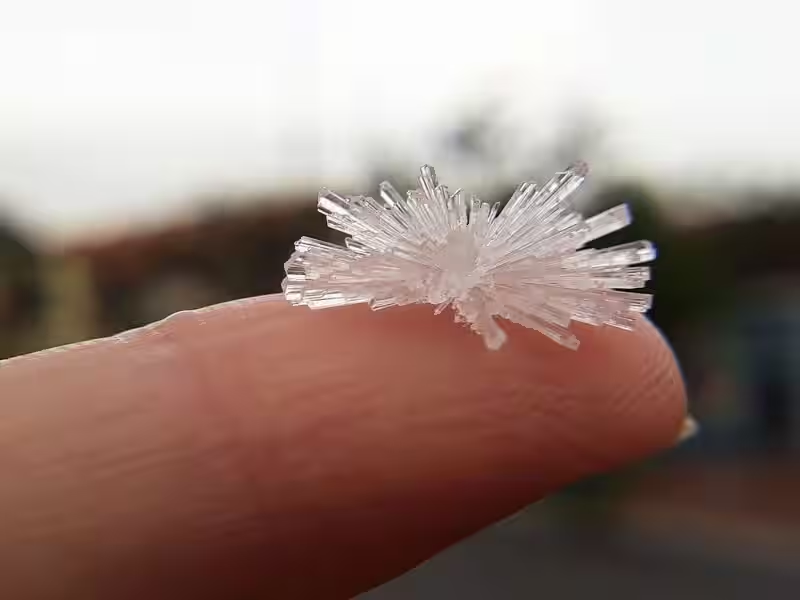
This article details a fascinating and surprisingly straightforward method for growing your own MSG crystals at home. While not widely documented online, this process offers a unique opportunity to explore the world of crystallography using a common kitchen ingredient: monosodium glutamate, or MSG. Let's delve into the process and discover the beauty of MSG crystal formation.
- Preparing the Supersaturated MSG Solution
- Growing Your MSG Crystal Seeds
- From Seed to Crystal: Two Growth Methods
- Maintaining Optimal Growth Conditions
- Harvesting and Storing Your MSG Crystals
- Frequently Asked Questions about your MSG Crystal
-
Frequently Asked Questions about Growing MSG Crystals
- Can I really grow MSG crystals at home?
- What materials do I need?
- How do I make a supersaturated MSG solution?
- How do I create seed crystals?
- How do I grow larger crystals?
- What if the solution is evaporating too quickly?
- How long does it take for the crystals to grow?
- What do I do once the crystals have grown?
- How should I store the MSG crystals?
- Are the MSG crystals edible?
- Can I use these crystals for jewelry?
- Why is this process not widely documented online?
- Is this experiment difficult?
Preparing the Supersaturated MSG Solution
The foundation of successful crystal growth lies in creating a supersaturated solution. This means dissolving more MSG in water than it can normally hold at a given temperature.
We achieve this by using equal parts hot water and MSG. For example, you'll use 500 grams of MSG powder and 500 milliliters of very hot (but not boiling) water. Thorough stirring is essential until the solution becomes completely clear. This step ensures all the MSG dissolves, maximizing the potential for crystal growth.
Once the solution cools to room temperature, it becomes supersaturated. This means it holds more dissolved MSG than it can stably maintain, setting the stage for crystallization. This is the perfect environment for your MSG crystals to form.
Growing Your MSG Crystal Seeds
Now, we divide our supersaturated solution. A small portion (approximately 10% of the total) is poured into a shallow dish. This will serve as our seed crystal incubator.
This small dish will sit undisturbed for several days. The rate of seed crystal formation depends on various environmental factors, including temperature and humidity. Lower humidity can lead to rapid evaporation and crust formation on the surface of the solution. If this happens, consider creating a more humid environment by placing the dish in a bathroom, near houseplants, or covering it loosely with plastic wrap to slowing evaporation.
Patience is key here; seed crystals typically take several days to appear. If you're impatient, you can add a few grains of MSG to encourage faster seed formation.
From Seed to Crystal: Two Growth Methods
Once tiny crystals begin to emerge in the shallow dish, carefully select a well-formed seed crystal. Attach this crystal to a thin, strong string—nylon fishing line works exceptionally well.
Now, suspend this string and seed crystal into the larger portion of the supersaturated MSG solution, ensuring the crystal hangs freely in the solution, preventing it from touching the sides or bottom. This technique promotes even growth, preventing the formation of oddly shaped or clumped crystals.
Alternatively, if you prefer, you can let crystals grow directly in the shallow dish. This frequently results in clusters of intergrown crystals which can be just as beautiful as single, suspended ones. The choice is yours!
Maintaining Optimal Growth Conditions
Maintaining a stable environment is crucial for healthy crystal growth. Avoid drastic temperature changes or excessive evaporation. Covering the container with plastic wrap helps minimize evaporation, preventing a crust from forming on the top.
As the crystals grow, you may notice the solution becoming less saturated. If this happens, you’ll need to transfer your suspended crystal to a new container with fresh, supersaturated MSG solution to continue its growth. This careful attention to the solution's saturation is important for maintaining optimal growth conditions. Visual documentation (pictures or videos) will help you track the growth progress over time. Expect significant size increases from day two to a week and beyond.
Harvesting and Storing Your MSG Crystals
Once your MSG crystals reach your desired size, carefully remove them from the solution. Drying is critical— gently pat them dry with a soft cloth. Avoid washing them, as this can dissolve the edges and create unwanted imperfections. Allowing them to air dry too slowly might lead to the formation of small, white, powdery imperfections on their surfaces.
Store your MSG crystals in a sealed zip-lock bag placed inside an air-tight container along with some loose MSG powder. This helps maintain a stable, slightly humid environment that prevents dehydration and cracking of the crystals. A light coating of clear nail polish can provide extra protection against dehydration, especially in dry climates.
Frequently Asked Questions about your MSG Crystal
Are MSG crystals edible? Yes, they are technically edible since they are pure MSG. However, we do not recommend consuming them.
Can I use these crystals for jewelry making? No, MSG crystals are extremely brittle and fragile, unsuitable for jewelry or similar applications.
How long does the crystal growing process take? The time will vary depending on environmental conditions and the size of the crystals you hope to grow.
This project is a fun and engaging science experiment, providing a unique opportunity to witness the fascinating process of crystal formation firsthand. The beauty of the resulting MSG crystal structure is a rewarding outcome of patience and careful attention. Remember, the key to success lies in maintaining a stable, supersaturated solution and providing a suitable environment for crystal growth. Enjoy your experiment!
Frequently Asked Questions about Growing MSG Crystals
Here are some frequently asked questions about growing monosodium glutamate (MSG) crystals at home, based on a recently published method:
Can I really grow MSG crystals at home?
Yes! This method provides a straightforward technique for growing MSG crystals, even for those without extensive crystal-growing experience. It involves creating a supersaturated solution and using either a seed crystal or direct growth in a dish.
What materials do I need?
You'll primarily need monosodium glutamate (MSG), hot water, a shallow dish, a container for the larger solution, nylon fishing line (or similar thin, strong string), and optionally, plastic wrap for covering containers and a zip-lock bag for storage.
How do I make a supersaturated MSG solution?
Dissolve equal parts MSG and hot water (e.g., 500g MSG in 500ml water). Stir until completely clear. Allow the solution to cool; this creates a supersaturated solution which is key for crystal growth.
How do I create seed crystals?
Pour a small portion of the supersaturated solution into a shallow dish. Leave it undisturbed for several days. Seed crystals will form, usually taking several days depending on environmental conditions. If seed crystals are slow to form, adding a few MSG grains can help initiate the process.
How do I grow larger crystals?
Once seed crystals appear, select a well-formed one and attach it to a nylon fishing line. Suspend this seed crystal in the larger portion of the supersaturated solution. This allows for better crystal growth and prevents clumping.
What if the solution is evaporating too quickly?
If the environment is too dry, place the dish (for seed crystals) or container (for larger crystals) in a more humid location, like a bathroom or near houseplants, to help prevent rapid evaporation and crust formation. Covering containers with plastic wrap also helps maintain humidity.
How long does it take for the crystals to grow?
Crystal growth takes time. You'll see noticeable size increases after a few days, with significant growth over a week to a month.
What do I do once the crystals have grown?
Carefully remove the crystals from the solution and allow them to dry completely in the air. Avoid washing them, as this can dissolve the edges. Carefully drying is crucial to prevent white specks from forming.
How should I store the MSG crystals?
Store your MSG crystals in a sealed zip-lock bag inside an airtight container with some MSG powder to maintain a stable, non-dehydrating environment. In very dry climates, you can add a coat of clear nail polish for extra protection.
Are the MSG crystals edible?
While technically edible, consuming these crystals is not recommended. This project is primarily for educational and visual enjoyment.
Can I use these crystals for jewelry?
No, these crystals are quite fragile and not suited for jewelry making.
Why is this process not widely documented online?
The method described here is a relatively unique approach to growing MSG crystals, not commonly shared publicly.
Is this experiment difficult?
No, this process is described as straightforward and achievable even for beginners, offering a fun and educational science experiment with visually appealing results.