
Did Moses Fast for 81 Days? Unpacking the Narrative of Moses Fasted
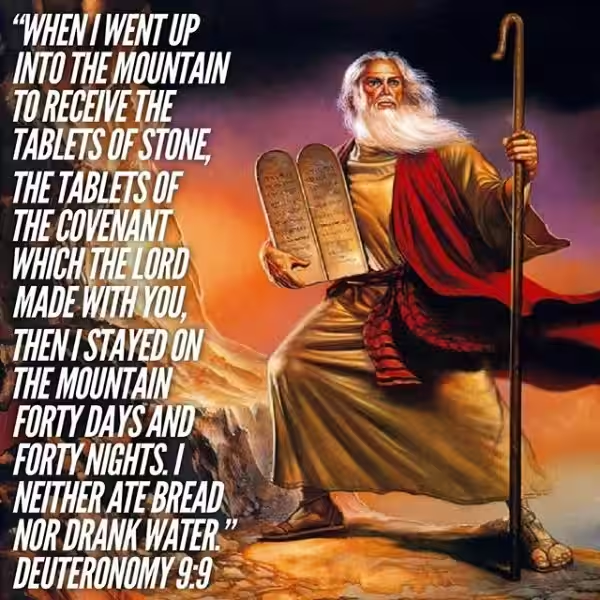
The biblical account of Moses' time on Mount Sinai is filled with dramatic encounters, divine revelations, and acts of profound spiritual devotion. One aspect that often sparks curiosity and discussion is the duration of Moses' fasts. While some interpret the text to suggest a continuous 81-day fast, a closer examination reveals a more nuanced understanding of these pivotal moments.
The 40-Day Fasts on Mount Sinai
The book of Exodus vividly describes Moses' ascent to Mount Sinai, where he spent 40 days and 40 nights in communion with God. Exodus 34:28 explicitly states that during this time, Moses neither ate nor drank. This wasn't a simple period of abstinence; it was a complete immersion in the divine presence, an act of profound dedication to receiving God's law. This intense period of fasting underscores the gravity and sacred nature of the event. It wasn’t just about physical deprivation, but a total surrender to God's will. The lack of food and water served as a powerful symbol of Moses' complete reliance on God’s strength and guidance.
This period wasn't a singular event, however. The text actually details several instances of Moses fasting. Moses fasted not just once, but on multiple occasions, each with a unique context and purpose. Each fast was a testament to his unwavering faith and commitment to the Israelite people. The sheer length of these fasts—40 days and nights—is itself remarkable, highlighting the intense spiritual nature of his encounters with the divine.
The Significance of the Number 40
The repeated use of the number 40 in biblical narratives often signifies a period of testing, trial, or preparation. Think of the 40 years the Israelites wandered in the desert, or the 40 days and nights of Jesus' temptation in the wilderness. In Moses' case, the 40-day fasts symbolize the arduous and transformative journey he undertook to receive God's law and to intercede on behalf of his people. These extended periods of fasting naturally pushed him to the limits of his physical and mental endurance.
The physical act of fasting, while demanding, allowed Moses to focus entirely on his spiritual encounter. By abstaining from food and drink, he cleared space for profound spiritual interaction with God. This is not to minimize the physical strain, but to highlight that the physical deprivation was a deliberate choice intended to intensify the spiritual experience.
Separating the Fasts: A Critical Look at the Narrative
It’s crucial to understand that the biblical narrative doesn't describe one continuous 81-day fast. Instead, the texts depict distinct periods of fasting, each triggered by specific circumstances. Moses' communion with God on Mount Sinai, described in Exodus, involved a 40-day fast. After descending the mountain, he discovered the Israelites’ idolatry, triggering a second 40-day fast during which he interceded for his people. These were separate events, separated by his descent from the mountain and the intervening interactions with the Israelites.
The idea of an 81-day fast is a misinterpretation born from combining these separate instances. While each fast was undoubtedly arduous, they did not happen consecutively. The intervening time between the fasts involved actions incompatible with continuous fasting, such as interacting with Aaron and the elders, and receiving new tablets. Moses' actions during these intervals imply that he consumed food and drink to maintain the strength needed to continue his mission.
The Importance of Accurate Interpretation
Understanding the specific context is crucial for accurate biblical interpretation. While the overall narrative emphasizes the importance of Moses' devotion and the transformative nature of his encounters with God, it's equally important to avoid misinterpretations that distort the historical and theological significance of the events. The biblical text is rich in symbolism, but it also requires careful attention to detail to ensure a faithful reading.
The 40-day fasts described in Exodus are powerful symbols of Moses' complete dedication to God's mission. They represent a period of intense spiritual engagement, highlighting the significance of his role in establishing the covenant between God and Israel. However, it's essential to remember that these were distinct events, not a single prolonged period of fasting.
The Lasting Impact of Moses' Fasting
Regardless of the length of each individual fast, the impact of Moses' fasting remains profound. His dedication to God, his willingness to endure hardship for the sake of his people, and his unwavering faith serve as a powerful example for believers. The narrative of his encounters on Mount Sinai, including the instances of fasting, continues to inspire and challenge us to deepen our own spiritual lives and to strive for a closer relationship with God. Moses’ fasting, therefore, serves as a powerful reminder of the importance of spiritual discipline, complete dedication to God's will, and the transformative power of seeking God's face. The story teaches us about the importance of listening to God, even in moments of extreme hardship and difficulty. The spiritual insights gained through these periods of fasting had lasting consequences for the Israelites and remain relevant for believers today.
Frequently Asked Questions: Moses' Fasts
How long did Moses fast on Mount Sinai?
Exodus 34:28 clearly states that Moses fasted for forty days and forty nights on Mount Sinai. This fast was undertaken during a period of intense communion with God, culminating in the receiving of the Ten Commandments. It’s important to note that other passages describe additional periods of fasting by Moses, but this specific fast is described in detail in Exodus 34.
Did Moses fast continuously for 80 or more days?
No. While Moses undertook multiple forty-day fasts, the biblical text does not support the claim of a continuous fast exceeding forty days. Specific instances of fasting are described, each occurring under different circumstances and separated by periods of activity, indicating that he ate and drank between these fasting periods. The idea of an 80+ day fast is a misinterpretation of separate fasting events.
What was the purpose of Moses' fast on Mount Sinai?
Moses' forty-day fast on Mount Sinai served several crucial purposes. Primarily, it demonstrated his complete dedication and spiritual preparation for receiving God's law directly. The prolonged abstinence from food and water emphasized the gravity and sacredness of the event and the covenant being established between God and Israel. By abstaining from physical needs, Moses focused solely on God's presence and the divine revelation he was about to receive. This intense spiritual preparation allowed for an uninterrupted communion with God, ultimately leading to the inscription of the Ten Commandments.
What happened after Moses' fast?
Upon descending from Mount Sinai after his forty-day fast, Moses' face radiated an extraordinary light, a visible manifestation of his divine encounter. This radiant face both awed and frightened the Israelites. To mitigate their fear, Moses, with the help of Aaron, explained the divine commands he had received. The radiant face and its subsequent covering became a visual representation of the distinction between the divine and human realms, highlighting the importance of mediation in transmitting sacred knowledge. The event cemented the Ten Commandments as the foundation of the covenant between God and Israel, establishing the law as the guide for their life and worship.
Why is the number forty significant in the context of Moses' fasts?
The number forty frequently appears in the Bible, often signifying a period of testing, preparation, or judgment. In the case of Moses' fast, the forty-day period highlights the intensity and profound nature of his encounter with God. It represents a complete and transformative experience, setting the stage for the establishment of the covenant and the giving of the law. This prolonged period underscores the significant impact of the event on both Moses and the Israelites.
Are there other accounts of Moses fasting in the Bible?
While Exodus 34:28-35 details one significant fast, other passages in the Bible mention Moses fasting during other crucial moments. These instances often involve intercession for the Israelites or periods of intense prayer and communion with God. The duration and circumstances vary, but each demonstrates Moses' profound devotion and commitment to his people and his relationship with God. The details of these other fasts, however, are not as extensively described as the fast on Mount Sinai.