
Joppa on Map: Uncovering the Ancient Port's Rich History
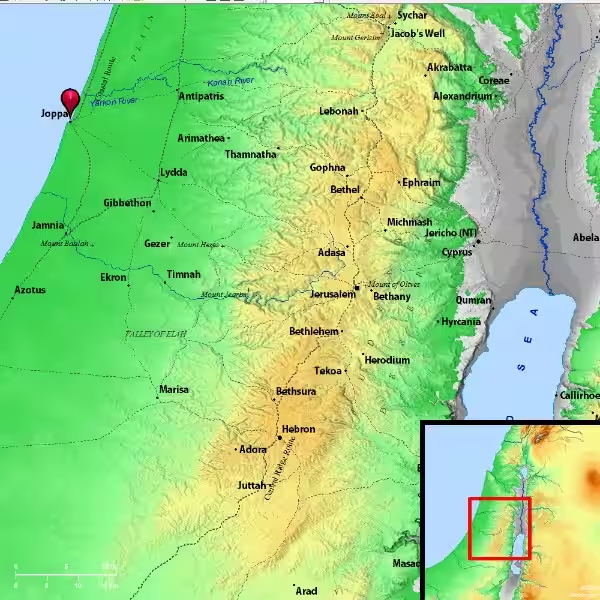
Finding Joppa on a map today reveals the modern city of Jaffa, Israel. But this coastal gem boasts a history far deeper than its current existence, stretching back millennia and weaving a vibrant tapestry of biblical events, conquests, and flourishing trade. Understanding Joppa's location and its significance requires looking beyond the modern city limits and exploring the layers of history embedded within its very stones.
- Joppa's Biblical Significance: A Gateway to Faith and Trade
- Joppa in the New Testament: A Witness to Early Christianity
- Beyond the Bible: Joppa's Extensive Pre-Biblical and Post-Biblical History
- Finding Joppa on a Modern Map: Jaffa Today
-
Frequently Asked Questions: Joppa on the Map
- Where is Joppa located?
- What is Joppa's historical significance?
- How can I find Joppa on a map?
- What biblical events occurred in Joppa?
- Is it possible to pinpoint the exact locations of biblical sites in modern Jaffa?
- What role did Joppa play in trade and commerce?
- What was Joppa's geographic character?
Joppa's Biblical Significance: A Gateway to Faith and Trade
Joppa's strategic location on the Mediterranean coast made it a pivotal port in ancient times. The Bible frequently mentions Joppa, highlighting its role in both commerce and the unfolding of pivotal religious events.
The Old Testament describes Joppa as a vital trading hub, particularly for the transportation of cedar wood from Lebanon to Jerusalem, the material used for constructing Solomon's Temple. (2 Chronicles 2:16; Ezra 3:7). Imagine the bustling activity, the constant flow of goods and people, as ships laden with this precious resource arrived at the bustling port. This activity underscores Joppa's economic importance even in its ancient form.
Joppa also features prominently in the story of the prophet Jonah, who famously attempted to flee God's command by sailing from Joppa to Tarshish (Jonah 1:3). This act of defiance, starting from the very shores of Joppa, highlights the city's maritime significance even in the earliest biblical accounts. The story itself gives us a clear understanding of Joppa's coastal nature and its ability to connect distant lands.
Joppa in the New Testament: A Witness to Early Christianity
The New Testament further enriches Joppa's historical narrative, placing it firmly within the context of the early Christian church.
One of the most significant events associated with Joppa is the resurrection of Tabitha (Dorcas) by the Apostle Peter (Acts 9:36-43). Tabitha, known for her charitable acts, died and was mourned by the community. Peter's miraculous resurrection, performed in Joppa, strengthened the early church's faith and spread its reputation. This event not only highlights Joppa’s place within the narrative of early Christianity but also emphasizes the city's importance as a center of faith and devotion.
Furthermore, Joppa is the setting for Peter's crucial rooftop vision, which occurred at Simon the tanner's house. This vision, a turning point in Christian history, revealed God's intention to extend salvation to the Gentiles (Acts 10:1-11:18). The vision, with its profound implications for the future of the faith, solidified Joppa's place as a pivotal location in the development of Christianity. Pinpointing the exact location of this house in modern Jaffa remains a subject of ongoing scholarly discussion and adds another layer of intrigue to Joppa's historical significance.
Beyond the Bible: Joppa's Extensive Pre-Biblical and Post-Biblical History
Joppa's history extends far beyond the biblical narratives. Ancient Egyptian records, such as the Tell el-Amarna letters, mention the city, confirming its existence and importance long before the biblical period.
The city experienced numerous conquests throughout its long history, falling under the control of various empires. Thothmes III and Sennacherib, powerful figures of their respective eras, conquered Joppa, demonstrating its strategic value and its position as a desirable prize for conquering empires. During the Maccabean revolt, Joppa saw intense periods of both Jewish control and conflict, with battles involving Judas and Simon Maccabeus shaping its political landscape. Notably, Simon Maccabeus significantly developed Joppa's harbor, greatly enhancing the city's commercial importance for the Jewish people during that time period. Later, under Roman rule, Joppa experienced periods of prosperity and ruin; its ultimate destruction by Vespasian marked a turning point in its history. This cycle of conquest and rebuilding is a testament to the city's resilience and persistent strategic value.
Joppa's Geography and Economy: A Coastal City's Strengths
Joppa is situated on a rocky mound overlooking the sea, possessing a relatively sheltered harbor. This natural advantage greatly facilitated its role as a major port. The city was renowned for its fertile gardens and orange groves and exported goods such as soap, sesame, wheat, and oranges—products that reflect the richness of the surrounding land and the city's commercial prowess.
The construction of Palestine's first railway further cemented Joppa’s (Jaffa’s) connection to Jerusalem, strengthening its importance as a vital link between the coast and the interior. Even after its periods of destruction and turmoil, Joppa continued to thrive. This long, unbroken connection to its location on the map and its essential role in the region is key to understanding its enduring significance.
Finding Joppa on a Modern Map: Jaffa Today
Today, when you search for "Joppa on map," you will find Jaffa, a vibrant district of Tel Aviv-Yafo in modern-day Israel. While the ancient city is long gone, its legacy endures. The archaeological remains, the historical accounts, and the religious significance continue to draw visitors and scholars alike.
Navigating the modern city of Jaffa involves exploring not just a geographical location, but a rich and layered history. The ongoing debates about the precise locations within Jaffa of significant biblical sites, such as Simon the tanner's house, highlight the complexity of connecting the ancient world to the present day. The enduring presence of Joppa, now Jaffa, demonstrates the powerful legacy of this ancient city that continues to captivate and inspire. Studying its location on a map is only the first step in understanding its remarkable and enduring story.
Frequently Asked Questions: Joppa on the Map
Where is Joppa located?
Joppa, also known as Jaffa, is a coastal city located in modern-day Israel. Historically, it was situated in ancient Palestine. Its strategic location on the Mediterranean Sea made it a vital port for centuries.
What is Joppa's historical significance?
Joppa boasts a rich and multifaceted history spanning millennia. Its importance is highlighted in both biblical and extra-biblical accounts. Biblically, it's mentioned in connection with Jonah's flight, Peter's resurrection of Tabitha, and Peter's vision regarding the inclusion of Gentiles in the early Christian church. Beyond the Bible, ancient Egyptian records and accounts of its involvement in conflicts throughout various empires (including those of Thothmes III, Sennacherib, and the Maccabees) showcase its enduring importance as a significant trading center and strategic port city.
How can I find Joppa on a map?
You can easily locate Joppa (Jaffa) on most modern mapping services such as Google Maps or Bing Maps by simply searching for "Jaffa, Israel". Its precise location on the Mediterranean coast, south of Tel Aviv, makes it readily identifiable.
What biblical events occurred in Joppa?
Several significant biblical events are associated with Joppa:
- Jonah's flight: The prophet Jonah famously sailed from Joppa to Tarshish to avoid God's command (Jonah 1:3).
- Peter's miracle: The Apostle Peter resurrected Tabitha (Dorcas) in Joppa (Acts 9:36-43).
- Peter's vision: Peter received a crucial vision in Joppa that led to the inclusion of Gentiles in the early Christian church (Acts 10:1-11:18).
Is it possible to pinpoint the exact locations of biblical sites in modern Jaffa?
While Jaffa today incorporates the general area of ancient Joppa, the precise locations of some biblical sites, such as Simon the Tanner's house, are subject to scholarly debate and remain uncertain. Archaeological research continues to shed light on the city's ancient layout and the positioning of these significant places.
What role did Joppa play in trade and commerce?
Joppa's strategic coastal location made it a major trading hub throughout its history. It was a crucial port for the transportation of goods, including cedar wood from Lebanon for temple construction in Jerusalem, and exported various products like soap, sesame, wheat, and oranges. Simon Maccabeus's improvements to its harbor further solidified its role in Jewish commerce.
What was Joppa's geographic character?
Joppa was situated on a rocky mound overlooking the sea, possessing a relatively sheltered harbor. The city was also known for its picturesque gardens and orange groves.