
Creed Examples: Discovering Your Guiding Principles
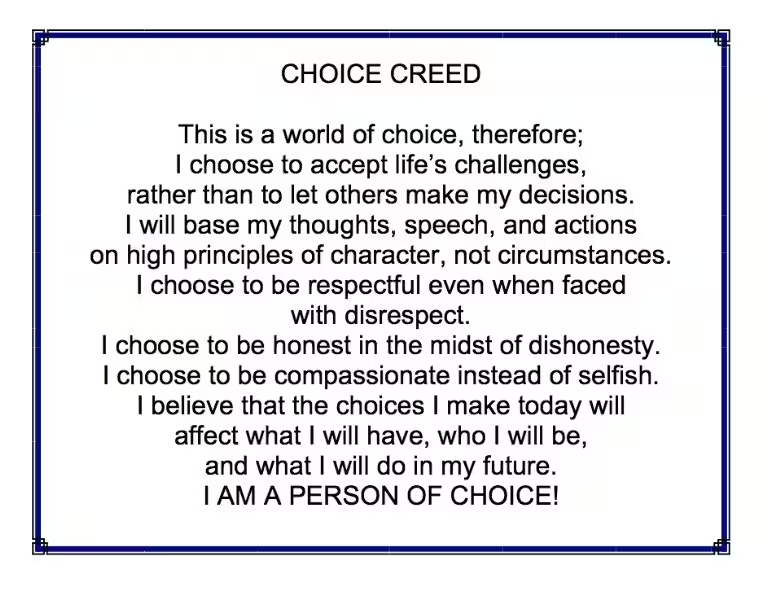
What if you could distill your life's philosophy into a concise, guiding statement? That's the power of a personal creed. This article explores the concept of a personal creed – a set of beliefs that influence your actions and decisions – by examining several compelling examples, from fictional characters to historical documents. Understanding these diverse creed examples can help you define your own.
Creed Examples in Fiction and Reality
Let's start with a relatable example: the Fast and Furious franchise. Dominic Toretto, the central character, embodies a powerful, albeit unconventional, creed. His unwavering loyalty to his "family," even when faced with betrayal or immense personal risk, is the bedrock of his actions. This highlights a creed prioritizing chosen bonds above personal gain or even the law. This illustrates how a strong creed, even one that might seem flawed from an outsider's perspective, can provide unwavering direction and purpose to an individual's life.
This concept of a guiding set of beliefs extends far beyond the silver screen. Merriam-Webster defines a creed as "a system of religious belief; a set of beliefs or aims which guide someone's actions." This definition encompasses both formalized religious statements and personal guiding principles. Let's delve into some notable examples.
Doc Savage's Creed of Self-Improvement and Altruism
The pulp hero Doc Savage, known for his incredible physical and mental prowess, lived by a personal creed focused on self-improvement for the benefit of others. His dedication to justice and unwavering courage in the face of adversity showcase a commitment to personal growth intertwined with selfless service. He wasn't merely strong; his creed demanded he use his strength to aid others, making his actions a direct reflection of his beliefs. This illustrates how a creed can drive personal development while simultaneously focusing on making a positive impact on the world.
The Pararescue Creed: Selfless Service Above All
The Pararescue Creed of the United States Air Force exemplifies selfless service in its purest form. These highly trained rescuers prioritize the lives of others above their own comfort and safety, demonstrating a commitment to duty and sacrifice that often surpasses personal limits. Their creed is not just a set of words; it's a lived experience, a daily commitment to putting others first, even in the most dangerous circumstances. This demonstrates a creed based on unwavering dedication and a profound sense of responsibility.
The Apostle's Creed: A Foundation of Religious Belief
The Apostle's Creed represents a more traditional, religious example. This statement of faith, central to many Christian denominations, articulates core beliefs regarding God, Jesus Christ, and the Holy Spirit. It provides a fundamental framework for understanding the world and one's place within it, offering guidance and meaning through a structured belief system. This example highlights the role a creed can play in providing a spiritual compass and grounding for life’s journey.
Jocelyn's Creed: Embracing Life's Uncertainties
In contrast to formalized creeds, Jocelyn's creed in the book "I Take Off The Mask" provides a more personal and philosophical approach. This creed emphasizes embracing life's challenges and uncertainties with positivity and resilience. It focuses on self-acceptance, love, and perseverance in the face of adversity. This is a potent example of how a personal creed can evolve and adapt to individual experiences and philosophies, highlighting the subjective yet deeply personal nature of a creed.
The American's Creed: A National Guiding Principle
The American's Creed, a statement of national ideals, highlights patriotism, civic duty, and the values underpinning the United States: freedom, equality, justice, and humanity. This creed emphasizes a commitment to national identity and principles, demonstrating how a shared creed can unify a large and diverse population around a common set of values. While national creeds provide a framework for societal interaction, they also inspire personal action within that context.
Creating Your Own Creed: A Journey of Self-Discovery
Defining your personal creed is an ongoing process, a reflection of your evolving beliefs and values as you navigate life's experiences. It's not a static document; rather, it's a living, breathing expression of who you are and who you aspire to be. The examples provided here serve as inspiration, demonstrating the diverse forms a creed can take and the profound impact it can have on shaping your life. Consider your own values, your guiding principles, and your aspirations. What beliefs propel you forward? What actions do you strive towards? The answers to these questions form the foundation of your personal creed. Embrace the journey of discovering and refining your own creed – a process of self-discovery that will enrich your life immeasurably.
Frequently Asked Questions: Understanding and Creating a Personal Creed
What is a personal creed?
A personal creed is a set of guiding beliefs and principles that influence your actions and decisions. It's a statement of how you live your life, encompassing your values, purpose, and relationships. It can be a short, simple statement or a more complex, detailed document. Think of it as your personal moral compass. Examples range from the unwavering loyalty of Dom Toretto's "family" in Fast and Furious to the more formal structure of the Apostle's Creed.
Why should I create a personal creed?
Creating a personal creed is a powerful exercise in self-discovery. It helps you clarify your values, define your purpose, and articulate how you want to live your life. It provides a framework for making decisions, especially in challenging situations, and helps you stay true to yourself. It's a living document that can evolve as you grow and change.
What are some examples of creeds?
Many examples exist, ranging from the highly personal to the formally structured:
- Dom Toretto's "family" creed (Fast and Furious): Prioritizing loyalty and chosen bonds above all else.
- Doc Savage's creed: Emphasizing self-improvement, justice, and courage for the benefit of others.
- The Pararescue Creed: Highlighting selfless service and prioritizing the lives of others above one's own.
- The Apostle's Creed: A formal statement of Christian faith outlining core beliefs about God, Jesus Christ, and the Holy Spirit.
- Jocelyn's creed ("I Take Off The Mask"): A philosophical approach focusing on embracing life's challenges with positivity and resilience.
- The American's Creed: A statement emphasizing patriotism, civic duty, and national values.
These examples demonstrate the diversity of forms a creed can take and the variety of values it can reflect.
How do I create my own personal creed?
Creating a personal creed is a journey of self-reflection. Consider these steps:
- Define who you are: What are your core values and beliefs?
- Identify your purpose: What gives your life meaning?
- Define your relationships: How do you value family, friends, and community?
- Address your relationship with the world: What is your role in society?
- Focus on action and behavior: How will your creed guide your actions?
- Write it down: Putting your creed in writing makes it more concrete and effective.
- Revise and refine: Your creed is a living document that can and should evolve over time.
Remember to draw inspiration from others, but ensure your creed feels authentic and reflects your unique identity.
Does my creed have to be perfect?
No! Your creed is a journey, not a destination. It's okay to revise and refine it as you grow and learn. Embrace imperfection and allow your creed to evolve alongside your understanding of yourself and the world. The most important thing is that it guides you towards living a life that is meaningful and true to yourself.