
Understanding the Heavenly Jesus: His Session and Reign
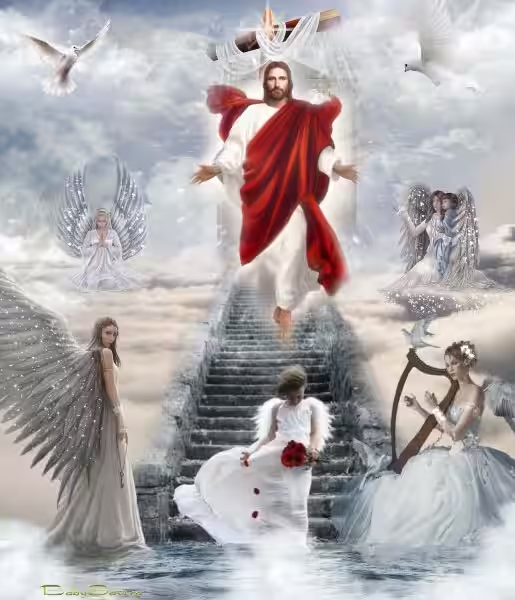
The concept of a "heavenly Jesus" often evokes powerful imagery, but what does it truly mean? This article delves into the theological significance of the Session of Christ, exploring its biblical basis, theological implications, and practical applications for believers today. Understanding this crucial doctrine illuminates our faith and strengthens our relationship with the risen Lord.
- The Session of Christ: Seated in Heavenly Glory
- Biblical Basis for the Heavenly Jesus' Session
- Theological Significance of the Heavenly Jesus' Session
- The Heavenly Jesus: Implications for Today
-
Frequently Asked Questions: The Heavenly Session of Jesus
- What is the "Session of Christ" or "Heavenly Session"?
- What biblical passages support the doctrine of the Heavenly Session?
- What is the theological significance of Jesus' session at the right hand of God?
- How does the Session of Christ relate to his roles as Prophet, Priest, and King?
- How does the Session impact believers today?
- Where is the doctrine of the Heavenly Session found in Christian creeds and traditions?
- Does the Session mean Jesus is inactive or passive?
- How does the Session relate to the future return of Christ?
The Session of Christ: Seated in Heavenly Glory
The Christian doctrine of the Session of Christ, also known as the heavenly session, describes Jesus’ enthroned position at the right hand of God the Father in heaven. This isn't simply a literal depiction of sitting; rather, it signifies his supreme authority and kingship. While the New Testament also depicts Jesus standing and walking in heaven, the "session" carries particular theological weight. The term "session," while archaic in its literal sense, conveys the idea of being seated for a purpose, a purposeful enthronement.
The image of Jesus seated at God's right hand is deeply symbolic. It denotes not idleness but active reign and authority. This position signifies his complete victory over sin and death, and the commencement of his kingdom. It's a visual representation of his exalted state, his dominion over all creation. Think of it as the ultimate throne room scene, demonstrating Jesus' power and glory.
Biblical Basis for the Heavenly Jesus' Session
The primary biblical support for the Session of Christ comes from Acts 2:33, Hebrews 10:12, and Psalm 110:1, which states, "The LORD says to my Lord: ‘Sit at my right hand until I make your enemies a footstool for your feet.’” Peter, in Acts, directly connects Jesus' exaltation after the resurrection and ascension to the fulfillment of this psalm. This verse emphasizes not just a passive seating but an active reign until all opposition is overcome.
Other passages, including Acts 5:31, Ephesians 1:20, and 1 Peter 3:22, further reinforce Christ’s presence at God’s right hand. These scriptures aren't isolated incidents; they form a consistent narrative within the New Testament, painting a clear picture of the heavenly Jesus. It's important to note that while some passages show Jesus standing (Acts 7:55) or walking (Revelation 2:1), these instances don't contradict the theological significance of his session; they simply showcase the multifaceted nature of his heavenly ministry.
Understanding the Symbolic Nature of the "Right Hand"
The "right hand" imagery in these passages is significant. In ancient cultures, the right hand represented honor, power, and authority. For Jesus to be seated at God's right hand signifies the highest possible honor and the complete bestowal of divine authority. It's the ultimate symbol of kingship and dominion.
Theological Significance of the Heavenly Jesus' Session
The Session of Christ is profoundly significant theologically. It signifies his exaltation and enthronement as King, marking the inauguration of his kingdom. This isn't a kingdom limited to the spiritual realm; it encompasses heaven and earth, impacting every aspect of creation. His reign extends to the Church, which is under his direct governance and care.
Furthermore, Hebrews 10:12 links the session to Christ’s completed priestly work, signifying the fulfillment of his atoning sacrifice. Through his session, believers now have direct access to God, surpassing the limitations of the Old Testament temple rituals. This direct access is a profound consequence of Jesus' work on the cross and his subsequent ascension and enthronement. This is a cornerstone of the Christian faith, highlighting the power and accessibility of prayer through the heavenly Jesus. Theologians like Karl Barth have emphasized the ongoing and foundational importance of Christ's session for human existence.
The Heavenly Jesus and Us: A Living Connection
The implications of the Session are far-reaching. It's not just a historical event; it's a living reality that impacts our relationship with God. It assures us of Christ's constant intercession on our behalf, of his enduring presence and active participation in our lives. Knowing that the heavenly Jesus is actively reigning and interceding on our behalf provides immense comfort and strength.
The Heavenly Jesus: Implications for Today
Understanding the Session of Christ has several practical implications for believers today. First, it reinforces the reality of Jesus' resurrection and ascension. It's not merely a historical event; it's a foundational truth that underpins our faith. His session confirms his ongoing life and victory over death, offering us ultimate hope and the basis for our Christian walk.
Secondly, it assures us of Christ’s ongoing intercession. In times of trial, knowing that Jesus is actively pleading for us provides immense comfort and encouragement. His intercession is not a passive act; it's a powerful demonstration of his love and concern for us. The heavenly Jesus is our ever-present advocate.
Finally, it underscores Christ’s universal authority. His reign extends beyond earthly boundaries, encompassing all powers and dominions. This understanding provides perspective when facing worldly chaos and uncertainties. The knowledge that ultimate authority and control reside with the heavenly Jesus offers solace and hope amidst life's challenges.
In conclusion, the doctrine of the Session of Christ is far more than a theological detail; it's a cornerstone of Christian faith. Understanding the heavenly Jesus' session, his reign, and his ongoing ministry provides a deeper appreciation for our faith and strengthens our connection with our Lord. It's a source of hope, comfort, and strength in the midst of life's complexities. The image of the heavenly Jesus, seated in glory and power, is not simply a historical event, but a living reality impacting us today.
Frequently Asked Questions: The Heavenly Session of Jesus
What is the "Session of Christ" or "Heavenly Session"?
The Session of Christ, a central tenet of Christian theology, refers to Jesus Christ's seated position at the right hand of God the Father in Heaven. While scripture also depicts Jesus standing and walking in Heaven, the "session" holds significant theological weight because it symbolizes his kingship and completed work of redemption. The term "session," though seemingly simple, signifies a state of authority and active reign.
What biblical passages support the doctrine of the Heavenly Session?
Key passages include Acts 2:33 and Hebrews 10:12, both referencing Psalm 110:1 ("The LORD says to my Lord: ‘Sit at my right hand until I make your enemies a footstool for your feet.’"). Acts 2 portrays Peter interpreting Jesus' exaltation after the resurrection and ascension as the fulfillment of this psalm. Other passages like Acts 5:31, Ephesians 1:20, and 1 Peter 3:22 further reinforce Christ's presence at God's right hand. Jesus himself predicted his future position at the "right hand of Power" (Mark 14:62; Matthew 26:64), alluding to Daniel 7:13. While some passages show Jesus standing or walking, these don't contradict the theological significance of his session.
What is the theological significance of Jesus' session at the right hand of God?
The Session signifies Christ's exaltation and enthronement as King. His position at God's right hand represents the highest honor and glory, marking the inauguration of his kingdom. This position denotes Christ's authority over heaven and earth and his governance of the Church. Importantly, Hebrews 10:12 links the session to Christ's completed priestly work, signifying the fulfillment of his sacrifice. It also provides access to God for believers, surpassing the limitations of Old Testament temple rituals.
How does the Session of Christ relate to his roles as Prophet, Priest, and King?
Jesus' heavenly session is intricately connected to his fulfillment of the Old Testament prophetic, priestly, and kingly offices. As Prophet, he continues to guide and teach through the Holy Spirit. As Priest, he perpetually intercedes for believers. As King, he reigns over all creation, exercising ultimate authority. The session is the culmination of his earthly ministry and the inauguration of his eternal reign.
How does the Session impact believers today?
The Session of Christ offers several key applications for believers: It confirms the reality of Jesus' resurrection and his ongoing, victorious life. It assures believers of Christ's continuous intercession on their behalf. Finally, it underscores Christ's universal authority, providing solace and perspective amidst life's challenges. Understanding Jesus' heavenly reign empowers believers to actively participate in His ongoing work on Earth.
Where is the doctrine of the Heavenly Session found in Christian creeds and traditions?
The Session of Christ is explicitly mentioned in the Apostles' Creed and is implicitly present in other creeds like the Niceno-Constantinopolitan Creed. It's frequently celebrated in hymns and liturgical practices, highlighting its enduring prominence in Christian theology and worship.
Does the Session mean Jesus is inactive or passive?
No. The "sitting" imagery doesn't imply inactivity. It symbolizes a state of authority and active reign, where Jesus exercises his roles as Prophet, Priest, and King. He actively intercedes for believers, guides the Church through the Holy Spirit, and governs all creation.
How does the Session relate to the future return of Christ?
The session is not a static state. While Jesus reigns now, Psalm 110:1 indicates his reign will continue until all enemies are subdued. This points towards a future culmination in the final judgment and the ultimate handover of the kingdom to the Father. The session is therefore both a present reality and a promise of future fulfillment.