
Before Joshua Enters the Promised Land: What Three Things Happened?
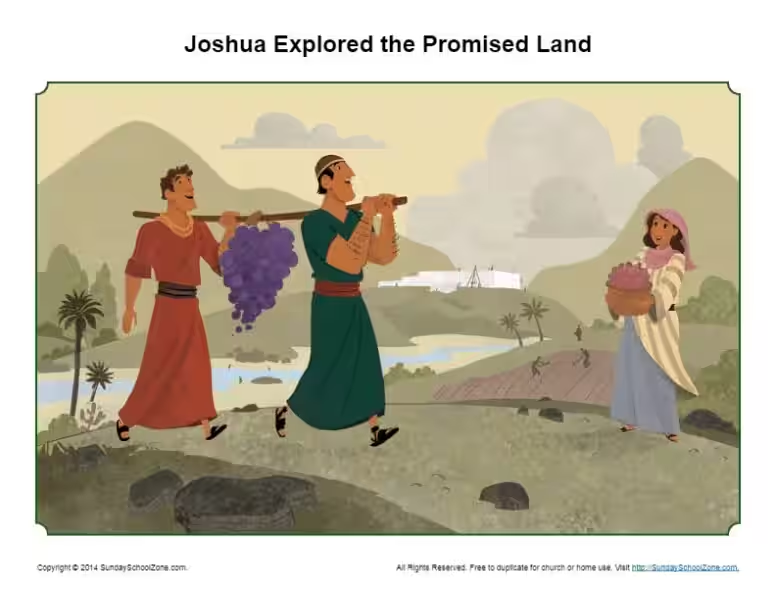
The transition from Moses' leadership to Joshua's marks a pivotal moment in Israelite history. Before Joshua could lead the Israelites into the Promised Land, several significant events unfolded, shaping the nation's future and setting the stage for the conquest of Canaan. These events highlight the importance of faith, obedience, and God's unwavering faithfulness. Let's explore three crucial occurrences that preceded Joshua's triumphant entry.
1. The Death of Moses and the Commissioning of Joshua
The death of Moses, a towering figure who had led the Israelites for forty years in the wilderness, was undoubtedly a profound event. His passing created a leadership vacuum, leaving the Israelites in a vulnerable position. The weight of expectation rested heavily on the shoulders of his successor, Joshua.
However, Moses' death wasn't a moment of despair or uncertainty for the Israelites. Instead, it marked a transition of leadership ordained by God. Before his death, Moses had already appointed Joshua as his successor, signifying God's plan for the next phase of their journey. God's direct confirmation of Joshua's appointment in Deuteronomy 31 adds immense weight to the transition. This divine endorsement provided reassurance and stability during a time of significant change. It also emphasized to the Israelites that God's promise to bring them to Canaan was not dependent on a single leader but on His unwavering faithfulness.
2. Consecration and Preparation for the Jordan River Crossing
The Israelites' journey didn't simply proceed smoothly after Moses' death. A period of preparation and consecration was crucial before Joshua could lead them across the Jordan River, the symbolic gateway to the Promised Land. This wasn't just a physical crossing; it represented a spiritual transition.
The three-day period of consecration detailed in Joshua 3 underlines the spiritual significance of entering the Promised Land. The act of washing clothing and abstaining from sexual relations symbolizes spiritual cleansing and a renewed commitment to obedience. This period wasn't just for the Israelites as a whole but emphasized the importance of each individual's spiritual readiness. This preparation underscored that entering the Promised Land wasn't merely a geographical achievement but a spiritual journey requiring readiness to embrace God's will and covenant.
3. The Miraculous Crossing of the Jordan River
The Jordan River, a formidable obstacle, posed a significant challenge to the Israelites' advance. However, God demonstrated his power and faithfulness through a miraculous intervention. The waters parted, allowing the Israelites to cross on dry land. This event wasn't just a convenient solution to a geographical problem; it was a powerful demonstration of God's power and a tangible sign of his commitment to his covenant with the Israelites.
Furthermore, the account in Joshua 3:13-17 highlights the faith required for this miracle. The priests carrying the Ark of the Covenant entered the water first, their actions demonstrating a profound trust in God's promise. Their faith became the catalyst for the miracle, showcasing that divine intervention often requires human faith and obedience to trigger it. The event served as a powerful testament to God's power and a profound encouragement to the Israelites as they embarked on the challenging task of conquering Canaan. The crossing of the Jordan River became a cornerstone of their history, a powerful symbol of faith, divine intervention, and the beginning of a new chapter in their journey.
In conclusion, before Joshua entered the Promised Land, the death of Moses, the intense period of consecration, and the miraculous crossing of the Jordan River were not simply isolated events. They formed a cohesive narrative that emphasized the transition of leadership, the spiritual preparation necessary to enter God's promised blessing, and the demonstration of God's providential power. These events served as crucial foundations for the Israelites' conquest of Canaan and offer valuable lessons for believers today, illustrating the importance of faith, obedience, and reliance on God's power to overcome obstacles and achieve His purposes.
Before Joshua Entered the Promised Land: Three Key Events
Here are answers to frequently asked questions about the events preceding Joshua's entry into the Promised Land, based on the Book of Joshua:
What was the initial challenge faced by the Israelites before entering Canaan?
The primary challenge was the lack of faith and repeated disobedience of the previous generation. Their rebellion in the wilderness resulted in forty years of wandering and prevented them from entering the Promised Land. Only Joshua, Caleb, and Moses survived that generation due to their faith and obedience. This highlights the importance of faith and obedience in receiving God's blessings.
What significant event marked the transition of leadership and the beginning of the conquest?
The death of Moses and the subsequent commissioning of Joshua as the new leader marked a significant turning point. God directly commissioned Joshua, reiterating the promise to give the Israelites Canaan and assuring him of divine presence, power, provision, and protection. This transition symbolized a shift from the old, disobedient generation to a new generation under Joshua's leadership, characterized by obedience and faith.
What major event happened immediately before the Israelites crossed the Jordan River?
Before crossing the Jordan River into the Promised Land, the Israelites underwent a period of consecration. This involved a three-day period of spiritual preparation, including washing clothes (symbolizing spiritual cleansing) and abstaining from sexual relations (ceremonial purity). This act of consecration highlighted the importance of spiritual preparedness before undertaking significant tasks and entering into God's promises. Following this, the miraculous parting of the Jordan River allowed for their passage into Canaan.