
Roman Catholic Communion Wine: A Comprehensive Guide

Why do Catholics drink wine during Communion?
In the Roman Catholic Church, communion wine holds deep spiritual and theological significance. During the sacrament of the Eucharist, the wine is consecrated and becomes the Precious Blood of Jesus Christ, offered for the forgiveness of sins. This sacred act is a core element of Catholic worship and reflects centuries of tradition, Scripture, and sacramental theology.
- 🍷 The Meaning of the Wine in the Catholic Church
- ✅ Why Do Catholics Drink Wine During Communion?
- 🍇 Types of Roman Catholic Communion Wine
- 📜 Requirements for Valid Communion Wine
- 🍷 Alcohol Content of Communion Wine
- 🚫 Alternatives for Those Who Cannot Drink Alcohol
- 🛐 Respect for the Sacrament of the Eucharist
- ❓ Frequently Asked Questions About Roman Catholic Communion Wine
- 🧭 The Sacred Role of Wine in Catholic Communion
🍷 The Meaning of the Wine in the Catholic Church
In Catholic belief, the wine used in Holy Communion is not merely symbolic. Through the process of transubstantiation, the wine becomes the Blood of Christ while retaining the appearance of wine. This doctrine is rooted in Jesus’ words at the Last Supper:
“This is my blood of the covenant, which is poured out for many for the forgiveness of sins.” (Matthew 26:28)
Thus, the meaning of the wine in the Catholic Church is both sacrificial and redemptive. It represents:
- Christ’s self-giving love
- The new covenant between God and humanity
- The unity of the Church in the Body and Blood of Christ
✅ Why Do Catholics Drink Wine During Communion?
Catholics drink wine during the Eucharist because Jesus instituted this practice Himself. By drinking from the chalice, Catholics:
- Participate in the Last Supper tradition
- Obey Jesus' command to "do this in remembrance of me" (Luke 22:19–20)
- Receive the real presence of Christ under the form of wine
The wine is not merely symbolic—it is part of the real sacramental presence of Christ, along with the consecrated bread (the Body).
🍇 Types of Roman Catholic Communion Wine

The Roman Catholic Church requires specific standards for communion wine:
🔴 Red Wine
- Most traditional option
- Symbolizes the Blood of Christ
- Commonly used in parishes worldwide
⚪ White Wine
- Permitted alternative
- Easier to clean in case of spills
- Can symbolize the joy and purity of Christ’s resurrection
📜 Requirements for Valid Communion Wine
To be valid for use in the Catholic Mass, Roman Catholic communion wine must meet the following criteria:
- Made only from pure grapes
- Naturally fermented (not artificially or chemically)
- Undiluted and free of additives (like flavoring or sugar)
- Must retain natural alcohol content from fermentation
Non-compliant wine (e.g., flavored, mixed, or synthetic wine) is not valid for consecration.
🍷 Alcohol Content of Communion Wine
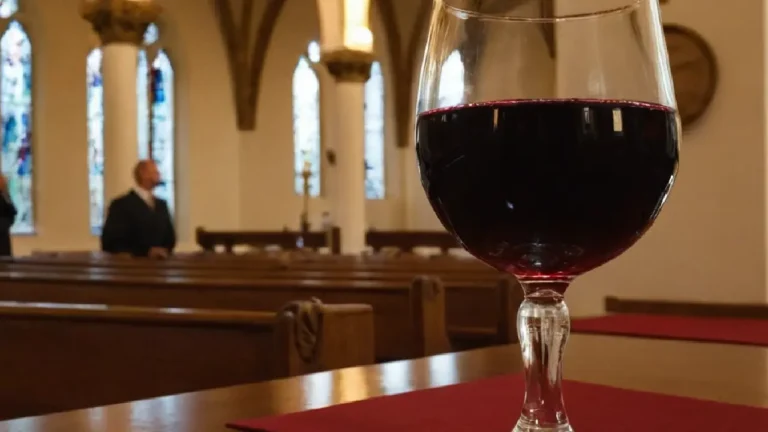
While the Church does not mandate a specific alcohol percentage, most Catholic communion wines contain 10%–15% alcohol by volume, reflecting traditional fermentation standards.
🚫 Alternatives for Those Who Cannot Drink Alcohol
If a communicant cannot consume alcohol for health or addiction-related reasons, the Church allows for:
- Receiving only the consecrated host (Body of Christ), which still offers full sacramental grace.
- In some cases, non-alcoholic mustum (grape juice with minimal fermentation) may be approved by the bishop for liturgical use.
Always consult a priest for guidance if you’re unable to consume standard communion wine.
🛐 Respect for the Sacrament of the Eucharist
Because the wine becomes the Blood of Christ, it must be:
- Handled with great reverence
- Consumed reverently by the faithful in a state of grace
- Prepared and distributed by clergy and authorized ministers
Spills are treated with care, and sacred vessels (chalices) are purified after Mass.
❓ Frequently Asked Questions About Roman Catholic Communion Wine

Can I bring my own wine for Communion?
No. Only wine approved and prepared for liturgical use may be consecrated.
Is grape juice allowed in place of wine?
Only mustum (minimally fermented grape juice) may be used, and only with proper permission.
What should I do if I accidentally spill the wine?
While not sinful, it must be handled reverently. The area should be cleaned according to Church guidelines.
Can I drink communion wine outside of Mass?
A: No. Communion wine is reserved for the sacrament and should not be consumed outside of a liturgical context.
What is the meaning of the chalice in Catholic Communion?
A: The chalice holds the consecrated wine—the Blood of Christ. It symbolizes Christ’s suffering, His covenant, and the unity of believers who share in the Eucharist.
🧭 The Sacred Role of Wine in Catholic Communion
The use of wine in Catholic Communion is rooted in Scripture, tradition, and deep sacramental theology. Far more than a ritual, it is an encounter with Christ Himself—the Lamb of God who takes away the sins of the world.
Whether red or white, Roman Catholic Communion wine must be pure, valid, and reverently handled, reflecting the holiness of the mystery it conveys. Understanding why Catholics drink wine at Mass invites us to a deeper appreciation of the Eucharist as the source and summit of Christian life.