
Understanding the Disciples' Boat: A Metaphysical and Literal Exploration
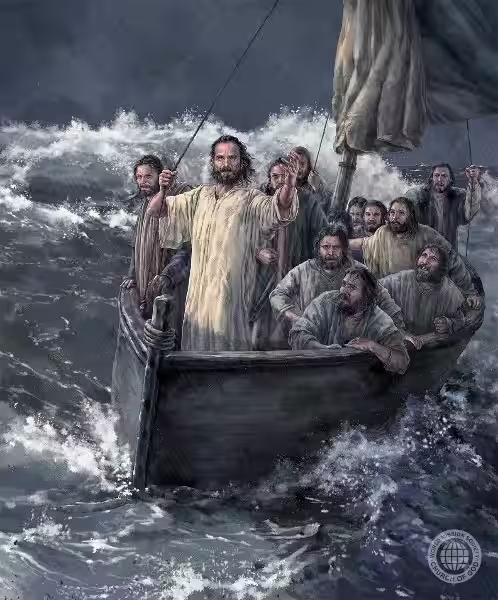
The image of the disciples in their boat, tossed about by a raging storm, is a powerful one. This scene, vividly depicted in the Gospels, has resonated with readers for centuries. But what does it really mean? Is it simply a literal account of a frightening nautical experience, or does it hold a deeper, more symbolic significance? This article will explore both the literal and metaphysical interpretations of this crucial moment in the life of Jesus and his disciples, specifically focusing on the events surrounding the disciples' boat.
- The Literal Account: A Storm at Sea
- The Metaphysical Interpretation: A Storm Within
-
Frequently Asked Questions: The Disciples' Boat and the Storm
- What is the story of the disciples' boat and the storm?
- What is the literal interpretation of the storm?
- What is the metaphysical interpretation of the storm, as offered by Rev. Ed?
- What does Jesus' rebuke of the disciples ("men of little faith") mean in this context?
- What is the key takeaway from the story, according to the metaphysical interpretation?
- How does the disciples' boat journey relate to the expansion of the Gospel?
- What is the significance of Jesus' sleep in the boat?
- What is the significance of the disciples' immediate obedience in Matthew 14:22?
The Literal Account: A Storm at Sea
The Gospels of Matthew, Mark, and Luke all recount the story of Jesus and his disciples encountering a violent storm on the Sea of Galilee. These accounts, while sharing a common narrative thread, offer subtle variations in detail, highlighting the human element of the storytellers themselves.
The common thread is clear: A sudden, fierce storm threatens to capsize the disciples' boat. The waves are high, the wind is strong, and the disciples, experienced fishermen though they may be, are terrified. They find themselves facing the raw power of nature and the very real possibility of death by drowning. Their fear is palpable, their desperation evident in their cries for help from Jesus – a man who, incredibly, is sleeping soundly amidst the chaos.
This literal depiction is compelling in itself. It paints a picture of vulnerability, highlighting the limitations of human strength in the face of overwhelming natural forces. The disciples' fear, their struggles against the elements, these elements are all intensely relatable, reflecting the struggles we all face – not necessarily in the form of a literal storm, but in our own lives' adversities. The storm, in this sense, becomes a metaphor for life’s difficulties: unexpected challenges, crushing anxieties, and the feeling of being utterly lost at sea.
Jesus' Response: More Than Just a Miracle
Jesus' response to the disciples' cries, however, moves beyond the merely physical. His command to the wind and waves, and the immediate cessation of the storm, is often interpreted as a demonstration of divine power. It's a clear assertion of authority over nature, a supernatural act that leaves the disciples awestruck and questioning.
But it's also important to note the way Jesus responds before the miracle. It's not simply a case of him instantly reacting to their distress. His rebuke of the disciples—"Why are you so afraid? Do you still have no faith?” (Matthew 8:26)—highlights a deeper issue: a lack of trust in his authority and, more importantly, in God's power. This adds another layer to the narrative, pointing to a spiritual lesson embedded within the literal event. It's not just about calming a storm; it's about cultivating faith in the face of overwhelming fear.
The Metaphysical Interpretation: A Storm Within
Reverend Ed's metaphysical interpretation of the story takes this a step further. It reframes the event not merely as a literal storm, but as a representation of the inner turmoil we all experience. The raging storm on the sea, in this reading, symbolizes the internal struggles that arise when we feel disconnected from our divine nature, what Rev. Ed refers to as the "Christ energy"—a concept representing an inherent connection to the divine, a potential for inner peace and power lying dormant within each of us.
The disciples' fear, then, isn't simply fear of drowning but a fear born of a lack of faith in their own inherent spiritual strength. Their cry, "Save, Lord, we are perishing," reflects a belief in an external God needing to rescue them, rather than recognizing the power already residing within them. This highlights the difference between a superstitious belief in a distant God and the recognition of an immanent, ever-present divine presence.
Jesus' Sleep and the Power Within
Jesus' sleep, within this framework, symbolizes the peaceful state achievable through recognizing this inner divinity. His act of calming the storm isn't seen as a supernatural power exerted from without but as a manifestation of the power that resides within each of us, accessible through faith and self-belief. The rebuke, "You of little faith," isn't a condemnation but a gentle nudge towards a greater understanding of their inherent potential. The disciples' boat, in this metaphysical interpretation, represents our own journey through life.
The disciples' boat, in this context, becomes a symbol of our own spiritual journey. The storm represents the challenges and obstacles we encounter, while Jesus' calming of the storm reflects the inner peace and strength we can tap into when we connect with our divine nature. The key takeaway is that true power lies not in external intervention, but in the self-discovery of our own inner resources.
The lessons learned from the disciples' boat and the metaphysical interpretation are applicable to our own lives. We all face “storms” – periods of difficulty, uncertainty, and fear. By recognizing the power within ourselves – our resilience, inner strength, and connection to a higher power – we can navigate those storms and emerge stronger. This doesn't mean that our challenges will vanish, but it does mean that our response to them can change. Instead of fear and helplessness, we can cultivate faith in our ability to overcome, to find the resources within ourselves to weather any storm. The true miracle lies not in the cessation of the storm itself, but in our ability to overcome our fears and find our inner spiritual strength. The disciples' experience on the Sea of Galilee serves as a constant reminder of this empowering truth.
Frequently Asked Questions: The Disciples' Boat and the Storm
What is the story of the disciples' boat and the storm?
The story, found in Matthew 8:23-26 and similar accounts in Mark and Luke, depicts Jesus and his disciples sailing across a lake during a sudden, violent storm. The disciples, terrified by the raging wind and waves, awaken Jesus, who is asleep. He rebukes the storm, and it immediately calms. Different Gospel accounts offer slight variations in detail, but the core narrative remains consistent.
What is the literal interpretation of the storm?
The literal interpretation sees the event as a miraculous demonstration of Jesus' power over nature. It highlights his divine authority and ability to control the elements. The disciples' fear underscores their human limitations and dependence on Jesus for salvation.
What is the metaphysical interpretation of the storm, as offered by Rev. Ed?
Rev. Ed's metaphysical interpretation reframes the story as a parable. The storm symbolizes the inner turmoil and fear experienced when feeling disconnected from one's divine nature, or "Christ energy," which represents an inherent oneness with the divine. The disciples' fear reflects a lack of faith in their own inner strength and connection to the divine, while Jesus' sleep symbolizes the peaceful state achievable through recognizing this inner divinity. Calming the storm, therefore, represents accessing the power inherent within, rather than a supernatural act from outside.
What does Jesus' rebuke of the disciples ("men of little faith") mean in this context?
Within the metaphysical interpretation, the rebuke isn't a condemnation of their belief in God, but a gentle challenge to recognize and trust their own inner strength and connection to the divine. It's a call to expand their understanding of their own spiritual potential.
What is the key takeaway from the story, according to the metaphysical interpretation?
The core lesson is that navigating life's challenges (represented by the storm) relies not on external intervention, but on recognizing and embracing our inner strength and connection to the divine. While difficulties will still arise, fear and powerlessness lessen when we understand and utilize our inherent spiritual resources. The true miracle is not the cessation of the storm, but the disciples' overcoming their fear and realizing their own spiritual power.
How does the disciples' boat journey relate to the expansion of the Gospel?
In Matthew 14:22, following the feeding of the 5,000, Jesus sends his disciples across the Sea of Galilee. This act can be interpreted as a symbolic representation of the expansion of Jesus' message beyond its initial Jewish audience, foreshadowing the future spread of Christianity to a wider world. The sea itself represents the challenges and uncertainties inherent in spreading the Gospel.
What is the significance of Jesus' sleep in the boat?
The metaphysical interpretation views Jesus' sleep as a symbol of the peace and tranquility attainable through recognizing one's connection to the divine. It highlights the inner calm that can be found even amidst external chaos.
What is the significance of the disciples' immediate obedience in Matthew 14:22?
Their immediate obedience to Jesus' instruction to go to the other side of the Sea of Galilee, even without full understanding of his plan, exemplifies faith and trust in God's guidance, even when the path is unclear. It is a model for believers to emulate.