
Uncovering the Ahava Location: A Journey Through History and Uncertainty
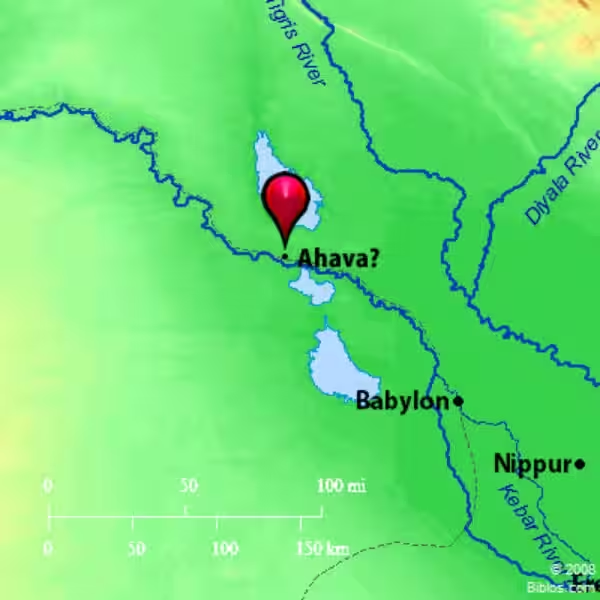
The biblical book of Ezra details a pivotal moment in Jewish history: the return of exiles from Babylon to Jerusalem. A crucial location in this narrative, and one that has intrigued scholars for centuries, is the river Ahava. Understanding the Ahava location is key to grasping the significance of Ezra's journey and the challenges he faced.
The Significance of Ahava in Ezra's Account
Ezra 8 recounts the meticulous preparations Ezra undertook before leading the exiles back to their homeland. The text doesn't just mention the river Ahava as a geographical landmark; it highlights its role as a crucial staging point for this monumental undertaking.
The encampment at Ahava lasted three days (Ezra 8:15), a period during which Ezra conducted a census of his company. This census revealed a critical shortage of Levites, the temple ministers essential for the proper functioning of the Jerusalem temple. This unexpected discovery prompted immediate action.
Ezra dispatched messengers to Casiphia, a location whose precise position is also debated, to recruit additional Levites and Nethinim (temple assistants). This proactive step demonstrates Ezra's organizational skill and determination to ensure the success of the return.
Importantly, before departing from Ahava, Ezra proclaimed a fast (Ezra 8:21). This act of seeking divine protection highlights the precariousness of the journey and Ezra's deep faith. He relied on God's providence rather than military might for their safety. The safe arrival in Jerusalem is directly attributed to God's intervention, underscoring the significance of the prayerful preparations made at the Ahava location.
Ahava: More Than Just a Stopping Point
The Ahava location wasn't merely a temporary resting place; it served as a pivotal point in the narrative's unfolding. It was a place of:
- Assembly: The initial gathering of the returning exiles.
- Assessment: The identification and subsequent rectification of a crucial personnel shortage.
- Prayer: A place of fervent prayer and seeking divine guidance before embarking on a dangerous journey.
- Departure: The final point of preparation before commencing the journey to Jerusalem.
The events at Ahava underscore the themes of faith, meticulous planning, and reliance on divine providence in the face of adversity.
The Elusive Ahava Location: A Mystery of Ancient Geography
Despite its importance in the biblical narrative, pinpointing the precise Ahava location remains a challenge for scholars. The lack of definitive archaeological evidence and the ambiguity of ancient geographical descriptions contribute to this ongoing debate.
Several theories exist, each attempting to reconcile the biblical account with the landscape of ancient Babylonia. Some suggest a connection to the "Is" river mentioned by Herodotus, now identified as the Hit river. Others propose a link to the district of Ivvah.
However, the most widely accepted theory identifies Ahava as one of the numerous canals that crisscrossed Babylonia. These canals, originating from the Euphrates River, were a vital part of the region's irrigation system and often flowed towards settlements or districts. The name "Ahava" might have derived from a nearby town or region towards which the canal flowed.
The Challenges of Identification
The difficulty in identifying the Ahava location stems from the sheer number of similar canals in ancient Babylonia. The landscape was a complex network of waterways, making it challenging to distinguish one from another based solely on textual descriptions. Furthermore, the passage of time and subsequent geographical shifts have further obscured the exact location.
The lack of precise coordinates doesn't diminish the significance of Ahava in Ezra's narrative. Its importance lies not in its exact geographical position but in its symbolic role as a place of transition, preparation, and faith.
Ahava: A Lasting Legacy of Faith and Perseverance
The story of Ezra's journey, and the role of the Ahava location within it, continues to resonate with readers today. The narrative serves as a powerful reminder of the importance of preparation, faith, and reliance on God's guidance, particularly when facing significant challenges. While the precise geographical location may remain elusive, the spiritual significance of Ahava remains undeniable. Its impact extends beyond the confines of ancient geography, serving as a timeless symbol of hope and divine provision. The search for the Ahava location remains an intriguing quest that underscores the enduring power of faith and the enduring mysteries of the past.
Frequently Asked Questions about the River Ahava
Where is the River Ahava located?
The precise location of the River Ahava, mentioned in the Book of Ezra, is unfortunately unknown. Ancient texts offer clues but no definitive answer. Several theories exist, suggesting possible connections to the "Is" river (now called Hit), the district of Ivvah, or one of the many canals branching from the Euphrates River in ancient Babylonia. The abundance of similar waterways in the region makes pinpointing its exact location impossible. The name "Ahava" likely refers to a town or district near the river itself.
What is the significance of Ahava in the Book of Ezra?
The River Ahava holds immense significance in the biblical narrative of Ezra's return to Jerusalem. It served as a crucial assembly point for Ezra and his company of returning Jewish exiles. Ezra used Ahava to:
- Gather and Encamp: The group camped at Ahava for three days, allowing for organizational tasks.
- Conduct a Census: A census revealed a shortage of Levites and Nethinim, prompting Ezra to seek additional personnel.
- Recruit Temple Personnel: Messengers were sent to Casiphia to recruit the needed Levites and Nethinim.
- Seek Divine Protection: Aware of the dangers of the journey ahead, Ezra proclaimed a fast at Ahava, seeking God's protection and guidance.
The events at Ahava highlight themes of faith, preparation, and dependence on God's providence. It's not merely a geographical location, but a pivotal point in the story of the return to Jerusalem.
Why is the exact location of Ahava uncertain?
The uncertainty stems from the extensive canal system in ancient Babylonia. Many canals, originating from the Euphrates River, crisscrossed the land. Identifying a specific canal as "the" River Ahava is difficult due to the lack of precise geographical markers in ancient texts and the changes in the landscape over millennia. The name "Ahava" likely identified a region or town near the river rather than the river itself.
What can we learn from the events at Ahava?
The story of Ahava provides valuable spiritual lessons:
- Importance of Preparation: The meticulous preparation and census highlight the need for thorough planning before embarking on significant endeavors.
- Faith in God's Provision: Ezra's reliance on prayer and fasting demonstrates faith in God's guidance and protection, rather than solely on human resources.
- Community and Collaboration: The recruitment of additional personnel highlights the importance of community and cooperation in achieving common goals.
- The Significance of Spiritual Preparation: The fast proclaimed at Ahava underscores the importance of seeking God's blessing and guidance before undertaking challenging tasks.
The events at Ahava serve as a reminder of the importance of faith, preparation, and reliance on God's providence in facing life's challenges.