
Hitler and Bible Prophecy: Did the Führer Fulfill an Ancient Prediction?
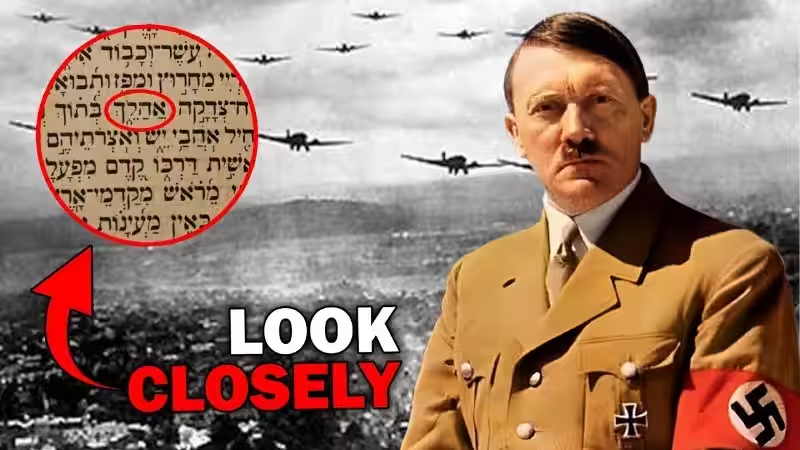
The rise and fall of Adolf Hitler remains one of history's most studied and debated topics. Beyond the historical analysis of his actions and motivations, many have sought to understand his reign through the lens of religious prophecy, specifically within the context of Bible prophecy. This article explores the complex interplay between Hitler's actions, his pronouncements, and interpretations of biblical prophecy, particularly regarding the figure of the Antichrist. We will examine both historical accounts and theological interpretations to explore this fascinating and often controversial subject.
- Hitler's Prophecy and the Holocaust
- Hitler and the Biblical Antichrist: Theological Interpretations
- Conclusion: History, Prophecy, and the Enduring Legacy of Hitler
-
Frequently Asked Questions: Hitler and Bible Prophecy
- Did Hitler make a prophecy about the annihilation of Jews?
- What is the historical significance of Hitler's prophecy?
- How did Hitler's prophecy evolve over time?
- What role did Hitler's prophecy play in Nazi propaganda?
- How is Hitler's prophecy interpreted in relation to biblical prophecy?
- What is the ongoing debate surrounding Hitler's prophecy?
- Does Hitler's prophecy prove a specific biblical prophecy?
Hitler's Prophecy and the Holocaust
Hitler's January 30, 1939, Reichstag speech contained a chilling prophecy: if international Jewry instigated another world war, it would result in the annihilation of the Jewish race in Europe. This statement wasn't a fleeting remark; it became a recurring theme in Nazi propaganda. The interpretation of this prophecy's meaning is central to understanding the Holocaust.
The speech's significance is debated among historians. Intentionalists believe it reveals a pre-existing plan for genocide, while functionalists suggest the "annihilation" initially lacked the specific connotation of mass murder. However, regardless of the initial intent, the ambiguity of the prophecy, coupled with its repeated public pronouncements, played a crucial role in shaping Nazi policy and public perception. The escalating violence against Jews following the speech clearly demonstrates a shift from initial policies of discrimination and expulsion to systematic extermination.
The Evolution of Hitler's "Prophecy"
The meaning of "annihilation" evolved alongside the escalating violence against Jews. Initially, it might have referred to expulsion or other forms of removal. However, post-1939, with the invasion of the Soviet Union and the declaration of war against the United States, the term became inextricably linked to the mass murder of Jews. Nazi propaganda chief Joseph Goebbels explicitly linked the prophecy's "fulfillment" to the mass deportations and killings. This propaganda, disseminated widely through various media, contributed to a widespread understanding, albeit often vague, among the German populace that Jews were being systematically exterminated. The prophecy thus provided a justification, however twisted, for the atrocities committed.
This evolution highlights the danger of ambiguous pronouncements made by those in positions of power. The vagueness inherent in Hitler's prophecy allowed for plausible deniability, enabling the Nazi regime to maintain a level of obfuscation regarding the specifics of the "Final Solution." The chilling reality is that the initial ambiguity did not prevent the horrific outcome.
Hitler and the Biblical Antichrist: Theological Interpretations
The question arises: does Hitler fit the profile of the Antichrist as described in the Book of Revelation? This question sparks passionate debate among theologians. Many preterists see the "beasts" of Revelation 13 as representing first-century Rome, rendering Hitler irrelevant to this specific prophecy. Futurists, conversely, believe the "beasts" represent a future entity, again seemingly excluding Hitler.
However, a more nuanced perspective argues that Revelation 13 should be interpreted as representative of ongoing persecution of Christians throughout history, not solely confined to a specific period. The "beasts" symbolize both internal threats (heresy) and external threats (persecution by powerful world leaders and nations). Hitler and Nazi Germany represent a powerful example of this external threat, a nation and leader claiming divine authority while persecuting Christians for their faith.
Hitler's Reign as a Manifestation of the "Beast"
Hitler's regime actively defied the confession of "Jesus is Lord," a central tenet of Christian faith. This defiance directly challenged the authority Hitler claimed. His actions, including the systematic persecution and murder of Christians and Jews, align with the characteristics of the "beast" as described in Revelation. The scale and brutality of the Holocaust, coupled with the regime's assertion of its own supremacy, present a compelling case for considering Hitler's regime as a historical manifestation of the "beast."
This theological interpretation doesn't negate the historical analysis provided by historians like Ian Kershaw. Kershaw's focus on Hitler's character, actions, and the socio-political context enabling his ascension provides crucial historical context. However, a theological perspective offers a complementary explanation. Kershaw's emphasis on the "Hitler factor" within broader historical forces mirrors the idea that while Hitler's rise was historically significant, it also exemplifies the ongoing, broader spiritual battle described in Revelation. The unprecedented scope of Hitler's rise to power and the devastating consequences of his regime serve not only as a historical event but also as a stark manifestation of the external antichrist force warned against in the Book of Revelation.
Conclusion: History, Prophecy, and the Enduring Legacy of Hitler
The connection between Hitler and Bible prophecy remains a complex and multifaceted topic. While the direct correlation between Hitler and a specific prophecy might be debated, his actions and the impact of his regime undeniably offer a lens through which to understand themes of persecution, oppression, and the struggle between good and evil — themes central to many biblical narratives. Hitler's prophecy regarding the annihilation of the Jewish people, regardless of its initial intent, became a chilling reality, forever etching his name into the annals of history as a symbol of hatred and genocide, and a stark reminder of the enduring power of evil. The study of Hitler and his regime allows us to engage in critical analysis not only of historical events but also of the enduring spiritual battles that continue to shape our world. Understanding this complex interplay allows for a more complete and nuanced understanding of both history and theological interpretations.
Frequently Asked Questions: Hitler and Bible Prophecy
This FAQ addresses common questions regarding Hitler's 1939 prophecy and its relation to interpretations of biblical prophecy, particularly those found in the Book of Revelation. It avoids direct claims of fulfillment of specific prophecies, focusing instead on the historical context and interpretations.
Did Hitler make a prophecy about the annihilation of Jews?
Yes. In his January 30, 1939, Reichstag speech, Hitler warned that if international Jewry instigated another world war, it would lead to the annihilation of the Jewish race in Europe. This statement, repeated throughout WWII, became a central element of Nazi ideology and a key component of the Holocaust's narrative. The interpretation of "annihilation" remains a subject of historical debate, ranging from expulsion to mass murder.
What is the historical significance of Hitler's prophecy?
The speech's significance is debated by historians. "Intentionalists" see it as evidence of a pre-existing plan for genocide, while "functionalists" believe the "annihilation" initially lacked the specific meaning of mass murder. Regardless of initial intent, the repeated public pronouncements of this prophecy shaped Nazi policy and public perception, contributing to the escalation of violence against Jews.
How did Hitler's prophecy evolve over time?
The meaning of the prophecy evolved alongside the escalating violence of the Holocaust. Initially ambiguous, its reiteration after the invasion of the Soviet Union and the declaration of war against the United States coincided with the intensification of systematic Jewish murder. Nazi propaganda explicitly linked the prophecy's fulfillment to mass deportations and killings.
What role did Hitler's prophecy play in Nazi propaganda?
Nazi propaganda extensively used the prophecy through various media. This dissemination contributed to a widespread, though often vague, understanding among the German population that Jews were being systematically exterminated. Even ordinary individuals involved in the atrocities referenced the prophecy to justify their actions.
How is Hitler's prophecy interpreted in relation to biblical prophecy?
Some religious interpretations connect Hitler's actions and pronouncements to biblical prophecies about the Antichrist or "beast" figures in the Book of Revelation. These interpretations often highlight the Nazi regime's persecution of Christians and its claim to authority, contrasting it with the Christian confession of "Jesus is Lord." However, it's crucial to note that such interpretations are varied and often debated within religious communities. Direct correlations between Hitler's prophecy and specific biblical verses are not universally accepted.
What is the ongoing debate surrounding Hitler's prophecy?
The central debate revolves around the interpretation of "annihilation." While it might have initially implied expulsion or other forms of removal, its context within the Holocaust undeniably became associated with mass murder. The prophecy's initial ambiguity allowed for plausible deniability and obfuscation regarding the specifics of the "Final Solution." The ongoing debate also includes discussions of the prophecy's role within broader Nazi ideology and its impact on the perpetration of the Holocaust.
Does Hitler's prophecy prove a specific biblical prophecy?
The connection between Hitler's prophecy and specific biblical prophecies is a matter of ongoing theological and historical debate. While some see parallels between Hitler's actions and interpretations of figures like the Antichrist, others emphasize the dangers of imposing a predetermined theological framework onto complex historical events. It's crucial to approach such interpretations with critical analysis and awareness of the diverse perspectives within both religious and historical scholarship.