
The Tassel Bible: Understanding Numbers 15:37-41 in the Modern World
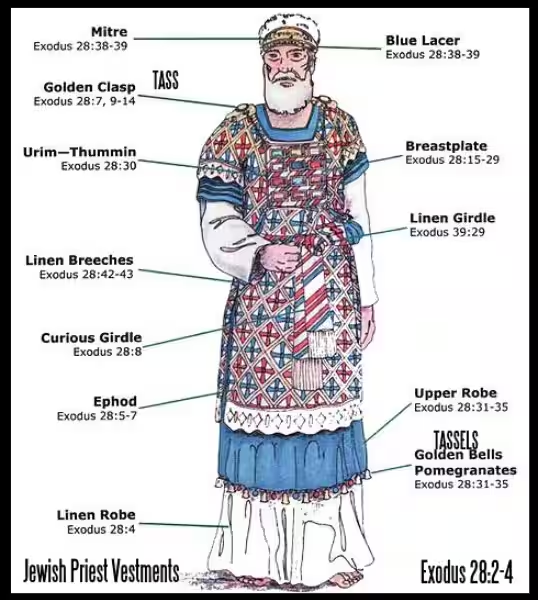
The passage in Numbers 15:37-41, which mandates the wearing of tassels with a blue cord by the Israelites, has sparked centuries of theological discussion. For contemporary Christians, this raises the question: What relevance, if any, do these "tassel bible" instructions hold today? This article will explore two main interpretative approaches to help us understand the significance of this passage in our lives.
- Direct Application: Should Christians Wear Tassels?
- Redemptive-Historical Interpretation: A New Covenant Perspective
- The Tassel Bible and Contemporary Relevance
-
Frequently Asked Questions about the Theological Implications of Tassels (Tzitzit)
- What is the main focus of the "Tassel Bible" (or similar text)?
- What is the "Direct Application" interpretation of the tassel commandment?
- What is the "Redemptive-Historical Interpretation" of the tassel commandment?
- Does the text advocate for or against wearing tassels today?
- What is the significance of the blue cord in the tassels?
- How does the text address other interpretations of the tassel commandment?
- What is the significance of the Lord's Supper in this context?
- Does the text address the use of tassels in Judaism?
Direct Application: Should Christians Wear Tassels?
One approach to interpreting Numbers 15:37-41 is to apply it directly to modern Christians. This suggests that, just as the Israelites wore tassels as a reminder of God's commandments, Christians should also adopt a similar practice. Perhaps a modern equivalent, such as a small cross or a discreet Scripture verse on a bracelet, could fulfill this role.
However, this approach presents considerable challenges. While the shared need for holiness between Old and New Testament believers is undeniable, simply substituting modern reminders for the specifically commanded tassels feels like an arbitrary replacement. Consider the parallel instruction in Deuteronomy 6 regarding inscribing God's words on our hands and doorposts. The fulfillment of this command in the phylacteries worn by Jewish people highlights the cultural specificity of God's commands. While personal reminders are valuable, are we justified in replacing one divinely prescribed symbol with another based on our own preferences? The act of wearing something as a reminder is not intrinsically holy; the holiness rests in the obedience to the command, and this command was specific to a particular time and culture.
Redemptive-Historical Interpretation: A New Covenant Perspective
A contrasting approach is to interpret Numbers 15:37-41 within the broader context of redemptive history. This perspective recognizes a key difference between Old and New Covenant believers: the nature of the reminder of our relationship with God. Under the Old Covenant, this reminder was primarily external—through prescribed rituals, garments, and symbols like the tassel bible mandates.
The New Covenant, however, offers an internal transformation. Unlike other religions with prescribed religious garments, Christianity uniquely lacks such external markers. This absence reflects the transformative power of the Holy Spirit, who writes God's law on our hearts (Jeremiah 31:31-34), providing an internal, rather than merely external, reminder. The concept of “putting on Christ” (Galatians 3:27) serves as a superior spiritual garment, surpassing the physical tassels.
The Lord's Supper: A Superior Reminder
The Lord's Supper provides a compelling example of a New Covenant reminder. While participation requires internalization to avoid superficiality (1 Corinthians 11:27-32), it serves as a powerful and ongoing reminder of God's covenant, far surpassing the external markers of the Old Testament. It's a living, dynamic symbol of Christ's sacrifice and our participation in his new covenant. This surpasses the static nature of the tassels.
The Significance of Internal Transformation
The difference between the Old and New Covenants isn't about the need for reminders, but about the nature of those reminders. The Old Covenant relied heavily on external symbols like the tassel bible describes, serving as a constant visible reminder for a people prone to forgetfulness. The New Covenant, however, emphasizes internal transformation through the indwelling Holy Spirit. This transformative work of the Spirit makes external, physical reminders less crucial. The emphasis shifts from outward conformity to inward transformation.
The Tassel Bible and Contemporary Relevance
While the direct application of the tassel bible's commands might appear straightforward at first glance, a redemptive-historical perspective reveals a deeper theological significance. This approach avoids the misapplication of Old Testament commands to the New Covenant context. It emphasizes the progress and transformation brought about by Jesus Christ and the work of the Holy Spirit.
It's not that reminders are unnecessary in the New Covenant. Rather, the nature of these reminders has fundamentally shifted. The external, physical symbols of the Old Covenant—like the tassels—have been superseded by the internal, spiritual transformation offered through faith in Jesus Christ and the ongoing work of the Holy Spirit.
Practical Implications
This understanding doesn't diminish the value of personal devotions, Bible study, prayer, or other spiritual disciplines. These acts serve as important reminders, but they are not substitutes for the transformative work of the Holy Spirit. They are expressions of our transformed hearts, not replacements for the external symbols of the Old Covenant.
The tassel bible passage, therefore, offers a powerful lesson: God's commands are to be interpreted within the larger narrative of redemption. Understanding the redemptive-historical context allows for a more nuanced and faithful interpretation, preventing the misapplication of Old Testament laws and unlocking deeper theological insights. The heart of the matter is not the physical act of wearing tassels, but the internal commitment to obedience and holiness that the tassels were intended to represent.
Frequently Asked Questions about the Theological Implications of Tassels (Tzitzit)
What is the main focus of the "Tassel Bible" (or similar text)?
The text explores the theological significance of Numbers 15:37-41, which commands Israelites to wear tassels with a blue cord. It examines how this Old Testament practice relates to contemporary Christians, considering two main interpretive approaches: direct application and redemptive-historical interpretation.
What is the "Direct Application" interpretation of the tassel commandment?
This view suggests that Christians should also wear tassels as a visual reminder of God's commandments, mirroring the Old Testament practice. However, the text argues against this approach, highlighting the cultural specificity of God's commands and the potential for misinterpreting a specific, historical practice. While acknowledging the importance of reminders, it questions the arbitrary substitution of one prescribed symbol (tassels) with another (e.g., a Bible verse).
What is the "Redemptive-Historical Interpretation" of the tassel commandment?
This interpretation emphasizes the fundamental difference between the Old and New Covenants. The Old Covenant relied on external symbols like tassels, while the New Covenant offers an internal transformation through the Holy Spirit, writing God's law on believers' hearts (Jeremiah 31:31-34). The text argues that "putting on Christ" (Galatians 3:27) supersedes the need for physical reminders. The Lord's Supper is presented as the contemporary equivalent, a far more significant reminder of God's covenant than external symbols.
Does the text advocate for or against wearing tassels today?
The text ultimately rejects the direct application of the tassel commandment to contemporary Christians. It strongly favors the redemptive-historical interpretation, arguing that the internal transformation offered by the Holy Spirit in the New Covenant renders external symbols like tassels unnecessary. The Lord's Supper is presented as a superior and more meaningful replacement.
What is the significance of the blue cord in the tassels?
The blue cord within the tassels likely held symbolic importance, potentially connecting all Israelites to a priestly role and representing a deeper spiritual significance within the Old Covenant context. The text does not elaborate on the blue cord's application to the New Covenant.
How does the text address other interpretations of the tassel commandment?
The text acknowledges the originality of its redemptive-historical interpretation while inviting further discussion and exploration. It engages with the challenges of the direct application approach, ultimately arguing for a nuanced understanding of Old Testament commands within the broader context of redemptive history.
What is the significance of the Lord's Supper in this context?
The Lord's Supper is presented as a superior, New Covenant equivalent to the Old Testament's external symbols like tassels. It emphasizes the importance of internalizing the meaning of the Supper, warning against superficial participation. It's seen as a far more profound reminder of God's covenant and sacrifice.
Does the text address the use of tassels in Judaism?
While the text focuses primarily on the implications for Christians, it acknowledges the continued use of tzitzit (tassels) in Judaism and their ongoing importance within that faith tradition. However, it does not directly delve into the specifics of Jewish interpretations or practices. The text's focus is on interpreting the Old Testament's instruction within a Christian framework.