
Understanding the Mother Enemy: A Deep Dive into Enemy Design in the Mother Series
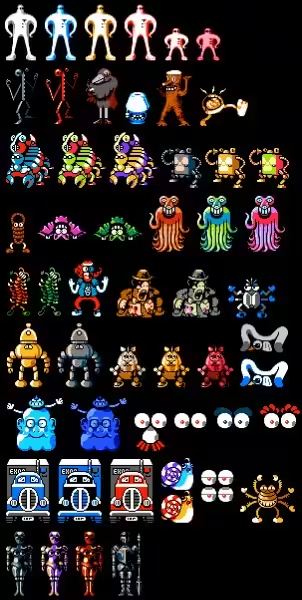
The Mother series, known in the West as EarthBound, is renowned for its quirky charm and innovative gameplay. But beyond the whimsical visuals and memorable characters lies a sophisticated approach to enemy design that significantly impacts the narrative and player experience. This article explores how the "mother enemy," or more accurately, the types of enemies in each Mother game, function as more than just obstacles; they become integral parts of the overarching story, reflecting the game's themes and driving the narrative forward.
- Enemies as Narrative Devices in Mother and EarthBound
- The Diversified Threats of Mother 3
- Boss Battles: Pivotal Moments in the Narrative
- Conclusion: The "Mother Enemy" as a Narrative Tool
-
Mother Series Enemy FAQ
- What is the primary function of enemies in the Mother series?
- How are enemies connected to the narrative in Mother and EarthBound?
- How does Mother 3 differ in its approach to enemy design?
- What do the enemies in Mother 3 symbolize?
- What are bosses in the Mother series, and what is their role?
- How do bosses contribute to the gameplay experience?
- How does the design of enemies in Mother evolve across the series?
- Do enemies in Mother solely serve a gameplay purpose?
- What is the significance of the shift in enemy design between the first two Mother games and Mother 3?
- Beyond HP depletion, what other purpose do enemies serve in the Mother series?
Enemies as Narrative Devices in Mother and EarthBound
The first two Mother games share a common thread: the overwhelmingly malevolent influence of Giygas. Most enemies encountered by Ninten and Ness aren't simply random creatures; they're manifestations of Giygas's power, his tendrils reaching into the game world. This creates a consistent sense of dread and urgency. Each battle isn't just a test of skill; it's a symbolic representation of the protagonists' fight against an all-encompassing evil.
The design of these enemies, often bizarre and unsettling, further reinforces this feeling. They aren't just visually distinct; their behavior and attacks often reflect Giygas's chaotic and unpredictable nature. This cohesive enemy design strengthens the narrative by constantly reminding the player of the looming threat and the stakes involved in their journey. The player is never truly safe, always aware of Giygas's insidious presence.
The Diversified Threats of Mother 3
Mother 3, however, takes a different approach. While the core function of enemies—hindering the player's progress—remains the same, the types of enemies are far more diverse. Instead of the singular, overarching evil of Giygas, Mother 3 presents a wider array of antagonists. We encounter wildlife, spirits, and the mechanical creations of the Pigmask Army.
This shift reflects the game's more complex narrative, which delves into themes of environmental destruction, war, and societal decay. The enemies in Mother 3 become symbolic representations of these broader concerns. A monstrous creature embodying environmental damage, for example, is not just a roadblock; it becomes a tangible manifestation of the game's central themes. This approach makes the combat encounters more meaningful and thematically resonant.
The Evolution of the "Mother Enemy" Concept
The evolution of the "mother enemy" concept from Mother to Mother 3 highlights the series' creative growth. The shift from a unified, Giygas-centric approach to a more diverse enemy pool demonstrates the series' ability to adapt and evolve its narrative techniques while maintaining the core gameplay loop. The consistent use of enemies as narrative devices, however, underlines the series’ commitment to a deeply integrated gameplay experience.
Boss Battles: Pivotal Moments in the Narrative
Beyond the standard enemies, the Mother series features challenging boss battles that serve as critical turning points in the narrative. These encounters are not merely tests of skill; they mark significant advancements in the story. Defeating a boss often unlocks new areas, abilities, or reveals crucial plot points, driving the narrative forward in a satisfying way.
The bosses themselves are meticulously designed, both visually and mechanically. Their unique abilities and attack patterns demand strategic thinking and skillful execution from the player. These challenging encounters provide both a sense of accomplishment and a pivotal moment of progress in the overarching story. They are not simply obstacles to overcome; they are narrative milestones that propel the player's journey.
The Strategic Importance of Boss Battles
The inclusion of bosses adds another layer of complexity to the gameplay. They provide a welcome challenge that keeps the players engaged. The strategic depth required to defeat them complements the narrative by emphasizing the gravity of the situation and the player's growing strength. The satisfying feeling of overcoming these significant challenges reinforces the emotional investment in the narrative. The "mother enemy" concept, then, extends beyond ordinary enemies to encompass these critical encounters as well.
Conclusion: The "Mother Enemy" as a Narrative Tool
In conclusion, the enemy design in the Mother series transcends simple gameplay mechanics. The "mother enemy," whether a singular, overarching antagonist or a diverse collection of foes reflecting broader thematic concerns, serves as a fundamental narrative tool. The evolution of the enemy concept across the three games showcases the series' ingenuity and its ability to organically incorporate challenging encounters into a compelling and deeply rewarding narrative experience. The Mother series demonstrates how clever enemy design can elevate a game from simple entertainment to a truly memorable and meaningful experience.
Mother Series Enemy FAQ
What is the primary function of enemies in the Mother series?
Enemies primarily act as obstacles that hinder the player's progress, depleting the player character's HP and requiring strategic combat to overcome. However, their role extends far beyond simple gameplay mechanics.
How are enemies connected to the narrative in Mother and EarthBound?
In the first two games, most enemies are linked to Giygas, either directly controlled by him or acting under his influence. Battles become symbolic representations of the protagonists' struggle against Giygas's power.
How does Mother 3 differ in its approach to enemy design?
Mother 3 features a more diverse enemy pool, including wildlife, spirits, and the Pigmask Army. This reflects the game's broader narrative themes of environmental destruction, societal oppression, and inter-generational trauma, rather than a single, overarching antagonist.
What do the enemies in Mother 3 symbolize?
The diverse enemies in Mother 3 act as symbolic embodiments of the game's various thematic elements, reflecting the wider narrative scope.
What are bosses in the Mother series, and what is their role?
Bosses are significantly stronger opponents serving as pivotal points in the narrative. Defeating a boss typically unlocks new areas, abilities, or plot points, marking significant story progression.
How do bosses contribute to the gameplay experience?
Bosses, alongside regular enemies, create a layered challenge that keeps players engaged and provides satisfying moments of accomplishment upon their defeat.
How does the design of enemies in Mother evolve across the series?
The series showcases an evolution in enemy design. The unified, Giygas-controlled enemies of the first two games give way to the more diverse antagonists of Mother 3, reflecting the shifting narrative focus.
Do enemies in Mother solely serve a gameplay purpose?
No, enemies are integral narrative elements, reflecting the overarching themes and antagonists of each game, enriching the storytelling experience beyond simple combat challenges.
What is the significance of the shift in enemy design between the first two Mother games and Mother 3?
The shift from Giygas-centric enemies to a diverse enemy pool in Mother 3 highlights the series' evolving narrative focus and its ability to creatively integrate enemies into the broader story and its thematic exploration.
Beyond HP depletion, what other purpose do enemies serve in the Mother series?
Enemies serve as symbolic representations of the overarching conflicts and themes within each game, acting as tangible manifestations of the narrative's struggles and challenges. They provide a visual and interactive way to experience these themes.