
Moses Shepherd: A Reluctant Leader's Journey to Faith
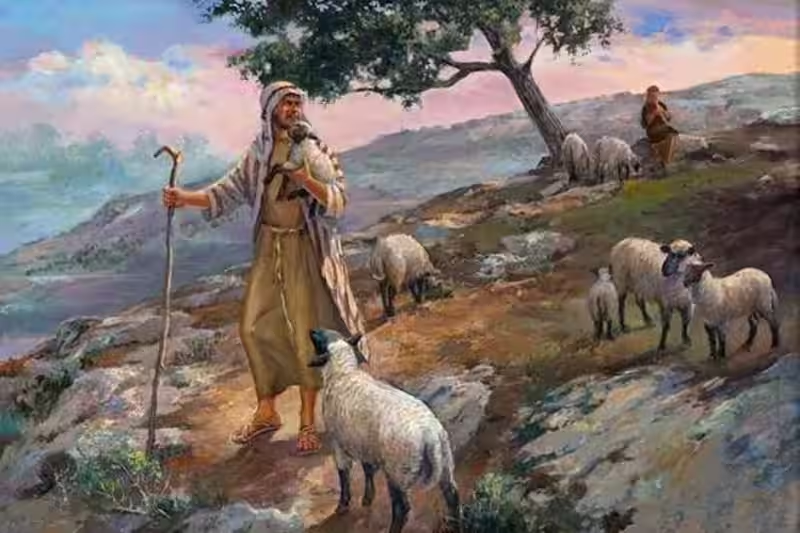
The story of Moses, the shepherd who became the liberator of Israel, is a powerful testament to God's calling and the transformative power of faith. It's a story filled with divine encounters, hesitant obedience, and ultimately, a profound demonstration of God's unwavering commitment to His people. But what can we learn from Moses' journey, especially considering his unlikely beginnings as a Moses shepherd in Midian?
- From Shepherd to Liberator: The Calling of Moses
- Moses' Reluctance and God's Assurance
- The Rumi Story: A Different Perspective
- Moses' Legacy: A Call to Humble Leadership
-
Frequently Asked Questions about Moses the Shepherd
- What is the significance of Moses' time as a shepherd in Midian?
- How did God initially reveal Himself to Moses?
- Why did Moses initially resist God's call?
- What was the meaning of God's declaration "I AM THAT I AM"?
- How does the story of Moses in the Bible contrast with the Rumi story "Moses and the Shepherd"?
- What is the overall message of Moses' story regarding faith and leadership?
From Shepherd to Liberator: The Calling of Moses
The Book of Exodus opens with Moses, a Midianite shepherd, tending his father-in-law's flock near Mount Horeb. This seemingly ordinary setting is where the extraordinary happens. It's here, amidst the quiet solitude of the desert, that Moses encounters the burning bush – a theophany that irrevocably alters the course of his life and the trajectory of history.
The burning bush isn't just a striking visual; it's a divine summons, the very presence of God made manifest. This encounter isn't a product of Moses' ambition; rather, it's God's initiative, choosing a seemingly ordinary individual for an extraordinary task. This sets a powerful precedent: God’s call often interrupts our ordinary lives, challenging our expectations and pushing us beyond our perceived limitations.
The conversation that unfolds between God and Moses is deeply significant. God reveals Himself as the God of Abraham, Isaac, and Jacob, establishing a lineage of covenant relationship. He acknowledges the suffering of the Israelites in Egypt and declares His intention to liberate them. This isn't simply a demonstration of power; it’s an act of compassion, a response to the cries of a suffering people.
Moses' Reluctance and God's Assurance
Moses' response to God's command is far from immediate acceptance. He expresses doubt, questioning his own adequacy to confront Pharaoh and lead the Israelites. His hesitations are understandable; the task is monumental, and he feels ill-equipped. This highlights a crucial aspect of leadership: true leaders are not always those who crave power but those who, despite their reservations, answer God's call with humble obedience. This resonates with A.W. Tozer’s observation that God often drafts, rather than recruits, His leaders.
God, however, reassures Moses, promising His constant presence and support. He doesn't dismiss Moses' concerns but instead addresses them directly, providing the necessary encouragement and empowerment. The very act of God choosing Moses, a seemingly ordinary Moses shepherd, is in itself a testament to God's power to work through imperfect, even reluctant, individuals.
The Significance of God's Name
The exchange between God and Moses also reveals the profound mystery of God's name. When Moses asks for God's name to convey to the Israelites, God replies, "I AM THAT I AM" (or YHWH in Hebrew). This enigmatic declaration speaks volumes about God's eternal self-existence, His power, and His unwavering commitment to His promises. This self-revelation is not merely a name; it's a statement of God's very being and His absolute authority.
The Rumi Story: A Different Perspective
The Rumi story, "Moses and the Shepherd," offers a fascinating counterpoint to the biblical narrative. In this story, Moses encounters a shepherd whose prayer, while unconventional and seemingly simplistic, is nonetheless heartfelt and sincere. The shepherd's prayer, filled with simple requests like washing God's clothes, initially strikes Moses as disrespectful.
However, God rebukes Moses for his judgmental attitude, highlighting the importance of inclusivity and acceptance in faith. The story emphasizes that God values sincere devotion above outward conformity. The shepherd's prayer, despite its imperfections, demonstrates genuine faith and a deep connection with God.
Lessons from the Rumi Story
The Rumi story provides several crucial lessons:
- God's acceptance of diverse forms of worship: God isn't limited by our understanding or our methods of prayer.
- The importance of sincerity: Genuine faith, even if imperfectly expressed, is valued by God.
- Humility in faith: Both Moses and the reader learn the valuable lesson of humility and open-mindedness.
- Rejection of religious rigidity: The story challenges rigid interpretations of religious practice and encourages tolerance.
The story underscores the idea that there are multiple valid paths to spiritual connection, emphasizing the importance of sincerity and humility above rigid adherence to prescribed forms of worship. The shepherd’s simple faith serves as a powerful reminder of the vastness of God's love and compassion.
Moses' Legacy: A Call to Humble Leadership
Moses' journey, from Moses shepherd to liberator of Israel, remains profoundly relevant today. His story is not just a historical account; it's a powerful illustration of God's calling, the importance of humble obedience, and the transformative power of faith. It reminds us that God often uses ordinary individuals, even those who initially resist, to accomplish His extraordinary purposes. His reluctance, his doubts, and his ultimate obedience become a powerful example for all who feel called to serve God, no matter how daunting the task may seem. The call to leadership is not a quest for self-glory, but a response to a divinely ordained purpose. The story of Moses, the shepherd who became a leader, is a timeless reminder of this profound truth.
Frequently Asked Questions about Moses the Shepherd
What is the significance of Moses' time as a shepherd in Midian?
Moses' years as a shepherd in Midian, far from being a period of inactivity, served as crucial preparation for his future leadership role. This time allowed for personal reflection, development of character, and a deepening relationship with God. It was during this period, while tending Jethro's flock near Mount Horeb, that God called him to lead the Israelites out of Egypt. The seemingly ordinary task of shepherding became a formative experience, shaping his humility and obedience, qualities essential for successfully fulfilling his divine commission.
How did God initially reveal Himself to Moses?
God revealed Himself to Moses through a theophany at Mount Horeb – a burning bush that was not consumed by fire. This extraordinary event signaled God's presence and initiated a direct conversation, marking a pivotal moment in biblical history. God identified Himself as the God of Abraham, Isaac, and Jacob, emphasizing His covenant relationship with the Israelites and His awareness of their suffering in Egypt.
Why did Moses initially resist God's call?
Moses initially resisted God's call due to a deep sense of inadequacy and a lack of self-confidence. He questioned his ability to confront Pharaoh and lead the Israelites out of Egypt, citing his perceived lack of eloquence and authority. His resistance highlights the fact that God often chooses unlikely individuals for great tasks, relying not on human capabilities but on His own power and guidance.
What was the meaning of God's declaration "I AM THAT I AM"?
God's declaration, "I AM THAT I AM" (or YHWH in Hebrew), revealed His eternal self-existence and His power to act. It conveyed the essence of God's being – His unchanging nature and His ability to fulfill His promises. This declaration became a crucial part of God's identity and was to be conveyed to the Israelites as a testament to His power and covenant faithfulness.
How does the story of Moses in the Bible contrast with the Rumi story "Moses and the Shepherd"?
While the biblical account focuses on God's call to Moses and his subsequent mission to lead the Israelites, the Rumi story "Moses and the Shepherd" offers a different perspective. It emphasizes God's acceptance of diverse forms of prayer and worship, contrasting with Moses' initial judgmental attitude toward a shepherd's simple, anthropomorphic prayer. The Rumi story highlights God's inclusivity and the importance of sincere faith, regardless of its form, challenging rigid interpretations of religious practice and promoting humility in one's understanding of God.
What is the overall message of Moses' story regarding faith and leadership?
Moses' story exemplifies true leadership not as self-driven ambition but as a reluctant acceptance of a divinely appointed role. His journey underscores that discovering God's purpose requires a close relationship with Him, involving sensitivity to His voice and seeking confirmation through various means. The story emphasizes trust in God's timing, His ability to shape individuals through seemingly ordinary circumstances, and the importance of surrendering to His calling rather than pursuing self-defined goals.