
Unraveling the Moses Desert: Where Did the Exodus Take Place?
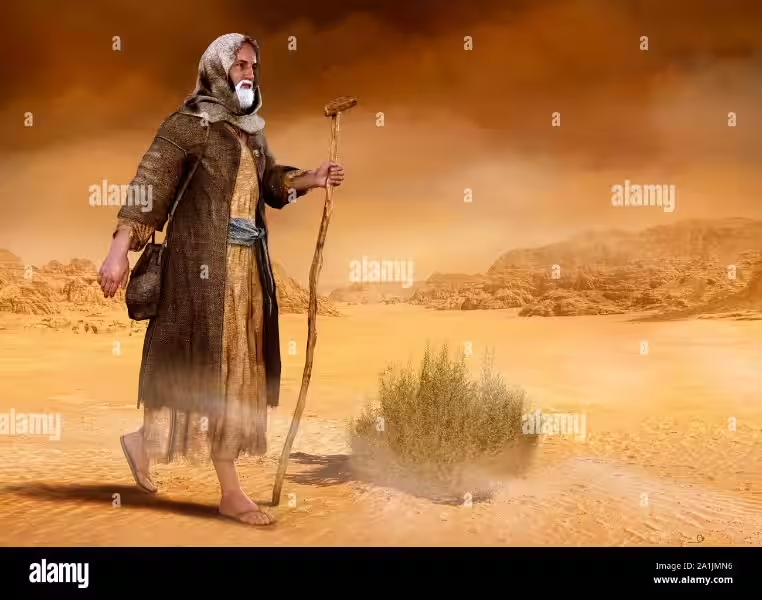
The story of Moses leading the Israelites out of Egypt and across the desert is a cornerstone of Abrahamic faiths. But the precise location of this "Moses desert" remains a subject of intense scholarly debate, impacting our understanding of the Exodus narrative itself. This ambiguity stems from the lack of clear extra-Biblical evidence and differing interpretations of the biblical text. Pinpointing the exact route significantly impacts our understanding of the scale and nature of the famous parting of the Red Sea.
- The Egyptian Approach: A Shorter Journey
- The Hebrew Approach: A Trek Across the Sinai
- Beyond the Geographic Debate: The Significance of the Moses Desert
-
Moses' Desert Journey: Frequently Asked Questions
- What is the significance of the desert journey in the story of Moses?
- Where did Moses and the Israelites cross the desert?
- How long did the desert journey take?
- What is the "Egyptian approach" to the desert journey?
- What is the "Hebrew approach" to the desert journey?
- What are the main differences between the "Egyptian" and "Hebrew" approaches?
- Why is the location of the desert journey so debated?
- How does the desert journey relate to the Red Sea crossing?
- What role did divine intervention play in the desert journey?
- What challenges did the Israelites face during their desert journey?
The Egyptian Approach: A Shorter Journey
This interpretation focuses on geographic features close to Egypt, suggesting a more localized event. Proponents of this theory typically place the crossing near one of the lakes in the Nile Delta.
The reasoning behind this is largely based on a presumed shorter journey across the desert. They point to the three campsites mentioned in the Book of Exodus – Succoth, Etham, and a third by the sea. Using this information, they estimate a three-day journey of approximately 12 miles across relatively flat, sandy terrain. This calculation considers the limitations of traveling with livestock and large groups of people. This shorter distance implies a smaller body of water suitable for a miraculous parting.
The Hebrew Approach: A Trek Across the Sinai
In contrast, the "Hebrew approach" prioritizes interpretations of Hebrew terms and a broader understanding of the Exodus narrative. This perspective places the crossing at the Gulf of Aqaba, requiring a significantly longer journey across the Sinai Peninsula.
This estimation necessitates a much longer journey across the Sinai Peninsula, potentially 150 miles or more across its widest point. This interpretation allows for a faster travel pace, estimated at 20-25 miles a day. This is justified by arguing that the Israelites, possibly aided by the divinely provided pillar of cloud and fire, could travel both day and night, significantly increasing their daily distance. This longer journey naturally implies a much larger body of water for the famous parting event.
Reconciling the Discrepancies
The stark contrast between these two approaches highlights the central challenge in pinpointing the Moses desert. The significant difference in estimated travel time and distance – from a few days to potentially several weeks – profoundly impacts the potential locations for the Red Sea crossing.
A three-day journey suggests a smaller, more localized event near the Nile Delta. Conversely, a longer journey across the Sinai Peninsula points to the much larger Gulf of Aqaba as the more likely location for the Red Sea crossing described in the Bible. Both approaches require careful consideration of the biblical text and the logistical challenges presented by moving a large group of people and livestock across a desert environment. Furthermore, the various interpretations of the biblical descriptions of the journey, including the miraculous pillar of cloud and fire, also need to be considered.
Beyond the Geographic Debate: The Significance of the Moses Desert
The debate over the precise location of the Moses desert extends beyond mere geographic speculation. It speaks to broader questions about the interpretation of biblical narratives, the balance between literal and metaphorical readings, and the interplay between faith and historical evidence.
Understanding the journey across the Moses desert, regardless of its exact location, provides crucial context to the broader narrative of the Exodus. It highlights the challenges faced by the Israelites, their reliance on faith, and the divine intervention described in the biblical text. Whether the journey was three days or three weeks, it underscores the profound spiritual and physical transformation of the Israelites' journey from slavery to freedom. The arduous trek through the harsh desert landscape serves as a powerful symbol of their trials and eventual liberation.
The Larger Narrative and its Implications
Ultimately, the location of the Moses desert, and consequently the Red Sea crossing, remains a subject of ongoing discussion and debate. Yet, the very act of exploring this question enriches our understanding of the Exodus story, its symbolism, and its lasting impact on religious thought and cultural identity. The ongoing debate demonstrates the complexity of interpreting ancient texts and the diverse perspectives that can arise from different methodologies and interpretations.
Regardless of the precise location, the Moses desert remains a powerful symbol of hardship, faith, and ultimate deliverance. It represents the struggles faced by individuals and communities in their pursuit of freedom and their reliance on hope and divine guidance. The story resonates across cultures and times, offering a timeless narrative of perseverance, faith, and redemption. The ongoing debate serves to highlight the enduring power of the Exodus story and its continued relevance in our modern world. The very journey itself, regardless of its precise geographical location, encapsulates the core themes of the Exodus narrative.
Moses' Desert Journey: Frequently Asked Questions
What is the significance of the desert journey in the story of Moses?
The desert journey is a central element of the Exodus narrative. It represents the Israelites' transition from slavery in Egypt to freedom, a period of testing and divine guidance, and a pivotal stage in their journey towards the Promised Land. The specific location and length of this journey remain a subject of ongoing scholarly debate, impacting interpretations of the Red Sea crossing.
Where did Moses and the Israelites cross the desert?
The location of the desert traversed by the Israelites during the Exodus is uncertain and a major point of contention among scholars. Two primary theories exist: the "Egyptian approach" suggesting a relatively short journey across a flat area near the Nile Delta, and the "Hebrew approach" proposing a much longer trek across the Sinai Peninsula towards the Gulf of Aqaba. Lack of conclusive extra-biblical evidence makes definitive determination impossible.
How long did the desert journey take?
The duration of the desert journey depends heavily on the chosen route. The "Egyptian approach" suggests a three-day journey based on the three campsites mentioned in Exodus, while the "Hebrew approach" allows for a significantly shorter timeframe due to a faster travel pace enabled by divine assistance and the potentially longer daily travel distances.
What is the "Egyptian approach" to the desert journey?
The "Egyptian approach" prioritizes geographical proximity to Egypt. It proposes a shorter journey (approximately 12 miles) across a relatively flat, sandy area near the Nile Delta, leading to a crossing of a smaller body of water. This interpretation focuses on logistical limitations of travel with livestock and families.
What is the "Hebrew approach" to the desert journey?
The "Hebrew approach" emphasizes the Hebrew meanings of biblical terms and a larger-scale interpretation of the Exodus narrative. It suggests a much longer journey (approximately 150 miles) across the Sinai Peninsula, ending at the Gulf of Aqaba. This interpretation incorporates the potential for faster travel (20-25 miles per day) due to divine assistance mentioned in the biblical text.
What are the main differences between the "Egyptian" and "Hebrew" approaches?
The key difference lies in the estimated distance and duration of the desert journey. The "Egyptian approach" suggests a short, slow journey near Egypt, while the "Hebrew approach" proposes a longer, potentially faster journey across the Sinai Peninsula. This discrepancy significantly impacts the potential location of the Red Sea crossing—a smaller body of water versus the much larger Gulf of Aqaba.
Why is the location of the desert journey so debated?
The lack of extra-biblical archaeological evidence to corroborate the biblical account is a major reason for the debate. Different interpretations of the biblical text itself, varying understandings of ancient travel capabilities, and differing priorities in interpreting the story (geographical realities vs. theological principles) all contribute to the ongoing discussion.
How does the desert journey relate to the Red Sea crossing?
The location and length of the desert journey are directly relevant to the location and scale of the Red Sea crossing. A short desert journey implies a crossing of a smaller body of water, close to Egypt. A long desert journey suggests a crossing of a much larger body of water, such as the Gulf of Aqaba.
What role did divine intervention play in the desert journey?
The biblical narrative emphasizes divine guidance and intervention throughout the desert journey, particularly through the pillar of cloud and fire that guided the Israelites. This divine assistance is factored into the "Hebrew approach" calculations of travel speed and distance, but not necessarily in the "Egyptian approach."
What challenges did the Israelites face during their desert journey?
The Israelites faced numerous challenges, including providing food and water for a large population and livestock, dealing with the harsh desert environment, and potential encounters with hostile tribes. These logistical challenges are integral to assessing the plausibility of both the "Egyptian" and "Hebrew" approaches.