
Understanding Message Bibles: A Guide to Eugene Peterson's Translation
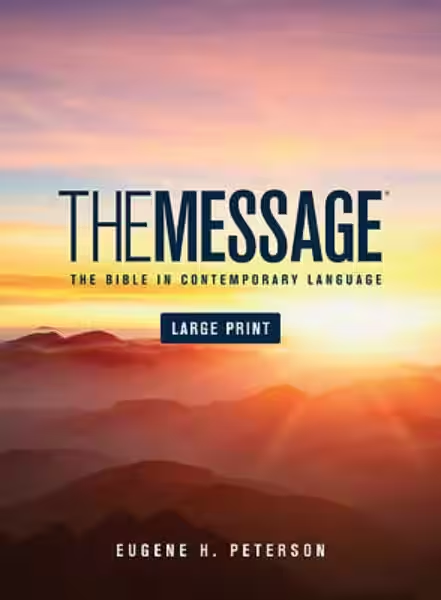
Many people looking for a fresh approach to scripture often turn to message bibles. But what exactly are they, and are they right for you? This article delves into the unique characteristics of The Message Bible translation, exploring its philosophy, strengths, and potential limitations.
- The Philosophy Behind The Message Bible
- Key Features of The Message
- Is The Message Bible Right for You?
- Beyond the New Testament: The Message's Continuing Influence
- Conclusion: Weighing the Strengths and Weaknesses of Message Bibles
-
Frequently Asked Questions about The Message Bible
- What is The Message Bible?
- How does The Message differ from other Bible translations?
- Who is The Message Bible for?
- What is the philosophical approach of The Message?
- Why are verse numbers omitted in The Message?
- Is The Message a suitable Bible for study?
- Is The Message considered a reliable translation?
- What are some potential criticisms of The Message?
The Philosophy Behind The Message Bible
The Message Bible, primarily the work of Eugene H. Peterson, isn't a literal translation in the traditional sense. Instead, it's a paraphrase, aiming for a contemporary feel and accessibility.
Peterson's goal wasn't to create a scholarly work packed with footnotes. He wanted to capture the essence of the original texts, making them resonate with modern readers. He sought to recreate the impact those ancient scriptures had on their original audiences, bridging the gap between then and now. His approach was deeply rooted in his pastoral experience, recognizing the need for a version that spoke directly to the hearts and lives of his congregation.
Key Features of The Message
Several distinct features set The Message apart from other Bible translations. These include:
Accessibility and Clarity
The Message prioritizes clarity and accessibility above all else. It uses contemporary language and idioms, making it much easier for modern readers to understand. Complex theological concepts are simplified, making the text engaging even for those unfamiliar with biblical language. This is a departure from more literal translations that often retain archaic phrasing and structures.
Practical Application
The translation emphasizes the practical application of biblical teachings to daily life. It moves beyond purely theological interpretations, encouraging readers to actively integrate the biblical message into their lives. This focus on real-world application makes The Message particularly appealing to those seeking guidance in their everyday struggles and decisions. Unlike some study Bibles, it doesn't overwhelm the reader with excessive commentary.
Spiritual Growth and a Relational Approach to God
The Message positions the Bible not just as a historical document but as a guide for spiritual growth and development. It fosters a sense of personal connection with God, emphasizing a relational approach rather than a distant, formal one. The warm and inviting tone of the language helps create a sense of intimacy and encourages personal reflection and prayer.
Interpretive Approach and Thematic Focus
While aiming for clarity, The Message employs an interpretive approach. This means Peterson didn't aim for a purely literal, word-for-word equivalent. Instead, he prioritized conveying the overall message and thematic focus of each passage. This approach can be both a strength and a weakness, depending on the reader's priorities.
Is The Message Bible Right for You?
The Message's unique approach makes it well-suited for certain readers but perhaps less so for others.
Who might benefit from The Message:
- New or infrequent Bible readers: Its accessibility and clear language make it an excellent starting point for those unfamiliar with biblical texts.
- Those seeking a devotional approach: Its focus on personal application and spiritual growth makes it ideal for daily reading and meditation.
- Readers who appreciate a contemporary style: The conversational tone and modern language can make the Bible feel more relevant and engaging.
Who might prefer a different translation:
- Scholars and Bible students: The interpretive nature of The Message may not satisfy those seeking a highly accurate, literal translation.
- Readers who value strict adherence to the original text: Its paraphrased nature might be a concern for those prioritizing a word-for-word rendering.
- Those needing detailed commentary and cross-references: The Message is a "reading Bible," not a study Bible, so it lacks the extensive annotations found in many other versions.
Beyond the New Testament: The Message's Continuing Influence
While Peterson's work initially focused on the New Testament, the Old Testament has since been translated using a similar approach. This consistency ensures a unified tone and style throughout the entire Bible.
The impact of The Message extends beyond its readability. It has inspired many to re-engage with scripture, finding fresh meaning and relevance in its pages. Many pastors and Bible study leaders have utilized The Message to deliver sermons and lead discussions, demonstrating its effectiveness in diverse contexts.
Conclusion: Weighing the Strengths and Weaknesses of Message Bibles
Message Bibles, particularly The Message, offer a unique approach to engaging with scripture. Its focus on accessibility, personal application, and spiritual growth resonates with many modern readers. However, its interpretive nature and lack of scholarly apparatus might make it unsuitable for others. Ultimately, the best translation for you depends on your individual needs and preferences. It's advisable to sample different versions to determine which best suits your style of reading and study. Remember to consider your goals—are you seeking a devotional experience, a deep theological understanding, or simply a clearer grasp of the biblical narrative? Your answer will guide you to the most appropriate and helpful version.
Frequently Asked Questions about The Message Bible
What is The Message Bible?
The Message is a contemporary paraphrase of the Bible, not a word-for-word translation. It aims to convey the meaning and spirit of the original biblical texts in clear, accessible, and engaging modern English. It was written by Eugene H. Peterson, who sought to make the Bible's message relevant to contemporary readers.
How does The Message differ from other Bible translations?
Unlike literal translations that prioritize word-for-word accuracy, The Message prioritizes conveying the original meaning and impact in a way that resonates with a modern audience. It uses contemporary language, idioms, and sentence structures, making it more easily understood and engaging than many traditional versions. It also omits verse numbers to improve the flow and reading experience.
Who is The Message Bible for?
The Message is intended for a broad audience, including those unfamiliar with the Bible and those who find traditional translations challenging or outdated. It seeks to bridge the gap between ancient text and modern reader, making the biblical message accessible and meaningful to contemporary individuals.
What is the philosophical approach of The Message?
The Message emphasizes accessibility, practical application, and spiritual growth. It seeks to make the Bible's wisdom relevant to daily life, fostering a personal and relational understanding of God. The translation employs thematic and contextual analysis, prioritizing clarity and contemporary relevance.
Why are verse numbers omitted in The Message?
Verse numbers were omitted to enhance the flow and readability of the text. The goal is to encourage a holistic understanding of passages, rather than a focus on isolated verses. This helps create a more immersive and natural reading experience, similar to how the original texts may have been experienced.
Is The Message a suitable Bible for study?
While The Message is primarily a reading Bible designed for engagement and enjoyment, it can still be used for personal study. Its focus on clarity and meaning allows for a good initial understanding of the text. However, for in-depth scholarly study, a more literal translation with accompanying commentaries may be more suitable.
Is The Message considered a reliable translation?
The Message's reliability depends on the reader's priorities. While not a word-for-word translation, it strives to accurately capture the essence and meaning of the original texts. Its use of paraphrase means it may not be suitable for all purposes, such as detailed theological or linguistic analysis. However, for personal devotion and understanding the overarching message, many find it a valuable resource.
What are some potential criticisms of The Message?
Some critics argue that The Message's paraphrastic nature compromises the precision and accuracy expected in a biblical translation. Others may find its informal style inconsistent with the perceived solemnity of scripture. It's important to be aware that it is a paraphrase, not a literal translation, and to use it accordingly. It’s best understood as a tool to help access the meaning of the text, not as the definitive interpretation.