
I Pressed On: Understanding the Nuances of Persistent Action and Influence
This article explores the multifaceted meaning of "press on," moving beyond its simple definition to delve into its implications in various contexts. We'll examine how "I pressed on" can represent both determined perseverance and potentially harmful coercion, highlighting the importance of understanding the nuances of this phrase.
- The Persistent Force of "Press On"
- The Dark Side: "Pressing Something On Someone"
- My Personal Reflection: "I Pressed On" and the Anagram of Depression
-
Frequently Asked Questions about "I Pressed On"
- What does "press on," as a verb, mean?
- How does the meaning of "press on" vary across different contexts?
- What does the phrase "press something on someone" imply?
- What are the ethical implications of "pressing something on someone"?
- What are the potential consequences of "pressing something on someone"?
- How did the author's experience with the anagram "I PRESSED ON" change their perspective on the phrase?
- What is the author's main takeaway from this experience?
- Why did the author decide not to remove their original social media post?
- What key themes are highlighted by the author's experience?
The Persistent Force of "Press On"
The verb "press," when used to describe an action, often implies a continuous and unwavering effort directed towards a specific goal. It's more than just action; it suggests a forceful, sustained application of energy, influence, or attention. Think of a weight pressing down on an object – the pressure is constant, unremitting. This persistent quality is central to understanding phrases like "I pressed on."
This concept manifests differently depending on the context. In some cases, "I pressed on" might signify unwavering determination in the face of adversity. Consider a marathon runner pushing through exhaustion, or a scientist relentlessly pursuing a breakthrough despite setbacks. In these scenarios, the phrase embodies resilience and commitment.
However, the same phrase can also have a less positive connotation. Imagine a situation where someone relentlessly pushes their agenda onto others, ignoring their objections or concerns. Here, "I pressed on" might describe an act of coercion or manipulation, rather than admirable persistence. The key difference lies in the intent and the impact of the action.
Examples of "Press On" in Different Contexts
The interpretation of "I pressed on" is heavily influenced by the surrounding circumstances. For instance, "I pressed on" with my work despite feeling overwhelmed could be a testament to perseverance. Conversely, "I pressed on" with my sales pitch even when the customer showed clear disinterest might be viewed as aggressive and insensitive.
This highlights the importance of considering the entire situation when interpreting the phrase. The same actions can carry vastly different meanings depending on the context, the intent behind the actions, and the overall outcome. Therefore, simply hearing "I pressed on" doesn't provide a complete picture; we need more information to understand the true meaning.
The Dark Side: "Pressing Something On Someone"
The phrase "press something on someone" takes the concept of persistent action and shifts it into a more problematic territory. It describes a situation where one individual compels another to accept something—an idea, a product, a service—that they may not want or need. This inherently involves an imbalance of power.
The individual doing the "pressing" often holds some form of leverage – social, economic, or emotional – which they exploit to achieve their aims. The recipient, on the other hand, feels pressured to comply, potentially sacrificing their autonomy and well-being. The act often bypasses genuine consent and free will.
The Ethical and Practical Implications of Coercion
The ethical implications of "pressing something on someone" are significant and depend heavily on the "something" being pressed and the methods used. Pressing a beneficial product on someone through aggressive sales tactics is different from forcing unwanted beliefs or actions upon them. The former might be considered unethical business practice, while the latter could constitute abuse or coercion.
The methods used to press also determine the severity of the action. Subtle manipulation through guilt-tripping or persistent persuasion is ethically dubious, while overt threats or intimidation are clearly unacceptable and potentially illegal. The line between acceptable persuasion and unacceptable coercion can be blurry, but it's crucial to recognize the potential for harm in such actions. Understanding this nuance is vital to navigating interpersonal relationships and professional interactions responsibly and ethically.
My Personal Reflection: "I Pressed On" and the Anagram of Depression
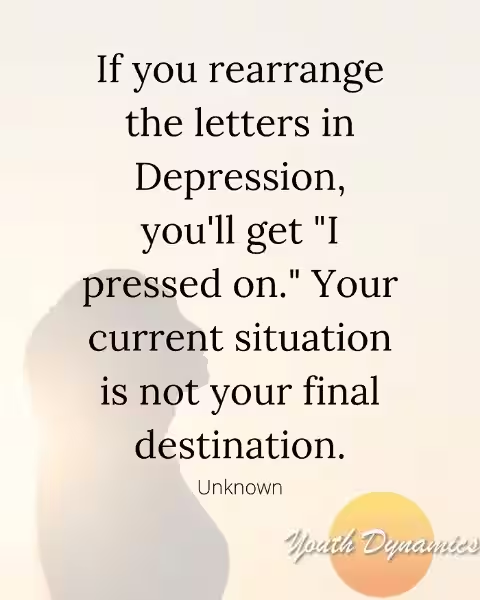
My journey with this phrase began with a seemingly innocuous observation: the anagram "I PRESSED ON" formed from the word "DEPRESSION." I shared this on social media, initially viewing it as a clever and positive message of perseverance. The positive social media response – likes, shares, and comments – reinforced this initial perception. I felt a sense of validation and community.
However, my perspective shifted dramatically when I later experienced a period of depression. Suddenly, the anagram felt dismissive and tone-deaf, akin to a trite "snap out of it" message. The seemingly empowering phrase felt invalidating and even hurtful in the context of my own struggle. This caused me to question whether my depressed followers might have shared similar feelings, and I contemplated removing the post. Ultimately, I decided against it due to its relatively low visibility.
The Importance of Context and Empathy
This experience taught me a valuable lesson about the importance of context and empathy in communication. The same words or actions can hold drastically different meanings depending on the speaker's perspective, their intentions, and the recipient's emotional state. While my initial intention was positive – to offer encouragement and support – the impact on others was far from guaranteed.
Consequently, I believe it's essential to approach online interactions with an understanding of the complexities of human experience. It's crucial to consider how our words and actions might be received, rather than solely focusing on our own intentions. Empathy and the willingness to assume positive intent where possible are crucial for creating a more supportive and less judgmental online environment. Learning to interpret "I pressed on" with proper consideration and understanding allows us to engage in more meaningful conversations.
Frequently Asked Questions about "I Pressed On"
What does "press on," as a verb, mean?
The verb "press on" signifies a persistent and continuous effort towards a specific goal. It emphasizes unwavering application of force, influence, or attention, despite obstacles or challenges. This isn't a momentary action, but a sustained pressure, whether it's emotional, aspirational, or physical.
How does the meaning of "press on" vary across different contexts?
While the core meaning of persistent, unwavering action remains consistent, the context shapes the specific interpretation. For instance, "pressing on" with a space mission suggests determined progress, while "negative feelings pressing on" in the film industry describes a continuous negative influence. The literal pressure of a uterus on the spine offers a tangible example of this sustained force.
What does the phrase "press something on someone" imply?
"Pressing something on someone" describes compelling or coercing an individual into accepting something they may not want or need. This highlights an imbalance of power, where the person "pressing" uses influence (social, economic, or emotional) to achieve their objective, potentially bypassing genuine consent.
What are the ethical implications of "pressing something on someone"?
The ethical implications depend heavily on "what" is being pressed and "how" it's being done. Pressuring someone to buy a product is different from pressuring them into accepting harmful ideologies or unwanted physical contact. Subtle manipulation can be ethically problematic, while overt pressure employing threats crosses ethical and potentially legal boundaries.
What are the potential consequences of "pressing something on someone"?
Consequences can range from resentment and anger to compromised autonomy and self-esteem. In severe cases involving harmful substances or exploitative situations, serious physical or psychological harm can result.
Initially, the author saw the anagram as a clever and uplifting message, gaining validation from social media engagement. However, after experiencing depression, the author found the message dismissive and insensitive, highlighting how the same phrase can be interpreted differently based on personal context and emotional state.
The author emphasizes the importance of context and the speaker's intentions when interpreting messages. They advocate for empathy, understanding, and assuming best intentions in online interactions, recognizing that seemingly positive messages can unintentionally cause harm. The author uses their experience to promote a message of understanding and mindful communication.
The author decided against removing the post because it had limited visibility. The decision was also influenced by a desire for the post to serve as a learning experience, highlighting the complexities of online communication and the importance of considering different perspectives.
The key themes include the importance of perseverance in the face of depression, the power of self-affirmation, the impact of personal emotional state on interpretation, and the significance of assuming best intentions in online communication. The author's experience serves as a personal anecdote illustrating these complex themes.