
Dominating Español Leer: A Journey Through Spanish Reading Comprehension
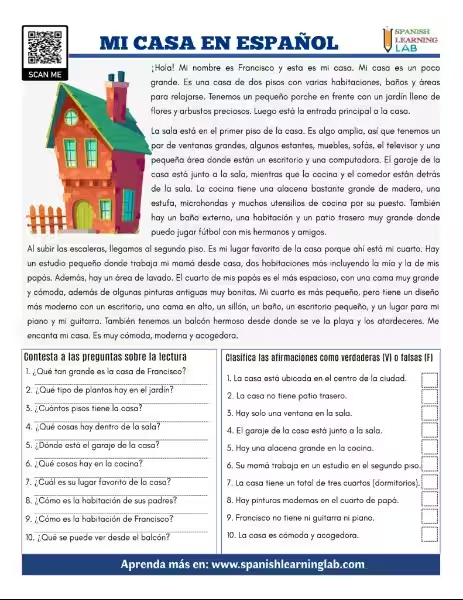
Learning to read in Spanish, or español leer, is a rewarding journey that opens doors to a rich culture and vast literary landscape. However, it's not merely about recognizing words; it's about understanding the nuances, the subtleties, and the overall message conveyed by the text. This article will explore the different levels of Spanish reading comprehension, providing you with a framework to assess your progress and identify areas for improvement.
- Understanding the Levels of Español Leer Comprehension
- Assessing Your Español Leer Skills
-
Español Leer: Frequently Asked Questions
- What is "Español Leer" about?
- How many levels of reading comprehension are there?
- What are the different levels of comprehension?
- How is reading comprehension assessed?
- What is the ultimate goal of "Español Leer"?
- Is this only about reading simple texts?
- How does it help with learning Spanish?
- Does it involve any other learning resources besides reading?
Understanding the Levels of Español Leer Comprehension
Reading comprehension isn't a single skill but a complex process built upon various abilities, from recognizing individual words to interpreting intricate literary devices. Think of it as a staircase, with each level building upon the previous one. Mastering español leer involves climbing this staircase, gradually improving your ability to understand increasingly complex texts.
We'll outline five distinct levels, offering insights into what each entails and how you can identify your current level. This understanding will empower you to target your learning efforts effectively. Remember, the goal is not just to read but to comprehend – to truly grasp the meaning and significance of what you're reading.
Level I: Basic Comprehension
At this initial level, your focus is on understanding simple, familiar texts. Think short stories with basic vocabulary, straightforward sentences, and easily identifiable information. You'll be able to extract explicit information directly from the text without needing to infer or interpret. This is the foundational stage, crucial for building confidence and fluency.
The key here is exposure to simple texts—children's books, basic news articles, or simple instructions. Consistent practice with these materials will quickly build your vocabulary and familiarity with basic sentence structures. Don't get discouraged if you find yourself at this level; it's the necessary first step towards more advanced comprehension.
Level II: Making Connections
Level II involves moving beyond simply identifying information to making simple connections within the text. You'll be able to understand the main idea of a relatively familiar text and deduce meanings from context clues. While still relying on straightforward language, you'll start to recognize relationships between different parts of the text.
Practice activities at this level could include summarizing short paragraphs, identifying the main idea of a short story, or matching vocabulary words with their definitions within a given context. Focus on understanding the flow of ideas and how sentences relate to each other to build a solid foundation for higher-level comprehension.
Level III: Interpretation and Inference
Level III introduces interpretation and inference. You're no longer just extracting information; you're analyzing it and drawing conclusions. You'll be able to understand moderately complex texts and use your existing knowledge to evaluate the information presented. This stage requires a more active engagement with the text, going beyond surface-level understanding.
Activities at this level could include answering open-ended questions, identifying the author's purpose or bias, or comparing and contrasting different perspectives within a text. Start reading articles on topics that interest you, focusing on understanding the implied meanings and drawing your conclusions based on the evidence presented.
Level IV: Detailed Comprehension of Complex Texts
Level IV demands a detailed understanding of complex, relatively unfamiliar texts. You'll be able to organize information from the text, overcome ambiguities, and use external knowledge to evaluate the information's accuracy and validity. This stage requires significant vocabulary and grammatical knowledge and the ability to handle more nuanced language styles.
At this stage, tackling longer articles, short stories, or even excerpts from novels will be beneficial. Pay close attention to the author's style, tone, and the underlying message. Compare what you read with your existing knowledge and form your own informed opinions.
Level V: Expert-Level Comprehension
Level V represents expert-level reading comprehension. Readers at this level can flexibly navigate complex, unfamiliar, and lengthy texts, demonstrating a complete and detailed understanding, even when faced with contradictory information. They can interpret subtle linguistic nuances and seamlessly integrate new knowledge into their existing understanding.
This level requires a significant investment in time and consistent practice with complex texts, possibly including literary criticism, academic papers, or in-depth journalistic pieces. Focus on critical evaluation, identifying biases, and formulating your own well-supported arguments based on the text's content. This is the pinnacle of español leer, a testament to years of dedicated learning and practice.
Assessing Your Español Leer Skills
Regularly assessing your reading comprehension is crucial. Consider the level of the texts you can comfortably understand, the types of questions you can answer, and the ease with which you can extract information and draw inferences. Remember that the levels are not rigid; they represent a spectrum of abilities, and you might find yourself operating at different levels depending on the text's complexity and your familiarity with the subject matter. Consistent practice and targeted learning are key to improving your español leer skills and reaching the highest levels of comprehension.
Español Leer: Frequently Asked Questions
What is "Español Leer" about?
"Español Leer" focuses on improving Spanish reading comprehension. It's not just about recognizing words, but understanding the meaning and intention behind the text, at various levels of complexity. The approach builds skills progressively, from understanding simple sentences to critically analyzing complex literary works.
How many levels of reading comprehension are there?
The approach outlines five distinct levels of Spanish reading comprehension. Each level builds upon the previous one, requiring increasingly sophisticated skills and understanding. Level I focuses on simple, familiar texts, while Level V requires expert-level comprehension of complex, nuanced, and lengthy texts.
What are the different levels of comprehension?
- Level I: Understanding simple, familiar texts with easily identifiable information.
- Level II: Making simple connections within the text and inferring meanings. Identifying the main idea of relatively familiar texts.
- Level III: Interpreting textual elements and drawing conclusions from different parts of the text. Understanding moderately complex texts and using prior knowledge for evaluation.
- Level IV: Detailed comprehension of complex and relatively unfamiliar texts. Organizing information and resolving ambiguities. Requiring precise understanding of long, complex texts and using external knowledge for evaluation.
- Level V: Expert-level comprehension. Flexible use of complex, unfamiliar, and lengthy texts. Complete and detailed understanding, including contradictory information. Interpreting subtle linguistic nuances and integrating the reading into existing knowledge and critically evaluating the text.
How is reading comprehension assessed?
Assessing reading comprehension involves considering various factors including the type of text, its context, and the reader's purpose for reading. The assessment helps to understand progress and identify areas for improvement.
What is the ultimate goal of "Español Leer"?
The ultimate goal is to develop a flexible and critical understanding of complex Spanish texts. This means being able to read and understand a wide range of materials, from news articles to literary works, and to critically evaluate the information presented.
Is this only about reading simple texts?
No, "Español Leer" covers a comprehensive range of reading levels. It progresses from basic comprehension of simple texts to advanced analysis of complex literary works and other challenging materials.
How does it help with learning Spanish?
Improving Spanish reading comprehension is crucial for overall language fluency. Strong reading skills build vocabulary, grammar understanding, and overall comprehension of the language. It’s a fundamental building block for effective communication in Spanish.
Does it involve any other learning resources besides reading?
While the core focus is on reading comprehension, the context suggests an educational platform, potentially incorporating additional resources like dictionaries, translators, and interactive learning tools to support the reading development process. These tools might include vocabulary building exercises or other supplementary activities.