
Do Not Suffer Fools: A Bible-Based Examination of Tolerance and Wisdom
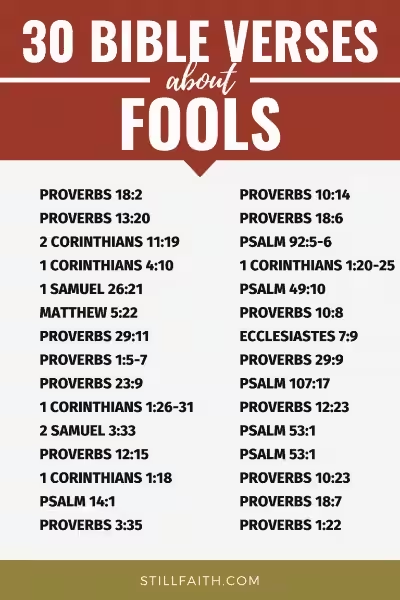
The phrase "do not suffer fools gladly" resonates with many, particularly those who've encountered individuals seemingly resistant to reason or logic. But where does this saying originate, and what does it truly mean in the context of faith and life? This exploration delves into the biblical roots of the phrase, examining its evolution and application in contemporary life.
- The Biblical Origin: 2 Corinthians 11:19
- The Evolution of Meaning: From Sarcasm to Modern Usage
-
Alternative Interpretations and Wisdom
- The Challenge of "Do Not Suffer Fools Gladly"
- What is the origin of the phrase "Don't suffer fools gladly"?
- What did Paul mean by "fools" in 2 Corinthians 11:19?
- What is the modern meaning of "Don't suffer fools gladly"?
- How has the meaning of the phrase evolved?
- Is there a positive interpretation of the phrase?
- What are some examples of the phrase's use in modern culture?
- Is the phrase always used negatively?
- Does Shakespeare use the phrase?
- Are there any significant interpretations beyond the negative and Chesterton's positive view?
The Biblical Origin: 2 Corinthians 11:19
The seed of the phrase "do not suffer fools gladly" lies in 2 Corinthians 11:19, a passage penned by the Apostle Paul. The King James Version (KJV) renders it as, "For ye suffer fools gladly, seeing ye yourselves are wise." The New International Version (NIV) translates it slightly differently: "You gladly put up with fools since you are so wise!"
The key difference between these translations lies in the nuance of the verb "suffer." In the KJV's usage, "suffer" implies tolerance, perhaps even patience. The NIV's "put up with" carries a stronger sense of reluctant endurance. Regardless of the exact translation, it's crucial to understand Paul's intended meaning. He wasn't offering a life manual on tolerance; rather, he was employing biting sarcasm.
Paul wrote this passage within a larger defense of his apostleship. He was countering the influence of "super-apostles," charismatic individuals who presented a more appealing, worldly message than his own. The Corinthians, in Paul's view, were "suffering fools gladly" – readily accepting these false teachers while potentially rejecting the genuine message of the Gospel.
The Sarcastic Sting
Paul's sarcasm is evident in the juxtaposition of "suffer fools gladly" and "seeing ye yourselves are wise." By highlighting the Corinthians' alleged wisdom, he ironically underscores their folly in embracing superficial charisma over genuine faith. This isn't an endorsement of intolerance; it's a critique of misplaced priorities. The "fools" aren't simply intellectually deficient individuals; they represent those who prioritize worldly success and eloquence over spiritual truth.
It's essential to understand the historical context. Paul faced significant opposition, and his message of a crucified Messiah was often considered foolishness. He was essentially challenging the Corinthians to reconsider their judgment of what constitutes true wisdom and spiritual authority.
The Evolution of Meaning: From Sarcasm to Modern Usage
Over time, the phrase's meaning has shifted considerably from its original sarcastic context. While the original intent was a critique of misplaced acceptance, the modern usage leans towards expressing frustration or impatience with perceived stupidity. We often hear "do not suffer fools gladly" uttered in the face of stubbornness, illogical reasoning, or plain ignorance.
The Cambridge Idiom Dictionary, for example, defines the phrase as conveying annoyance at someone's perceived lack of intelligence. This modern interpretation focuses on the negative aspects—the frustration and annoyance—rather than the potential for amusement or even enlightenment, as some interpretations suggest.
The Intellectual and Cultural Connotations
The phrase's modern usage often carries an intellectual connotation. It's frequently invoked by those who value reason, logic, and intellectual rigor. It becomes a justification for a certain level of curmudgeonly behavior. However, this can lead to an exclusionary mindset, where those deemed "fools" are dismissed rather than engaged.
The shift in meaning also reflects a cultural tendency towards immediate gratification and impatience. In a fast-paced world, engaging with contrasting viewpoints often feels like a waste of precious time, leading to a preference for dismissing those we perceive as intellectually inferior rather than engaging in dialogue. This is in stark contrast to the patient, long-suffering approach often modeled in the Gospels.
Alternative Interpretations and Wisdom
While the common usage emphasizes frustration, some offer alternative perspectives. G.K. Chesterton, for instance, focused on the word "gladly." He suggested that the ability to find delight in interacting with so-called "fools" could be a source of profound wisdom. He viewed "great fools," those who possess a unique blend of conscious and unconscious humor, as individuals capable of surprising insights and unexpected wisdom.
This interpretation emphasizes the potential for learning and even enjoyment in encounters with those who differ from us. It challenges us to move beyond mere tolerance toward a more active engagement, searching for the unexpected wisdom that may lie hidden beneath the surface of perceived folly.
The Challenge of "Do Not Suffer Fools Gladly"
The phrase “do not suffer fools gladly” presents a paradoxical challenge. On one hand, it highlights the importance of discerning truth from falsehood, wisdom from folly. On the other, it risks becoming a justification for intolerance and elitism. The true wisdom, therefore, may lie not in simply avoiding "fools," but in approaching interactions with grace, patience, and a willingness to learn, even from those we initially deem less intelligent or insightful. The challenge lies in finding a balance between discerning truth and maintaining empathy and understanding. It's a journey that requires both intellectual rigor and spiritual maturity.
Ultimately, the question isn't whether to "suffer fools gladly," but how to engage with those who hold different perspectives in a way that honors both truth and compassion. This requires a careful examination of our own biases, a willingness to listen, and a deep understanding of the complexities of human interaction. Perhaps, then, we can transcend the limitations of a simple, often negative phrase and find a more nuanced and helpful approach to navigating our interactions with others.
Don't Suffer Fools Gladly: A FAQ
Here are some frequently asked questions about the phrase "Don't suffer fools gladly," its origins, and its meaning:
What is the origin of the phrase "Don't suffer fools gladly"?
The phrase originates from 2 Corinthians 11:19, where the Apostle Paul wrote (in the King James Version), "For ye suffer fools gladly, seeing ye yourselves are wise." However, the modern usage reverses the sentiment, frequently appearing as "Don't suffer fools gladly." Paul's original intent was sarcastic, criticizing the Corinthians for welcoming false teachers while potentially rejecting his genuine message.
What did Paul mean by "fools" in 2 Corinthians 11:19?
In Paul's context, "fools" refers to rival teachers and apostles who presented a superficially appealing message, contrasting with Paul's emphasis on the "foolishness of the cross." It's crucial to understand that this wasn't a condemnation of intellectual deficiency but rather a critique of those who prioritized worldly wisdom and success over genuine faith.
What is the modern meaning of "Don't suffer fools gladly"?
The modern interpretation has shifted significantly from Paul's original sarcastic usage. Today, "Don't suffer fools gladly" generally expresses a feeling of irritation or frustration towards those perceived as foolish or lacking in intelligence or common sense. It's a justification for impatience and dismissal of individuals deemed intellectually inferior.
How has the meaning of the phrase evolved?
The phrase's meaning has evolved from its original sarcastic context to a commonly used expression of annoyance with perceived stupidity. While Paul used it to highlight the Corinthians' preference for superficial wisdom, modern usage focuses on frustration and the desire to avoid engaging with individuals deemed intellectually frustrating.
Is there a positive interpretation of the phrase?
While the common modern usage is negative, G.K. Chesterton offered a contrasting perspective. He focused on the word "gladly," suggesting that tolerating fools could be a source of delight and even humor, particularly when recognizing the inherent incongruity in their actions and beliefs. Chesterton emphasized finding enjoyment in the interaction, rather than mere resignation.
What are some examples of the phrase's use in modern culture?
The phrase frequently appears in obituaries, often used to describe the deceased's personality or approach to life. It's also common among intellectuals, reflecting a certain intellectual pride or frustration with those deemed less intelligent.
Is the phrase always used negatively?
While predominantly used negatively, the phrase can be employed ironically or humorously, acknowledging the speaker's own potential flaws or limitations in patience. The context is crucial in determining the intended meaning.
Does Shakespeare use the phrase?
Shakespeare frequently depicted fools in his plays, but he didn't use the specific phrase "suffer fools gladly" in the Pauline or modern sense. His characters who are considered "fools" often possess a different type of wisdom or understanding.
Are there any significant interpretations beyond the negative and Chesterton's positive view?
The phrase's interpretation remains largely binary, swinging between the frustration inherent in the modern usage and the more nuanced, potentially positive view suggested by Chesterton. Other interpretations largely build upon these two main perspectives.