
Finding Your Bible Refuge: God's Promise of Protection and Salvation
Finding solace and security in a chaotic world is a universal desire. For believers, the Bible offers a profound answer: a Bible refuge in God Himself. This isn't merely a physical sanctuary, but a spiritual haven providing protection, comfort, and the promise of eternal life. This article delves into the multifaceted nature of this refuge, exploring its biblical foundations and practical implications for believers today.
- God as the Ultimate Fortress: Biblical Promises of Protection
- Beyond Physical Protection: The Spiritual Refuge of Salvation
- Old Testament Analogies: Cities of Refuge
-
Frequently Asked Questions about Biblical Refuge
- What is a "Bible refuge" in the context of faith?
- What biblical passages highlight God as a refuge?
- How do I access this spiritual refuge?
- Does this refuge protect me from all harm?
- What are the dangers of misplaced trust regarding refuge?
- How is the Old Testament concept of "cities of refuge" relevant today?
- What is the overall message of the Bible concerning refuge?
God as the Ultimate Fortress: Biblical Promises of Protection
The Bible consistently portrays God as a shield, fortress, and hiding place. Psalms are replete with imagery emphasizing God's active involvement in protecting His people. Psalm 91, for example, beautifully illustrates this: "He who dwells in the secret place of the Most High shall abide under the shadow of the Almighty. I will say of the Lord, ‘He is my refuge and my fortress; My God, in Him I will trust.’" (Psalm 91:1-2).
This isn't a passive protection; it's an active engagement. God doesn't just stand by; He intervenes, shielding believers from physical dangers, such as enemies and pestilence, as well as emotional distress. The imagery of God’s wings as a shelter (Psalm 91:4) speaks volumes about His encompassing care and unwavering presence. The key to accessing this refuge? Trusting in God and consistently pouring out your heart before Him (Psalm 62:8). This constant communication fosters a deep relationship, strengthening the connection to the spiritual refuge God offers.
Beyond Physical Protection: The Spiritual Refuge of Salvation
The concept of refuge extends far beyond physical safety. John 3:16-17 lays the foundation for understanding the spiritual dimension: "For God so loved the world that He gave His only begotten Son, that whoever believes in Him should not perish but have everlasting life...For God did not send His Son into the world to condemn the world, but that the world through Him might be saved."
This passage highlights God's love as the bedrock of salvation, offering eternal life through faith in Jesus Christ. This salvation is the ultimate refuge from spiritual death and eternal condemnation. Jesus himself is described as the "door" (John 10:9) and the "good shepherd" (John 10:11) who protects His sheep, ensuring their eternal life. Ephesians 2:4-6 reinforces this, describing salvation as a gift of God's grace, elevating believers to a heavenly place with Christ. This spiritual refuge offers peace, forgiveness, and the assurance of a future free from the burdens of sin and death.
Misplaced Trust: The Dangers of Worldly Reliance
While the Bible emphasizes God as the ultimate refuge, it also cautions against misplaced trust. Jeremiah 17:5-7 starkly contrasts the futility of relying on human strength with the blessedness of trusting in the Lord: "Cursed is the man who trusts in man and makes flesh his strength, whose heart departs from the Lord." This warning underscores that true refuge lies solely in God, not in worldly possessions, human achievements, or fleeting comforts. Proverbs 18:10 further reinforces this, likening the "name of the Lord" to a strong tower where the righteous find safety.
This isn't a condemnation of earthly endeavors, but a call for proper perspective. We must recognize that true, lasting security is found only in our relationship with God. Our trust should be anchored in Him, not in the shifting sands of worldly pursuits.
Old Testament Analogies: Cities of Refuge
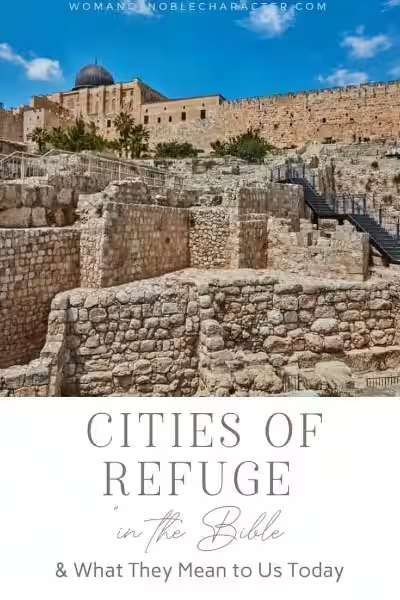
The Old Testament concept of "cities of refuge" (Joshua 20:1-9) provides a compelling analogy to the spiritual refuge offered by God. These cities offered temporary protection to those who had unintentionally killed someone, illustrating God's provision of safety even in the midst of difficult circumstances.
While the physical cities no longer exist, their significance lies in the principle they represent: God's provision of sanctuary and protection, even in times of unintentional wrongdoing. This resonates with the broader biblical message: even when we stumble, God offers a place of refuge, a path to reconciliation and restoration, ultimately pointing towards the greater spiritual refuge found in salvation through Christ.
Understanding "Refuge" in the Psalms: A Deeper Dive
The Psalms offer a rich tapestry of expressions reflecting the Israelites' relationship with God amidst hardship and persecution. Understanding "refuge" in the Psalms requires moving beyond a simple geographical sanctuary to embrace a multi-faceted theological concept. It encompasses not only physical protection but also spiritual solace, divine intervention, and the assurance of God's unwavering presence.
The Psalmist's cries for help reveal a deep dependence on God's power and justice. The concept of refuge is intertwined with justice and righteousness, portraying God as a righteous judge who defends the innocent and punishes the wicked. The imagery extends beyond the physical, encompassing a spiritual sanctuary where God's presence offers comfort, peace, and strength, even in overwhelming adversity. This internal refuge fosters hope and faith, even when facing seemingly insurmountable challenges. The journey depicted in the Psalms – from despair and lament to trust and praise – showcases the enduring nature of God’s refuge. The Psalms are a testament to the continuous need for and unwavering availability of divine protection and solace. Choosing God as your Bible refuge is choosing a constant, unwavering source of strength and security.
Frequently Asked Questions about Biblical Refuge
What is a "Bible refuge" in the context of faith?
In the Bible, refuge isn't just a physical place of safety; it's primarily a spiritual reality. It refers to the protection, solace, and salvation God offers believers from all forms of adversity—physical threats, emotional distress, and spiritual dangers. This refuge is found in God's unwavering love and power, providing not only temporary protection but also eternal life. Think of it as a secure haven found in a relationship with God.
What biblical passages highlight God as a refuge?
Numerous Psalms emphasize God's role as a shield, fortress, hiding place, and shelter (Psalms 18:30, 27:5, 91:4, 91:1-2, 46:1, 32:7, 119:114, 31:19-21). These depict God as actively involved in protecting believers. John 3:16-17 and John 10:9-11 emphasize God's love and Jesus' role as the "door" to salvation and "good shepherd," offering spiritual refuge and eternal life. Ephesians 2:4-6 reinforces salvation as a gift securing our heavenly place with Christ. The concept is further illustrated by the "cities of refuge" in the Old Testament (Joshua 20:1-9), a tangible analogy of God's provision of sanctuary.
How do I access this spiritual refuge?
Accessing this refuge hinges on trust in God and a consistent relationship with Him. Pouring out your heart before God in prayer (Psalm 62:8) is crucial. Faith in Jesus Christ, as highlighted in John 3:16-17, is central to experiencing the spiritual refuge of salvation. This involves actively seeking God's guidance, obeying His commands, and relying on His promises. It's not a passive state but an active participation in a relationship with the divine.
Does this refuge protect me from all harm?
While God promises protection and solace, the Bible doesn't guarantee freedom from all suffering in this life. The refuge offered is primarily spiritual and eternal. It provides strength, comfort, and hope in the face of adversity, leading to ultimate salvation. While God may intervene in physical circumstances, it's important to understand that the ultimate refuge is in His love, grace, and the promise of eternal life.
What are the dangers of misplaced trust regarding refuge?
Jeremiah 17:5-7 warns against relying on human strength or worldly possessions for refuge. Proverbs 18:10 emphasizes that true safety lies in the "name of the Lord," not in material things or human endeavors. Misplaced trust can lead to disappointment and despair, highlighting the importance of placing our complete faith and reliance solely on God.
How is the Old Testament concept of "cities of refuge" relevant today?
The Old Testament "cities of refuge" serve as a powerful analogy for God's provision of sanctuary and protection. While not literal cities today, the principle remains: God offers a place of safety and protection, even amidst difficult circumstances. It highlights God's grace and provision, even in times of unintentional wrongdoing or hardship. The temporary nature of those cities reminds us that our ultimate refuge is in God's eternal embrace, not temporary physical safety.
What is the overall message of the Bible concerning refuge?
The Bible conveys a message of hope and assurance regarding refuge. God's protection extends beyond physical or temporal safety to embrace spiritual salvation and eternal life. The emphasis on trust, faith, and obedience highlights the active role of believers in experiencing God's refuge. This refuge is a source of comfort and strength amidst life's challenges, ultimately leading to eternal peace and security in a relationship with God.