
Beggar's Coat: Unveiling the Transformative Power of Faith
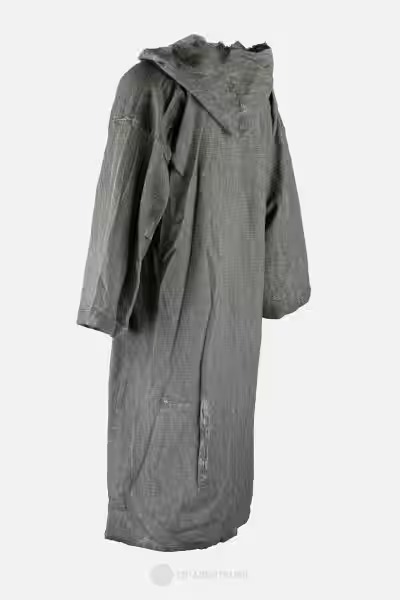
This article explores the powerful parable of Bartimaeus, the blind beggar in Mark 10:46-52, and how it relates to our own spiritual journeys. We will examine how Bartimaeus's "beggar's coat" symbolizes the limitations we face, and how embracing faith can lead to profound transformation.
- The Identity Crisis: Bartimaeus and the Beggar's Coat
- Breaking Free: The Symbolic Act of Rejection
- From Beggar's Coat to New Identity: A Metaphor for Spiritual Renewal
- Shedding the Old and Embracing the New: A Call to Action
-
Beggar's Coat: Frequently Asked Questions
- What is the "beggar's coat" in the context of the Bartimaeus parable?
- How does Bartimaeus's "beggar's coat" relate to spiritual transformation?
- What does "throwing off the beggar's coat" symbolize spiritually?
- How does Bartimaeus's persistence in his plea relate to the concept of the "beggar's coat"?
- What is the significance of Jesus's response to Bartimaeus?
- How can we apply the parable of Bartimaeus and the "beggar's coat" to our own lives?
- What role does engaging with God's Word play in shedding the "beggar's coat"?
- Is the "beggar's coat" only about physical limitations?
The Identity Crisis: Bartimaeus and the Beggar's Coat
Bartimaeus, a blind beggar, lived a life defined by his limitations. In Roman times, beggars often wore a designated "beggar's coat," a visible marker of their societal standing. This garment wasn't just clothing; it was an identity, a symbol of dependence and societal acceptance of his low status. Bartimaeus, at least initially, seemingly accepted this identity. He was a part of the system, relying on the charity of passersby.
His acceptance of the beggar's coat, however, didn't represent contentment. It represented a reality, a harsh truth of his daily life. The coat was a visual representation of his perceived limitations and societal role. It was a comfortable yet limiting cage. It defined him, and this is a crucial aspect to understand the story's deeper meaning. His identity was inextricably linked to his condition and his role in society.
Breaking Free: The Symbolic Act of Rejection
The encounter with Jesus dramatically alters this reality. Upon hearing of Jesus's arrival, Bartimaeus cries out, not for alms, but for mercy. This bold act, his persistent pleas to Jesus, is extraordinary. He isn't subtly asking for help; he's forcefully demanding it. His cries, "Jesus, Son of David, have mercy on me!" demonstrate a faith that transcends his societal limitations.
The text emphasizes Jesus's response. He stops His journey, a significant act that showcases the importance of Bartimaeus's plea. While the text doesn't explicitly mention Bartimaeus "throwing off" his beggar's coat, this act is interpreted symbolically as a rejection of his former identity. He's not just asking for physical healing; he's seeking a complete transformation. This rejection is a powerful demonstration of his faith and his willingness to embrace something completely new. He's gambling his entire existence on this interaction.
The Significance of Bartimaeus's Plea
Bartimaeus’s persistent cries weren't merely a desperate attempt for healing; they were a declaration of faith. His cries were a rejection of his defined role and a courageous step towards a new identity. His actions are a powerful example of active faith, not passive acceptance of his situation. He didn't wait for help; he actively pursued it. This is critical to understanding the narrative's message.
Jesus's Response: Faith as the Catalyst
Jesus's response, "Your faith has saved you," is profound. The healing isn't just a physical miracle; it's a spiritual transformation. This healing is directly tied to the unwavering faith demonstrated by Bartimaeus. This is not a mere coincidence; it's a deliberate emphasis on the spiritual component of the miracle. The restoration of sight is symbolic of a deeper spiritual awakening.
From Beggar's Coat to New Identity: A Metaphor for Spiritual Renewal
The parable serves as a potent metaphor for spiritual transformation. The "beggar's coat" represents the limitations imposed by sin, doubt, fear, and other negative attributes. These are the shackles of the "old man," a state of spiritual bondage. This old self, bound by sin, is the state from which Jesus offers liberation.
The healing of Bartimaeus mirrors the new identity received through faith in Christ, the "new man" born again (2 Corinthians 5:17). The new identity is not passively received, but actively embraced through the rejection of the old self and the acceptance of faith in Jesus. This is not a passive process; it requires active participation and a conscious decision. This analogy speaks to the transformative power of genuine faith.
Cultivating the New Identity
This new identity is not a one-time event but a continuous process nurtured by engaging with God's Word and actively living out our faith. It's a continuous journey of growth and spiritual transformation. This growth is fundamental to maintaining the new identity and continuing to reject the old self and its limitations. The new identity is not an arrival destination but a journey that unfolds throughout one's life.
The Importance of Scripture
The Bible, through its teachings, narratives, and wisdom, provides the framework for understanding and navigating this transformation. It is a vital tool for understanding and living out this new identity and staying away from the old one. Regular engagement with Scripture provides guidance, strength, and nourishment for the continued journey toward spiritual maturity.
Shedding the Old and Embracing the New: A Call to Action
The parable of Bartimaeus calls us to actively reject our own "beggar's coats"—the limiting identities rooted in sin that hold us back. We must choose to embrace the "new coat" offered through Christ, a life empowered by faith.
This involves a conscious decision to reject the old patterns of behavior and thinking that hinder spiritual growth. It requires embracing a proactive faith, like Bartimaeus, and actively seeking a deeper relationship with God. This is not a passive process, but an active commitment to transformative change. It is a choice that requires courage, humility, and a willingness to surrender to God's will. It’s a journey of faith, of shedding the old and embracing the new. It’s about moving from a life defined by limitations to one defined by the transformative power of faith in Jesus Christ.
Beggar's Coat: Frequently Asked Questions
What is the "beggar's coat" in the context of the Bartimaeus parable?
The "beggar's coat" is a symbolic representation of the limitations and identity imposed by sin, doubt, fear, and other negative aspects of our lives. In the context of Bartimaeus, the blind beggar, it literally represented his societal status and the constraints of his begging life. Spiritually, it symbolizes the "old man" – our state of spiritual bondage that hinders our relationship with God.
How does Bartimaeus's "beggar's coat" relate to spiritual transformation?
Bartimaeus's act of essentially "throwing off" his beggar's coat (a symbolic interpretation) represents a rejection of his former limiting identity and a complete embrace of faith in Jesus. This act mirrors the spiritual transformation possible through faith in Christ. By rejecting the "beggar's coat" of sin and limitations, we open ourselves to receiving a new identity – the "new man" – in Christ.
What does "throwing off the beggar's coat" symbolize spiritually?
Symbolically, "throwing off the beggar's coat" signifies a complete surrender to faith and a willingness to risk everything for spiritual healing and transformation. It represents actively rejecting the limitations imposed by sin, doubt, and fear, and embracing the transformative power of faith in Jesus Christ. It's an act of leaving behind the old self and embracing a new life in Christ.
How does Bartimaeus's persistence in his plea relate to the concept of the "beggar's coat"?
Bartimaeus's persistent cries for mercy demonstrate a faith that refuses to accept the limitations of his "beggar's coat." His unwavering faith, despite societal norms and personal vulnerability, actively challenges the constraints of his former identity and compels a response from Jesus. This persistence underscores the necessity of actively pursuing spiritual transformation rather than passively accepting a life defined by sin.
What is the significance of Jesus's response to Bartimaeus?
Jesus's response highlights that spiritual healing is not merely a physical act but a transformation born from unwavering faith. His statement, "Thy faith has made thee whole," emphasizes that Bartimaeus's belief, his rejection of his "beggar's coat," was the catalyst for his healing. This underscores the importance of faith as the foundation for spiritual transformation.
How can we apply the parable of Bartimaeus and the "beggar's coat" to our own lives?
We can apply this parable by identifying and actively rejecting the "beggar's coats" in our lives – the limiting beliefs, sinful behaviors, and fears that hold us back from a closer relationship with God. This involves actively engaging with God's Word to nurture a new identity in Christ, freeing ourselves from the constraints of a life defined by sin and embracing the transformative potential of faith.
What role does engaging with God's Word play in shedding the "beggar's coat"?
Engaging with God's Word is crucial for cultivating and solidifying the new identity received through faith in Christ. The Bible provides the guidance and strength necessary to overcome the limitations of the “beggar’s coat” and to maintain the new identity in Christ, preventing a return to old habits and patterns. It helps to reinforce the spiritual transformation.
Is the "beggar's coat" only about physical limitations?
No, the "beggar's coat" is primarily a metaphor for spiritual limitations. While Bartimaeus's blindness was a physical limitation, the parable uses this to symbolize the deeper spiritual bondage caused by sin and the absence of a relationship with God. The physical limitation serves as an accessible example of a larger spiritual truth.