
Autism Bible: Finding Faith and Understanding in the Face of Autism
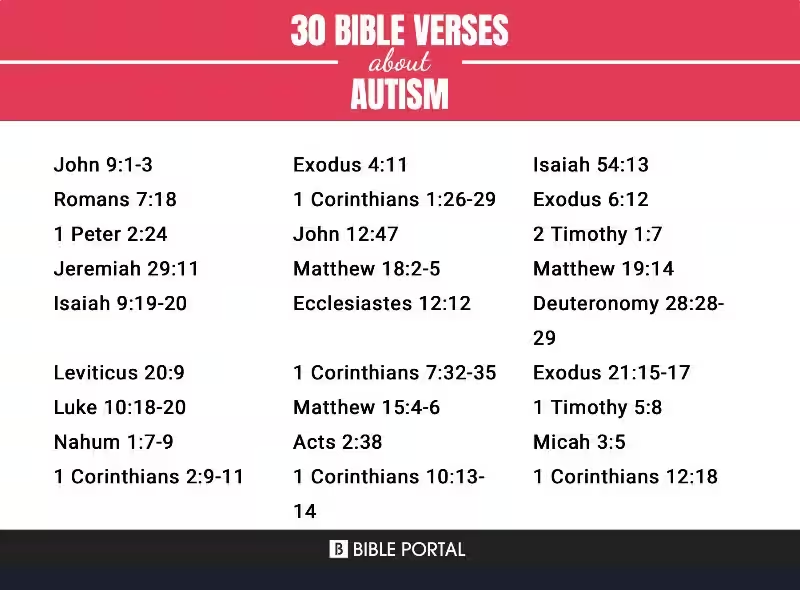
This article explores the intersection of Autism Spectrum Disorder (ASD) and faith, particularly within a biblical context. It aims to provide comfort, understanding, and resources for families and individuals navigating the complexities of ASD and their spiritual journeys. We'll explore several aspects of ASD, examine potential connections to biblical narratives, and ultimately highlight the power of faith as a source of strength and community.
- Understanding Autism Spectrum Disorder (ASD)
- Autism and the Bible: Exploring Potential Connections
- ASD, Spirituality, and the "Autism Bible"
- The Bible's Message of Love and Acceptance
- Finding Hope and Healing through Faith
- Conclusion: Embracing Inclusivity and Understanding
-
Autism and the Bible: Frequently Asked Questions
- What is autism spectrum disorder (ASD)?
- Are people with ASD less religious or spiritual than neurotypical individuals?
- Are there any figures or events in the Bible that might relate to autism?
- How can religious communities better support individuals with ASD?
- What kind of support does the Bible offer families and individuals affected by autism?
- How can religious leaders and clinicians collaborate to help individuals with ASD?
- What is the overall message regarding autism and faith?
Understanding Autism Spectrum Disorder (ASD)
Autism Spectrum Disorder is a complex neurodevelopmental condition characterized by persistent challenges in social communication and interaction, and by restricted, repetitive patterns of behavior, interests, or activities. The presentation of ASD varies significantly between individuals, making diagnosis challenging.
There's no single cause, with research pointing to a heterogeneous genetic basis and a complex interplay of genetic and environmental factors. Furthermore, the under-recognition of autism in females highlights the diversity within the spectrum, leading to delayed diagnosis and missed support opportunities.
Cognitive Models of Autism
Several cognitive models attempt to explain the core features of ASD. These include:
- Theory of Mind (ToM): This focuses on the ability to understand the mental states of others (beliefs, intentions, desires). While often associated with ASD, ToM deficits are not universally present, and the relationship is complex.
- The "Broken Mirror" Hypothesis: Suggests difficulties with self-recognition and understanding of one's own internal states.
- Central Coherence: This model highlights challenges in integrating information into a cohesive whole, leading to a focus on details rather than the bigger picture.
- Intense World Theory: This theory proposes that individuals with ASD experience the world as more intense, leading to sensory overload and avoidance behaviors.
These models offer different perspectives on the cognitive underpinnings of ASD, emphasizing the heterogeneity of the condition and the limitations of any single explanation. Recognizing this diversity is crucial for understanding the varied ways individuals with ASD experience the world and their faith.
Autism and the Bible: Exploring Potential Connections
The Bible, with its rich tapestry of characters and events, offers potential avenues for reflection on the experiences of individuals with ASD. It's important to approach these connections with sensitivity and acknowledge their speculative nature. We’re not aiming for definitive diagnoses, but rather exploring intriguing possibilities.
For example, the behavior of the boy in Matthew 17:15, who was afflicted with a spirit, exhibits characteristics that some might interpret as consistent with autistic traits. Similarly, certain aspects of Goliath's and Samson's behavior, characterized by intense focus and unusual strength combined with social difficulties, could invite such interpretations.
These observations highlight the long-standing presence of diverse neurological profiles across history, but are not definitive diagnoses. They simply prompt reflections on the acceptance and inclusion of individuals different from the societal norm, even if that difference wasn't understood at the time.
ASD, Spirituality, and the "Autism Bible"
Individuals with ASD, like all people, are capable of profound spiritual connection. However, their unique cognitive strengths and challenges might shape how they express and experience their faith. The term "Autism Bible," while not an established term, captures the individual's unique relationship with faith and may refer to how religious texts are interpreted through the lens of autism.
Many find comfort and meaning in the structure and predictability of religious rituals and belief systems. The literal interpretation of religious texts, common in some individuals with ASD, underscores the need for inclusive religious communities capable of adapting their practices to accommodate sensory sensitivities and diverse learning styles.
Creating Inclusive Religious Environments
Inclusive religious communities need to:
- Offer sensory-friendly environments minimizing overwhelming stimuli.
- Provide simplified explanations of complex theological concepts, using visual aids and diverse learning materials.
- Understand and support the literal interpretation style frequently found in ASD.
- Foster open and accepting attitudes towards neurodiversity.
These adaptations are crucial for creating spaces where individuals with ASD can fully participate and find spiritual nourishment.
The Bible's Message of Love and Acceptance
The Bible consistently emphasizes messages of love, compassion, and acceptance—messages particularly resonant for individuals with ASD and their families. Verses like Psalm 139:14, "I praise you because I am fearfully and wonderfully made," offer profound comfort and reassurance. Such verses affirm the inherent worth and dignity of every individual, regardless of neurodiversity.
Furthermore, the overarching message of God's unwavering love and support, even in the face of difficulties, provides strength and hope. The struggles faced by families raising children with ASD are acknowledged and validated, providing a powerful foundation for resilience and faith.
Finding Hope and Healing through Faith
Several biblical narratives offer powerful examples of hope in the face of adversity. The story of Joseph, despite facing betrayal and imprisonment, ultimately rises to prominence through God's plan. This narrative demonstrates that even seemingly negative events, like a child's diagnosis with autism, can be part of God's larger, often incomprehensible, plan.
The author's personal experience, emphasizing Romans 8:28 ("all things work together for good to those who love God), highlights the importance of trust and surrender to God's will, even when circumstances are difficult. While the definition of "good" might be ambiguous, the emphasis on sanctification and spiritual growth provides a framework for understanding God's work in the midst of hardship. This understanding offers hope and resilience to those grappling with the challenges of autism.
Conclusion: Embracing Inclusivity and Understanding
The relationship between autism and faith is multifaceted and evolving. Religious leaders and clinicians must collaborate to create sensitive and supportive environments that acknowledge the diverse ways individuals with ASD express their faith and spiritual experiences. Empathy, acceptance, and a commitment to inclusion are crucial for fostering communities where faith can be a source of strength, belonging, and spiritual growth for individuals with ASD and their families. The "Autism Bible", then, becomes not just a literal interpretation of scripture, but a testament to the power of faith to navigate life's unique challenges, transforming adversity into strength, and fostering hope in the face of uncertainty.
Autism and the Bible: Frequently Asked Questions
Here are some frequently asked questions about the intersection of autism spectrum disorder (ASD) and faith, particularly within a biblical context:
What is autism spectrum disorder (ASD)?
ASD is a complex neurodevelopmental condition characterized by persistent challenges in social communication and interaction, and restricted, repetitive patterns of behavior, interests, or activities. Its presentation varies greatly between individuals, including significant differences between male and female presentations. The genetic basis of ASD is heterogeneous, meaning there's no single gene responsible. Several cognitive models attempt to explain ASD, including Theory of Mind (ToM) deficits, the "broken mirror" hypothesis, central coherence weaknesses, and the intense world theory. It's crucial to remember that while ToM deficits are often associated with ASD, they aren't universally present.
Are people with ASD less religious or spiritual than neurotypical individuals?
No. Individuals with ASD are not inherently less religious or spiritual. However, their expression of faith may differ significantly. They may find comfort and profound spiritual connection in ritual and belief systems, particularly those offering structure and predictability.
Are there any figures or events in the Bible that might relate to autism?
Some biblical narratives, such as the boy in Matthew 17:15, or aspects of Goliath and Samson's behavior, have been interpreted as potentially consistent with autistic traits. It's important to stress that these are speculative interpretations and not definitive diagnoses.
How can religious communities better support individuals with ASD?
Religious communities should strive for inclusivity by creating sensory-friendly environments, providing simplified explanations of complex theological concepts, and using diverse learning materials. Adapting practices to accommodate sensory sensitivities and diverse learning styles is crucial.
What kind of support does the Bible offer families and individuals affected by autism?
The Bible's overarching messages of love, compassion, and acceptance offer profound support. Many verses emphasize God's unwavering love and support, reinforcing the idea that individuals with autism are "fearfully and wonderfully made." This provides comfort and encouragement to families navigating the challenges of raising a child with ASD.
How can religious leaders and clinicians collaborate to help individuals with ASD?
Collaboration between religious leaders and clinicians is vital to create sensitive and supportive environments. This partnership acknowledges the diverse ways individuals with ASD may express their faith and spiritual experiences. It ensures that appropriate support and understanding are provided.
What is the overall message regarding autism and faith?
The ultimate message is one of empathy, acceptance, and the potential for faith to be a source of strength and community for individuals with ASD and their families. Understanding the unique ways individuals with ASD experience faith and spirituality is crucial for fostering inclusivity and support.