
Understanding Ann Takamaki's Persona: A Complex Character Study
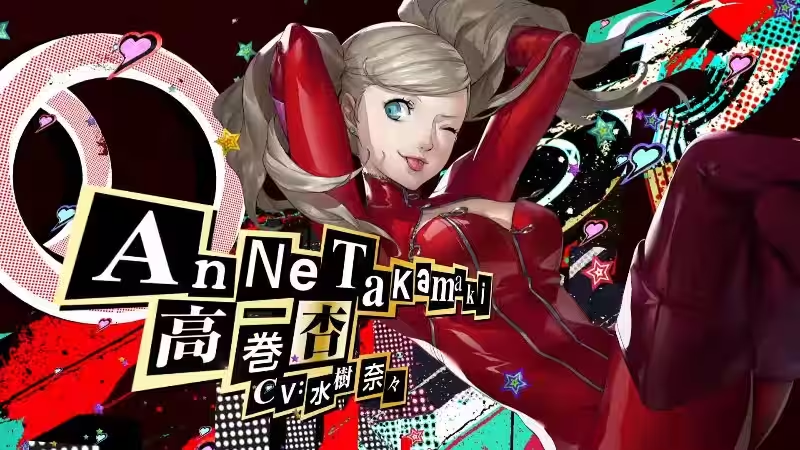
Ann Takamaki, a key figure in Persona 5, is more than just a pretty face. Her story is multifaceted, provoking both admiration and criticism, and understanding her character requires delving into the complexities of her design, narrative role, and reception. This exploration aims to provide a balanced perspective on Ann's persona, encompassing both her strengths and the controversies surrounding her portrayal.
Ann's Journey: From Victim to Phantom Thief
Ann's introduction paints her as an initially isolated figure at Shujin Academy. Her Japanese-American heritage, combined with the predatory actions of her teacher, Kamoshida, and the resulting fallout with her friend Shiho, leaves her vulnerable to rumors and social ostracization. This initial vulnerability, however, lays the groundwork for her transformation.
Her decision to join the Phantom Thieves stems from a deep-seated desire for revenge against Kamoshida, a powerful and influential figure who has abused her and others. This powerful motivation drives much of her character arc throughout the game. It's important to note, however, that her actions are not solely fueled by revenge. She demonstrates growth and resilience, forming strong bonds with the other Phantom Thieves and ultimately finding strength and agency within herself.
The Power of Carmen and Hecate
Ann's Persona, initially Carmen and later Hecate, reflects this transformation. Carmen, the fiery and passionate character of the opera, initially embodies Ann's rebellious spirit and desire for justice. The evolution to Hecate, a more powerful and multifaceted Persona, symbolizes her overcoming her trauma and embracing a more complex identity. This evolution mirrors her personal journey from a victim of abuse to a powerful and independent individual. The symbolism of Carmen, a character often associated with freedom and defiance against patriarchal norms, is particularly relevant to Ann's story.
Controversy and Criticism: Examining the Complexities of Ann's Portrayal
While Ann's character arc is compelling for many, her portrayal has also drawn significant criticism. One major point of contention is the game's handling of her sexual abuse. Critics argue that Persona 5 often prioritizes the perspectives of the abusers, underdeveloping Ann's character in the process. This, coupled with the game's occasional use of her trauma for comedic effect, has left many viewers feeling unsettled.
The "Dumb Blonde" Stereotype and Sexualization
Furthermore, some critics accuse the game of perpetuating harmful stereotypes, portraying Ann as a "dumb blonde" and unnecessarily sexualizing her. Her initial costume design, as well as certain interactions with other characters, contributed to this criticism. While her design later evolves, this initial portrayal overshadows other aspects of her character in the minds of many. These critiques are often contextualized within the broader discussions surrounding the "Cool Japan" initiative and its potential to reinforce sexist tropes.
A Balanced Perspective: Strength, Vulnerability, and Growth
Despite the valid criticisms, it's important to acknowledge the positive interpretations of Ann's character. Many see her as a powerful figure who takes ownership of her sexuality and inspires real-world victims of abuse. Her journey from victim to empowered individual is a testament to her resilience and internal strength. The evolution of her relationship with her friends and her ultimate reconciliation with her past are key elements that support this more positive reading of the character.
Beyond the Stereotypes
Her mixed-race heritage, and the societal pressures and stereotypes she faces, are equally significant aspects of her character, adding depth and nuance that go beyond surface-level interpretations. Discussing Ann’s Ann's persona allows us to navigate complex issues such as the representation of trauma, the dangers of sexualization in video games, and the importance of nuanced characters in media.
Conclusion: A Character Worth Discussing
In conclusion, Ann Takamaki is a complex and controversial character within the Persona 5 universe. While her portrayal is not without its flaws, her story offers a valuable opportunity to reflect on the representation of trauma, the complexities of female characters in video games, and the challenges of balancing compelling narratives with sensitive subject matter. Her journey, both its triumphs and its shortcomings, continues to fuel important discussions surrounding game design, representation, and the power of narrative to shape our understanding of complex social issues. The legacy of Ann's persona will likely continue to be debated and reinterpreted for years to come.
Who is Ann Takamaki?
Ann Takamaki is a major character in the video game Persona 5, a second-year student at Shujin Academy with Japanese-American heritage. She's a key member of the Phantom Thieves, operating under the codename "Panther." Her journey is significantly shaped by her experiences with sexual abuse at the hands of her teacher, Suguru Kamoshida, and the subsequent attempt of her friend Shiho Suzui to take her own life because of Kamoshida's actions.
What motivates Ann?
Ann's primary motivation for joining the Phantom Thieves is revenge against Kamoshida and a desire to prevent further suffering caused by his abuse. This desire for justice drives her actions throughout the game.
What is Ann's Persona?
In the Metaverse, Ann's Persona is Carmen (later evolving into Hecate). The symbolism of Carmen, a figure known for her defiance and independence, is often interpreted as representing Ann's own journey of reclaiming agency after trauma.
What is Ann's role in the Phantom Thieves?
Ann is a founding member of the Phantom Thieves, playing a crucial role in their operations. Her abilities and personality contribute significantly to the group's success.
What is the critical reception of Ann's character?
Ann's character has received mixed reviews. While some praise her strength and resilience in overcoming trauma, others criticize the game's handling of her abuse, suggesting that it's poorly executed, sexualizes her unnecessarily, and uses her trauma for comedic effect. Concerns have also been raised about her portrayal possibly reinforcing sexist tropes.
How is Ann's design and voice portrayed?
Ann's Phantom Thief costume went through several design iterations. She's voiced by Nana Mizuki (Japanese) and Erika Harlacher (English), with Harlacher aiming for a nuanced portrayal of a high school girl. Natsumi Uetake provided motion capture for Ann in Persona 5: Dancing Star Night.
Where else does Ann appear?
Beyond Persona 5, Ann appears in Super Smash Bros. Ultimate and the Persona 5 anime adaptation. Various merchandise featuring Ann, such as replicas of her clothing, has also been released.
What are some key interpretations of Ann's character?
Her character has been analyzed through various lenses, including discussions about her mixed-race heritage, the societal pressures she faces, and the symbolism of her Persona. Some positive interpretations highlight her growth and empowerment, while others focus on the game's shortcomings in portraying her trauma effectively. Her story is discussed within the framework of "Cool Japan" and its potential to perpetuate harmful stereotypes.