
Understanding the Valley of Achor: From Judgment to Hope
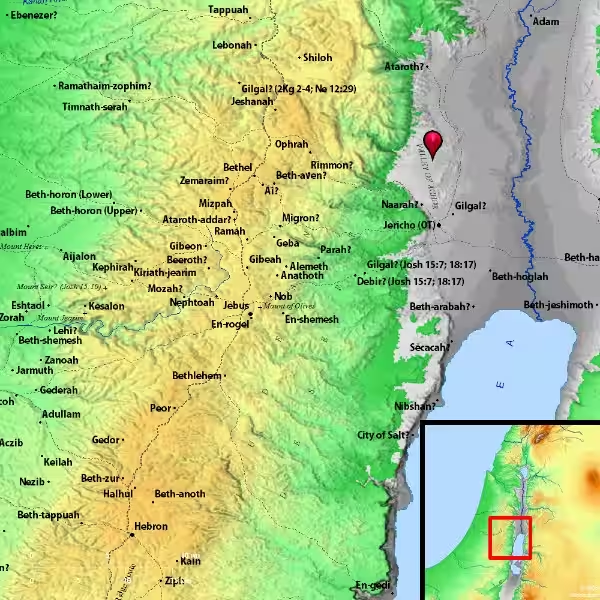
The Valley of Achor. The name itself evokes a sense of trouble and affliction, a place of punishment and despair. But the story of the Achor Valley is far richer and more nuanced than a simple narrative of divine retribution. It's a story of sin, consequence, and ultimately, the remarkable power of God's restorative grace. This article will delve into the biblical account of the Achor Valley, exploring its historical context, symbolic meaning, and enduring relevance for believers today.
- The Story of Achan and the Valley of Achor
- From Affliction to Hope: A Reinterpretation
- The Enduring Relevance of the Achor Valley
-
Frequently Asked Questions about the Valley of Achor
- What is the Valley of Achor?
- What happened in the Valley of Achor?
- Where exactly is the Valley of Achor located?
- What is the symbolic significance of the Valley of Achor?
- How does the Valley of Achor relate to themes of hope and restoration?
- What lessons can we learn from the story of the Valley of Achor?
The Story of Achan and the Valley of Achor
The Book of Joshua recounts the pivotal role the Achor Valley played in the Israelite conquest of Canaan. Following the miraculous fall of Jericho, the Israelites faced a seemingly insurmountable obstacle at the city of Ai. Their initial attack resulted in a crushing defeat, leaving the Israelites bewildered and demoralized.
God revealed the reason for their failure: Achan, a member of the tribe of Judah, had violated a sacred command by keeping some of the devoted spoils of Jericho for himself. This act of disobedience, seemingly insignificant in isolation, had far-reaching consequences. Achan's transgression wasn't simply a personal failing; it was a breach of the covenant between God and His people, affecting the entire community. The Israelites, bound together by their pact with God, suffered collectively for the actions of one individual. This resonates with the New Testament concept of the church as one body, where the actions of one member inevitably impact the whole.
The punishment meted out to Achan in the Valley of Achor was severe, a stark illustration of the weight of disobedience. He, his family, and all his possessions were stoned and burned. This act of purification was essential to restoring God's favor and clearing the path for the Israelites to continue their conquest. The Achor Valley, therefore, became inextricably linked with the consequences of sin and the importance of obedience within God's covenant.
From Affliction to Hope: A Reinterpretation
The story of the Achor Valley, however, doesn't end with Achan's demise. The valley's significance transcends its role as a site of judgment. Later biblical texts, particularly Hosea and Isaiah, offer a remarkably different perspective.
Hosea 2:15 speaks of the Valley of Achor as a "door of hope," a profound shift in meaning. This prophetic reinterpretation transforms the valley from a place of sorrow and punishment into a symbol of God's restorative power and His unwavering commitment to His people, even in the face of profound transgression.
Isaiah 65:10 further reinforces this message of hope and redemption. The prophet paints a picture of the Achor Valley as a place of prosperity and rest, a stark contrast to its previous association with judgment. The transformation of the valley mirrors God's capacity to turn even the most desolate of circumstances into something beautiful and fruitful. This powerful imagery conveys the message of God's unwavering faithfulness and His willingness to restore and renew His people, even after their most grievous failings.
The Dual Nature of the Achor Valley
The Achor Valley, therefore, embodies a powerful duality. It serves as a sobering reminder of the consequences of disobedience and the importance of upholding God's covenant. Simultaneously, it stands as a beacon of hope, illustrating God's unwavering love, His boundless capacity for forgiveness, and His ability to transform places of sorrow into places of profound blessing. This dual nature encapsulates the complexities of the divine-human relationship, highlighting both the weight of sin and the boundless reach of God's grace.
The Enduring Relevance of the Achor Valley
The lessons embedded within the story of the Achor Valley remain profoundly relevant for believers today. It underscores the importance of personal accountability and the potential consequences of individual actions within the wider community of faith. More importantly, it offers a profound message of hope and restoration, reminding us that even in the darkest of valleys, God's grace can prevail, transforming despair into hope and renewing our lives in ways we might never have imagined. The Achor Valley serves as a potent reminder that even after our most significant failures, God's love is unwavering, His mercy unending, and His power to redeem and restore is limitless. It's a reminder that even in our own "valleys of Achor," we can find a door of hope, leading us toward a future of renewal and restoration.
Frequently Asked Questions about the Valley of Achor
What is the Valley of Achor?
The Valley of Achor is a location mentioned in the Bible, primarily associated with the story of Achan in the Book of Joshua. It's situated northwest of Jericho and holds significant symbolic weight due to its connection with Achan's sin and subsequent transformation into a symbol of hope and restoration. The name "Achor" means "trouble" or "affliction," reflecting the events that took place there.
What happened in the Valley of Achor?
After the Israelites conquered Jericho, Achan, a member of the tribe of Judah, disobeyed God's command by keeping some of the devoted spoils for himself. This act led to a devastating defeat in the subsequent battle against Ai. God revealed Achan's sin as the cause of Israel's failure, highlighting the principle of corporate responsibility. As a consequence, Achan, his family, and his possessions were stoned and burned in the Valley of Achor. This event served as a stark illustration of God's intolerance for disobedience and the serious consequences of violating His commands.
Where exactly is the Valley of Achor located?
The precise geographical location of the Valley of Achor is debated among scholars. While generally placed in the vicinity of Jericho, between the Jordan Valley and higher ground, the specific location remains uncertain. The Wady Kelt, a ravine south of Jericho, is often suggested as a possibility. However, the biblical descriptions don't necessarily point to a single, specific location.
What is the symbolic significance of the Valley of Achor?
The Valley of Achor's significance lies in its dual representation. Initially, it symbolizes judgment and the consequences of disobedience, highlighting the seriousness of violating God's commands and the principle of corporate responsibility within the Israelite community. However, it is later reinterpreted prophetically in Hosea and Isaiah as a "door of hope" and a place of rest and prosperity. This transformation signifies God's capacity for forgiveness, His ability to transform sorrow into blessing, and the promise of a renewed future, emphasizing God's faithfulness to His covenant and His willingness to restore His people even after significant transgressions.
How does the Valley of Achor relate to themes of hope and restoration?
The story of the Valley of Achor moves beyond punishment to encompass themes of hope and restoration. The prophets Hosea and Isaiah reinterpret the valley as a symbol of God's transformative power. Hosea refers to it as a "door of hope," signifying God's restoration of His people after their repentance and His willingness to turn their troubles into blessings. Isaiah describes it as a place of rest and prosperity, demonstrating the potential for renewal and God's capacity to bring about positive change even in the face of hardship and past failings. This dual representation emphasizes God's unwavering love and commitment to His people, even after their failures.
What lessons can we learn from the story of the Valley of Achor?
The story of the Valley of Achor offers several key lessons: the importance of obedience to God's commands; the consequences of sin and the principle of corporate responsibility; the significance of repentance and God's capacity for forgiveness; and the potential for transformation and renewal even after significant hardship and failure. It reminds us of God's unwavering commitment to His covenant and His willingness to restore His people, offering a message of hope and redemption.