
Abraham Pray: A Powerful Intercession for Sodom
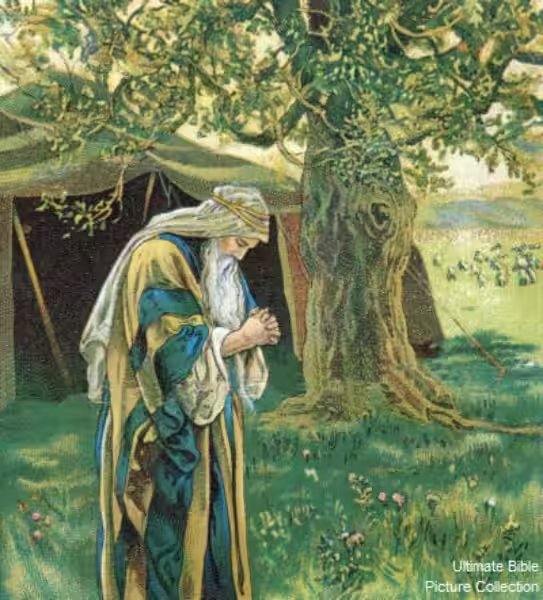
The story of Abraham's plea for Sodom, found in Genesis 18:16-33, is a compelling example of powerful intercession. It raises a crucial question for believers today: How can we emulate Abraham's faith and boldness in our own prayers? This article will explore Abraham's prayer, examining its key elements and drawing valuable lessons for our own spiritual lives.
- The Setting: God's Plan and Abraham's Response
- The Core of Abraham's Plea: Justice and Mercy
- The Outcome and Theological Lessons
-
Abraham's Prayer for Sodom: Frequently Asked Questions
- What is the story of Abraham's prayer for Sodom?
- What was the core of Abraham's plea to God?
- How did Abraham approach his intercession?
- What theological lessons can we learn from Abraham's prayer?
- Was Abraham's prayer successful in saving Sodom?
- What does Abraham's prayer teach us about approaching God in prayer?
- What is the significance of the decreasing numbers in Abraham's requests?
- What is the overall message of the story of Abraham's prayer for Sodom?
The Setting: God's Plan and Abraham's Response
The narrative begins with God revealing his intention to investigate the wickedness of Sodom and potentially destroy it. This isn't presented as a fait accompli, but as a plan open to discussion. This is a significant point. God, in His sovereignty, chooses to engage with Abraham. This immediately establishes a crucial element of the story: God's willingness to listen, to dialogue, and to be moved by human prayer.
The divine disclosure doesn't lead Abraham to passively accept God's judgment. Instead, he initiates a remarkable dialogue, questioning God's plan and arguing for mercy. This proactive response underscores the importance of actively engaging with God, not merely accepting whatever He decrees. It emphasizes that faith isn't passive acceptance but an active, engaged relationship.
The Core of Abraham's Plea: Justice and Mercy
The heart of Abraham's plea rests on the principle of justice. He boldly confronts God, stating, "Far be it from thee to do such a thing, to slay the righteous with the wicked, so that the righteous fare as the wicked! Far be it from Thee! Shall not the Judge of all the earth do right?" This isn't a mere suggestion; it's a direct challenge to God's character, highlighting the incompatibility of divine justice with indiscriminate destruction.
Abraham grounds his argument in God's own nature, appealing to His inherent righteousness. He doesn't argue against God but with God, based on what he knows of God's character. This is a potent lesson for us: our prayers should be rooted in God's revealed attributes—His mercy, compassion, justice, and love.
The Gradual Reduction: A Testament to Persistence
Abraham doesn't stop at a single request. His strategy involves a gradual reduction in the number of righteous people required to spare Sodom. He begins by asking for the city's preservation if 50 righteous individuals reside there, then progressively lowers the number to 45, 40, 30, 20, and finally, 10.
This incremental approach displays unwavering persistence and a willingness to push the boundaries of divine mercy. It also suggests a growing understanding of God's willingness to listen and respond to persistent, humble prayer. The shift from decreasing by fives to decreasing by tens demonstrates perhaps a growing boldness in Abraham's faith.
Humble Boldness: A Paradoxical Strength
Throughout his intercession, Abraham maintains a striking balance between humility and boldness. He acknowledges his own insignificance, stating, "Behold I have taken upon myself to speak to the Lord, I who am but dust and ashes," yet he persists in his plea without wavering.
This combination of humble acknowledgment and fervent advocacy is vital. We must recognize our limitations before God, while maintaining the boldness to ask for extraordinary things. This paradoxical strength is a hallmark of effective prayer. It's not arrogance but faith-filled persistence.
The Outcome and Theological Lessons
Ultimately, God agrees to spare the city if ten righteous individuals can be found. However, the text doesn't reveal whether this threshold was met, leaving us to ponder the gravity of Sodom's sin and the limitations of human righteousness.
This doesn't diminish the significance of Abraham's prayer. The negotiation itself is the central point, showcasing the power of persistent, faith-filled intercession. The story teaches us about God's willingness to listen, the importance of appealing to His character, and the power of persistent prayer.
Key Lessons from Abraham's Prayer
- God's willingness to listen: The very fact that God engages with Abraham's prayer highlights His openness to dialogue and responsiveness to sincere pleas.
- The importance of intercession: Abraham's actions demonstrate the power and responsibility of interceding for others.
- The nature of divine justice: The narrative emphasizes God's commitment to righteousness and His desire to protect the innocent.
- The power of faith and boldness: Abraham's persistence showcases the effectiveness of humble yet persistent prayer.
- Limitations of human righteousness: The story implicitly acknowledges the limits of human capacity for righteousness and the reality of divine judgment.
Abraham's prayer for Sodom serves as a timeless model of powerful intercession. It teaches us to approach God with both humility and boldness, grounding our prayers in His character and trusting in His mercy, even when the outcome isn't what we initially hoped for. The fact that God even engaged with Abraham's prayer proves the value of the attempt itself, and models for us the power of a fervent, faith-filled "Abraham pray" moment.
Abraham's Prayer for Sodom: Frequently Asked Questions
What is the story of Abraham's prayer for Sodom?
The story, found in Genesis 18:16-33, recounts Abraham's fervent intercession with God to spare the wicked city of Sodom from destruction. God reveals his intention to investigate Sodom's wickedness and potentially destroy it. Abraham, hearing this, boldly and persistently pleads with God for mercy, arguing against the destruction of the righteous alongside the wicked. He progressively lowers his request for the number of righteous people needed to save the city, from 50 down to 10. While God agrees to spare the city if 10 righteous individuals are found, the text leaves the outcome uncertain, highlighting the gravity of Sodom's sin.
What was the core of Abraham's plea to God?
Abraham's plea centered on the principle of divine justice. He argued that it would be unjust for God to destroy the righteous along with the wicked, emphasizing God's inherent righteousness and mercy. His question, "Shall not the Judge of all the earth do right?" directly challenged God's character, highlighting the incompatibility of indiscriminate destruction with divine justice.
How did Abraham approach his intercession?
Abraham's approach was characterized by both humility and persistence. He began by acknowledging his own insignificance ("I who am but dust and ashes"), yet he boldly and persistently negotiated with God, gradually reducing the number of righteous people required to save Sodom, from 50 to 45, 40, 30, 20, and finally 10. The decreasing increments show a growing boldness in his prayer.
What theological lessons can we learn from Abraham's prayer?
Abraham's prayer teaches several key lessons:
- The Power of Intercession: God is open to dialogue and responds to sincere pleas.
- Divine Justice and Mercy: God values righteousness and seeks to preserve the innocent, but judgment will come upon wickedness.
- Faith and Boldness in Prayer: Persistent and humble supplication can move God's heart.
- Limitations of Human Righteousness: Even the most fervent prayers may not avert judgment when sin reaches a critical point.
- God's Willingness to Listen: God engages with human pleas and demonstrates His willingness to hear and respond to sincere prayer.
Was Abraham's prayer successful in saving Sodom?
The Bible doesn't explicitly state whether the required number of righteous individuals were found in Sodom. The narrative emphasizes the gravity of Sodom's wickedness and the limitations even of Abraham's powerful intercession. While God agreed to spare the city if ten righteous people were found, the implication is that Sodom's wickedness was too pervasive.
What does Abraham's prayer teach us about approaching God in prayer?
Abraham's prayer demonstrates the importance of:
- Boldness: Approaching God with confidence in His mercy and justice.
- Persistence: Not giving up easily, even when facing seemingly insurmountable odds.
- Humility: Acknowledging our own limitations and dependence on God.
- Focusing on God's character: Basing our prayers on God's revealed attributes of mercy, justice, and compassion.
What is the significance of the decreasing numbers in Abraham's requests?
The gradual reduction of the number of righteous people needed to save Sodom (from 50 to 10) illustrates Abraham's persistent advocacy and his willingness to push the boundaries of divine mercy. It also suggests a growing understanding of God's willingness to listen and a strengthening of his faith. The shift in increments (from fives to tens) might indicate a growing boldness as he grasped the extent of God's mercy.
What is the overall message of the story of Abraham's prayer for Sodom?
The story is a powerful testament to the interplay between divine justice and human supplication. It shows that while God is just and will judge wickedness, He is also merciful and open to hearing and responding to the prayers of His faithful. It encourages believers to approach God with boldness, humility, and persistence in prayer, trusting in His mercy and justice.