
Understanding Elkanah's Wife: A Deeper Look at Hannah and Peninnah
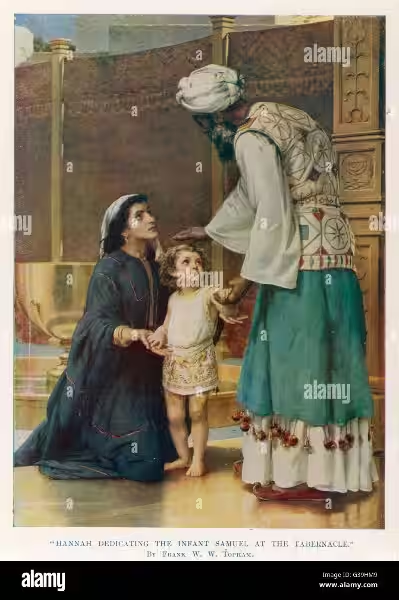
The story of Elkanah's wives, Hannah and Peninnah, is a poignant exploration of faith, infertility, and the complexities of human relationships within a polygamous society. While the biblical account in 1 Samuel 1 provides a framework, midrashic literature enriches our understanding of the characters, especially Peninnah, Elkanah's other wife. This article delves into these interpretations, aiming to provide a more nuanced perspective on their lives and the dynamics of their relationship.
- The Biblical Account and its Limitations
- Midrashic Interpretations: Expanding the Narrative
- The Paradoxical Blessing: A Theological Interpretation
- Conclusion: A Multifaceted Story
-
Frequently Asked Questions about Elkanah's Wives
- Who were Elkanah's wives?
- What was the nature of the relationship between Hannah and Peninnah?
- Why did Peninnah taunt Hannah?
- How did Elkanah respond to the conflict between his wives?
- What is the significance of the Midrashic interpretations of Peninnah's actions?
- Did Peninnah's actions have any unintended consequences?
- What are the overall takeaways from the story of Elkanah, Hannah, and Peninnah?
The Biblical Account and its Limitations
The Book of Samuel offers a glimpse into the lives of Elkanah, Hannah, and Peninnah, but it primarily focuses on Hannah's journey of faith and her eventual miracle of childbirth. We learn that Elkanah had two wives, and that Peninnah, possessing children, repeatedly taunted Hannah for her barrenness. This taunting caused Hannah significant distress, impacting her emotional well-being and fueling her fervent prayers.
The biblical narrative, however, leaves many questions unanswered. It doesn't delve deeply into Peninnah's motivations, her personality beyond her cruelty, or the broader dynamics of the household. It presents a snapshot of conflict, but doesn't offer a full picture of the complexities of their lives and relationships. This is where midrashic interpretations come into play, filling in the gaps and offering a richer, more profound understanding of the situation, providing context to the actions of Elkanah's wife, Peninnah, and Hannah.
Midrashic Interpretations: Expanding the Narrative
Midrashic literature, offering interpretations and expansions of biblical texts, provides a more detailed look at Peninnah's character and actions. These interpretations aren't simply retellings; they analyze Peninnah's motivations, revealing a more complex character than the Bible initially suggests.
Peninnah's Taunting: A Calculated Campaign
Several midrashim detail Peninnah's consistent efforts to humiliate Hannah. These weren't isolated incidents, but a calculated campaign of subtle yet persistent cruelty. One midrash describes Peninnah flaunting her children's well-being, pointedly asking Hannah if she'd cared for her sons, highlighting Hannah's lack of children.
Another portrays Peninnah's subtle cruelty through everyday domestic activities. She would meticulously attend to her children, drawing attention to Hannah's inability to participate in these commonplace maternal acts. The subtle nature of these actions underscores the emotional manipulation at play, making the suffering all the more insidious.
Peninnah's Insecurities: A Deeper Motivation
Midrashic interpretations suggest Peninnah's actions weren't simply malicious. They posit that her behavior stemmed from her own insecurities. She perceived Elkanah's preference for Hannah, possibly fueling a sense of competition and jealousy. Her taunting can be seen as a desperate, albeit destructive, attempt to gain his attention and validation within a polygamous household.
This interpretation places Peninnah's actions within a broader social context. It highlights the challenges faced by women in polygamous relationships, particularly the competition and potential for conflict between co-wives. Her actions are not simply the result of personal spite, but also a reflection of the socio-cultural pressures of the time.
The Paradoxical Blessing: A Theological Interpretation
Perhaps the most fascinating aspect of the midrashic interpretations is their connection between Peninnah's cruelty and Hannah's eventual blessing. A rabbinic interpretation focuses on the Hebrew word "re'am," which means both "anger" (Peninnah's provocation of Hannah) and "thunder," which precedes rain.
This wordplay suggests a parallel between Peninnah's anger and the rain that fertilizes barren land, symbolizing Hannah's subsequent fertility. This interpretation doesn't condone Peninnah's actions, but offers a theological explanation for the seemingly paradoxical outcome. Hannah's suffering, fueled by Peninnah's cruelty, inadvertently paved the way for her miracle.
Conclusion: A Multifaceted Story
The story of Elkanah's wife, and the relationship between Hannah and Peninnah, is far more complex than a simple tale of jealousy and faith. Midrashic interpretations provide a deeper understanding of the motivations and consequences of their actions, highlighting the pain of infertility, the complexities of human relationships in a polygamous setting, and the unexpected ways in which adversity can lead to profound blessing. These interpretations offer a theological reflection on suffering, divine justice, and the intricate interplay of human actions and divine intervention. The story remains a compelling reminder of the enduring power of faith and the complexities of the human heart.
Frequently Asked Questions about Elkanah's Wives
Who were Elkanah's wives?
Elkanah had two wives: Hannah and Peninnah. The biblical account, particularly 1 Samuel 1, focuses on their contrasting experiences and the significant impact of their relationship.
What was the nature of the relationship between Hannah and Peninnah?
The relationship between Hannah and Peninnah was deeply strained. Peninnah, who had children, consistently taunted Hannah, who was barren. This taunting wasn't simply occasional; Midrashic literature portrays it as a calculated and persistent campaign of subtle humiliation, designed to highlight Hannah's infertility. The source of Peninnah's behavior is debated, with some interpretations suggesting insecurity stemming from Elkanah's apparent preference for Hannah.
Why did Peninnah taunt Hannah?
Midrashic interpretations offer several perspectives on Peninnah's motivations. While the Bible depicts her taunting as stemming from Hannah's barrenness, Midrash expands on this, suggesting that Peninnah's actions were driven by a desire to gain Elkanah's attention and validation within their polygamous marriage. Her relentless teasing can be seen as an attempt to assert her position and counteract her perceived lesser standing compared to Hannah in Elkanah's eyes.
How did Elkanah respond to the conflict between his wives?
The biblical text shows Elkanah attempting to comfort Hannah, expressing concern and questioning her sadness. However, he doesn't directly address or intervene in Peninnah's behavior. This highlights the complexities of the social and familial dynamics within a polygamous marriage in that era.
What is the significance of the Midrashic interpretations of Peninnah's actions?
The Midrashic interpretations move beyond a simple retelling of the biblical narrative. They provide a deeper understanding of Peninnah's character and motivations, exploring the psychological and social context of her actions. These interpretations offer a nuanced view of a complex character, delving into the insecurities and power dynamics within a polygamous relationship. Furthermore, some interpretations even suggest a theological connection between Peninnah's actions and Hannah's eventual blessing, highlighting the unexpected ways suffering can lead to divine favor.
Did Peninnah's actions have any unintended consequences?
Some Rabbinic interpretations argue that Peninnah's cruelty, while reprehensible, inadvertently served as a catalyst for Hannah's miracle of finally conceiving Samuel. A wordplay in Hebrew connects Peninnah's "anger" (re'am) with the "thunder" (re'am) that precedes rain, symbolizing how her provocation spurred Hannah's eventual fertility. This interpretation is not meant to condone Peninnah's behavior but to offer a theological framework for understanding the paradoxical outcome.
What are the overall takeaways from the story of Elkanah, Hannah, and Peninnah?
The story of Elkanah's wives offers valuable insights into various aspects of human experience. It highlights the pain of infertility, the complexities of polygamous relationships, the destructive nature of unchecked jealousy and insecurity, and the potential for unexpected blessings amidst suffering. It also underscores the importance of faith and prayer in the face of adversity. The Midrashic interpretations enrich this narrative, adding layers of psychological and theological depth to the biblical account.