
Acts 2 Study: Understanding the Birth of the Christian Church
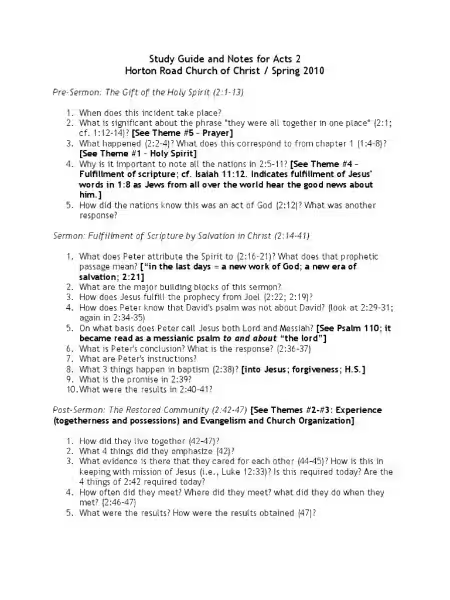
This Acts 2 study delves into the pivotal events of Pentecost, exploring how this day fundamentally shaped the early Christian church and continues to resonate with believers today. We'll examine the miraculous events, Peter's powerful sermon, and the formation of the first Christian community, revealing the profound impact of the Holy Spirit.
- The Promise Fulfilled: Jesus' Predictions and the Coming of the Holy Spirit
- The Miraculous Events of Pentecost: Wind, Fire, and Tongues
- Peter's Sermon: A Proclamation of Jesus' Lordship
- The Response to the Gospel: Repentance and Baptism
- The Early Church: A Model of Community and Devotion
-
Acts 2 Study: Frequently Asked Questions
- What are the main events covered in this Acts 2 Bible study?
- How does the study connect the events of Pentecost to Jesus' earlier promises?
- What are the three miraculous phenomena described in Acts 2:1-13, and what is their significance?
- What are the key elements of Peter's sermon in Acts 2:14-36?
- What was the response of the crowd to Peter's sermon, and what happened afterward?
- What were the characteristics of the early church as described in Acts 2:42-47?
- What is the overall message or takeaway from this Acts 2 study?
The Promise Fulfilled: Jesus' Predictions and the Coming of the Holy Spirit
Before diving into the events of Acts 2, it's crucial to understand the context established in the Gospels. Jesus, in John 14 and 16, promised the coming of the Holy Spirit, a "Helper" or "Advocate" (Paraclete) who would guide and empower his disciples after his ascension. This promise wasn’t a vague hope; it was a concrete assurance of continued divine presence and guidance for the nascent church.
This promise wasn’t just about a future event; it was integral to Jesus' plan for the church's future. He clearly outlined the role of the Holy Spirit, emphasizing its importance in leading, teaching, and empowering the believers. It's important to understand this anticipation to fully grasp the significance of the events of Pentecost. The disciples, having witnessed Jesus' miracles and teachings, eagerly awaited this promised empowerment.
Peter's Role: A Designated Leader
Beyond the general promise of the Holy Spirit, Jesus also designated Peter as a key leader within the nascent movement. While all the disciples received the Spirit's empowering, Peter's prominent role in Acts 2 reflects Jesus' prior investment in him. Understanding this leadership dynamic is crucial for interpreting Peter's bold and effective preaching in Acts 2.
The choice of Peter as the primary speaker on Pentecost isn't arbitrary. Jesus' prior interactions with Peter, including his confession of faith and his subsequent commissioning, set the stage for Peter's central role in the events of Acts 2. This leadership, bestowed by Christ himself, adds weight and authority to Peter's sermon and the subsequent establishment of the church.
The Miraculous Events of Pentecost: Wind, Fire, and Tongues
Acts 2:1-13 vividly describes the miraculous events of Pentecost. A rushing wind filled the house where the disciples were gathered, and tongues of fire rested upon each of them. Then, they began speaking in other languages, a phenomenon understood by the diverse multitude gathered in Jerusalem for the feast.
These three phenomena—the wind, the fire, and the speaking in tongues—each carry symbolic weight. The rushing wind symbolizes the powerful and pervasive nature of the Holy Spirit. The tongues of fire represent the Spirit's purifying and empowering presence. And the speaking in tongues, or glossolalia, served as a powerful sign to the diverse crowd, demonstrating the Spirit’s ability to transcend linguistic barriers. This event dramatically reversed the situation described in the Tower of Babel narrative, where linguistic diversity led to division. Here, linguistic diversity became a catalyst for unity, showcasing the Spirit's power to unify people of different backgrounds.
Interpreting the Signs: A Multifaceted Symbolism
A key element in understanding Acts 2 is discerning the symbolic meaning of the miraculous occurrences. While the speaking in tongues is a subject of ongoing theological debate, its undeniable effect on the crowd is clear. The event naturally drew attention and created a sense of wonder, preparing the ground for Peter's sermon.
The interpretation of these symbols is still debated today. This naturally leads to diverse theological perspectives, but the fundamental message remains: the Holy Spirit had arrived, empowering the disciples and launching the church into existence.
Peter's Sermon: A Proclamation of Jesus' Lordship
Peter's sermon (Acts 2:14-36) forms the heart of the narrative. Empowered by the Holy Spirit, Peter addressed the astonished crowd, skillfully weaving together Old Testament prophecy with the reality of Jesus' life, death, resurrection, and ascension. He quoted Joel 2:28-32, showing how the outpouring of the Spirit fulfilled God's ancient promises.
Peter's boldness, a direct result of the Spirit's empowerment, is striking. He fearlessly proclaimed Jesus as the Messiah, the Christ, and the Lord—affirming his divine authority and identity. His message was both inclusive ("everyone"), offering salvation to all who call on the name of the Lord, and exclusive, emphasizing the necessity of faith and repentance. This duality underscores the nature of God's grace and the imperative of personal response.
The Power of Proclamation: A Simple Yet Profound Message
Peter’s sermon, although delivered spontaneously, was meticulously crafted. He eloquently linked the outpouring of the Spirit with God’s promises, directly refuting the crowd's initial assumption of drunkenness. He didn't shy away from the challenging aspects of Jesus' crucifixion, presenting it within God's redemptive plan.
The clarity and simplicity of his message stand in contrast to the complexity of the surrounding events. His focus on Jesus' resurrection as the pivotal proof of his divinity was a masterstroke of communication. The message was clear, concise, and compelling.
The Response to the Gospel: Repentance and Baptism
The crowd's reaction (Acts 2:37-41) was immediate and profound. Pierced by the message and witnessing the power of the Spirit, they cried out, "What shall we do?" Peter's response—repentance, baptism in Jesus' name, and the promise of receiving the Holy Spirit—led to approximately 3,000 baptisms. This mass conversion highlights the transformative power of the Gospel message when accompanied by the Holy Spirit's work.
The response wasn't merely intellectual assent; it was a deep, personal transformation. The crowd's immediate question, "What shall we do?", reflects a genuine desire to respond to God's grace. This response was a catalyst for the rapid growth of the early church.
The Immediate Impact of Faith: A Powerful Demonstration of Transformation
The immediate and dramatic conversion of thousands underscores a critical element: the Spirit's empowerment doesn't just affect the speaker but the hearers as well. The Spirit's work isn't confined to the disciples; it extends to the entire audience, resulting in a widespread spiritual awakening.
The events of Pentecost weren't just a miracle; they were the catalyst for a movement. The mass baptisms aren't just statistics; they represent the transformation of lives and the beginning of a new era in religious history.
The Early Church: A Model of Community and Devotion
Acts 2:42-47 describes the life of the early Christian community. Their devotion was characterized by several key elements:
- Apostles' Teaching: A commitment to the foundational teachings of Jesus and the apostles.
- Fellowship (Koinonia): A deep sense of community and shared life.
- Breaking of Bread (Communion): Regular participation in the Lord's Supper.
- Prayer: Constant prayer and dependence on God.
- Sharing of Possessions: A spirit of generosity and mutual support.
This communal life wasn't perfect; it wasn't a utopian society. Yet, it served as a powerful model of Christian living, demonstrating the transformative potential of the Holy Spirit's presence. It is a testament to the power of faith to inspire acts of selfless love and shared community.
The early church's communal living wasn't imposed; it was a natural outgrowth of their shared faith and experience of the Holy Spirit. While the exact details of their communal sharing have been debated throughout history, the principle of mutual support and selfless service remains highly relevant.
This section serves as a model for modern Christian communities to strive for genuine fellowship, mutual support, and unwavering commitment to the teachings of Christ. The early church's life serves as a powerful witness to the unifying and transformative power of faith. The Acts 2 study offers invaluable insights into the founding of the Christian church and continues to inspire believers today.
Acts 2 Study: Frequently Asked Questions
What are the main events covered in this Acts 2 Bible study?
This 12-minute study focuses on the pivotal day of Pentecost, described in Acts 2. We explore three key events foretold by Jesus: the outpouring of the Holy Spirit, Peter's powerful sermon proclaiming Jesus as the Messiah, and the formation of the first Christian church. The study also examines the characteristics of the early church community.
How does the study connect the events of Pentecost to Jesus' earlier promises?
The study begins by referencing Jesus' promises in John 14 and 21 regarding the coming of the Holy Spirit as a "Helper" and the establishment of Peter as a key leader. This provides crucial context for understanding Pentecost as the fulfillment of God's plan.
What are the three miraculous phenomena described in Acts 2:1-13, and what is their significance?
Acts 2:1-13 describes a rushing wind, tongues of fire resting on the disciples, and the disciples speaking in other tongues understood by a diverse crowd. The study explores the symbolic significance of these phenomena—sound, fire, and Spirit-empowered words—within the broader biblical narrative, interpreting the event as a reversal of the Tower of Babel, signifying unity through the Holy Spirit.
What are the key elements of Peter's sermon in Acts 2:14-36?
The study analyzes Peter's boldness, empowered by the Holy Spirit, and his use of Joel's prophecy (Joel 2:28-32) to connect the outpouring of the Spirit with God's promises. His message emphasizes Jesus' crucifixion and resurrection, highlighting Jesus' identity as Lord and Christ. The sermon's inclusivity ("everyone") and exclusivity ("calling on the name of the Lord") regarding salvation are also explored.
What was the response of the crowd to Peter's sermon, and what happened afterward?
The crowd demonstrated conviction and repentance, leading to approximately 3,000 baptisms. This highlights the immediate impact of the sermon and the Holy Spirit's work. The study explores the significance of this mass conversion.
What were the characteristics of the early church as described in Acts 2:42-47?
The study examines the early church's devotion to the apostles' teaching, fellowship, breaking of bread, prayer, and sharing of possessions. This communal life is presented as a direct result of the Holy Spirit's presence and serves as a model for modern Christian communities.
What is the overall message or takeaway from this Acts 2 study?
The study emphasizes the transformative power of the Holy Spirit and the importance of communal worship and living out the teachings of Jesus. It encourages readers to pray for the Holy Spirit's filling and empowerment in their own lives, mirroring the faith of the early believers. The study highlights the interplay between the Holy Spirit, the Gospel message, and the formation of the early Christian community.