
Reap Harvest: Understanding the Spiritual and Literal Meanings
This article explores the multifaceted meanings of "reap harvest," examining both its literal agricultural applications and its rich metaphorical use in spiritual contexts. We'll delve into the nuances of the words "reap" and "harvest," exploring their subtle differences and how understanding them can enrich our understanding of both farming and spiritual growth.
- The Literal Reap Harvest: Agriculture's Cyclical Bounty
- Reap Harvest: A Spiritual Metaphor for Growth and Reward
-
Frequently Asked Questions: Reaping Your Harvest
- What does "reaping a harvest" mean, spiritually speaking?
- What's the difference between "reaping" and "harvesting" in a spiritual context?
- How does the parable of the sower relate to reaping a harvest?
- How can I ensure a good spiritual harvest?
- How long does it take to reap a spiritual harvest?
- What if I don't see immediate results?
The Literal Reap Harvest: Agriculture's Cyclical Bounty
The terms "reap" and "harvest" are intrinsically linked to agriculture, representing the culmination of a season's labor. However, they possess distinct connotations.
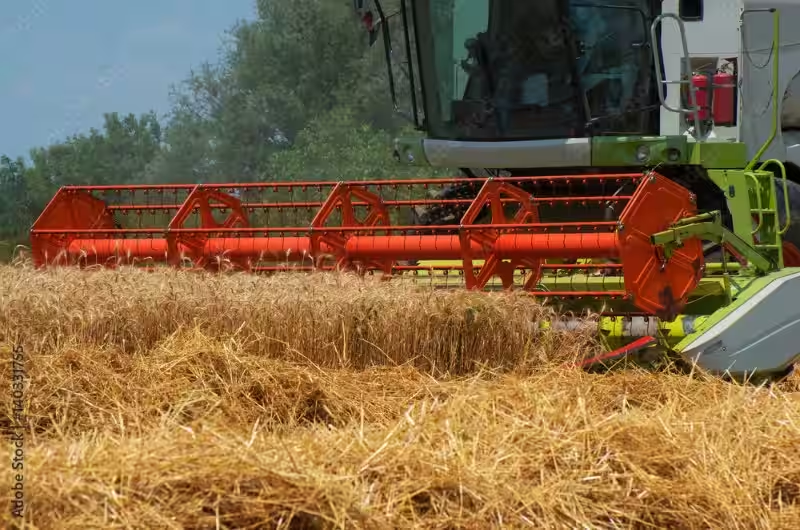
Harvesting, in its broadest sense, encompasses the gathering of a wide range of crops – from juicy tomatoes and crisp lettuce to golden wheat and towering sunflowers. It's a comprehensive process involving not only the act of picking or cutting but also the subsequent cleaning, sorting, and storage of the gathered produce. Think of the bustling activity of a modern-day farm, with combines harvesting vast fields of grain, or the careful hand-picking of delicate fruits. The term "harvest" evokes a sense of abundance and the fulfillment of a season's work.
Reaping, on the other hand, carries a more specific and evocative image. It primarily refers to the cutting of cereal grains like wheat, barley, or oats, often using traditional tools like sickles. The imagery is deeply rooted in historical agricultural practices, conjuring up pictures of farmers bending over sun-drenched fields, meticulously cutting stalks of grain. The act of reaping emphasizes the manual labor and the direct connection between human effort and the resulting yield. It speaks to a more intimate and hands-on approach to gathering the fruits of one's labor. While you might harvest tomatoes, you would more accurately reap wheat.
The Subtle Difference in Application
The choice between "reap" and "harvest" depends largely on context. While both describe the gathering of crops, "harvest" is the broader, more general term, encompassing various methods and crops. "Reap," however, carries a stronger connotation of manual labor and a specific focus on cereal grains. You might harvest an entire orchard of apples, but you would reap a field of rye. This nuanced difference in usage highlights the importance of considering the specific context when choosing the most appropriate term.
Reap Harvest: A Spiritual Metaphor for Growth and Reward
Beyond its agricultural significance, the concept of "reap harvest" holds profound spiritual meaning. Many spiritual traditions employ the agricultural analogy to illustrate the principles of sowing and reaping, emphasizing that our actions have consequences, both positive and negative.
This concept is strongly supported by scripture. Genesis 8:22, for example, speaks of the continuing cycle of planting and reaping, ordained by God. Ecclesiastes 3:1 reinforces this cyclical nature, stating that there's a time for everything, including planting and harvesting. These verses establish the foundational idea that every action, every deed, every word we sow will ultimately yield a harvest.
The Parable of the Sower and the Spiritual Harvest
Jesus' parable of the sower (Matthew 13:1-8) powerfully illustrates the varying outcomes of spiritual planting. Just as a farmer sows seed, we sow our actions, words, and thoughts into the world. The parable highlights the challenges and varying degrees of success in this process, emphasizing the importance of preparing the ground (our hearts) to receive the seed (God's word or our good deeds). This means nurturing our spiritual lives, actively seeking to understand and apply God's teachings, and being open to His guidance.
Paul's letter to the Galatians (6:7-10) further emphasizes this principle, urging perseverance in doing good, promising a future harvest of blessings. This isn't a passive process; it requires consistent effort, unwavering faith, and a willingness to invest time and energy in spiritual growth. Just as a farmer tends to his crops, we must nurture our spiritual lives through prayer, study, and acts of service. Only through consistent effort can we truly reap a harvest of spiritual blessings.
Practical Application: Reaping a Rich Spiritual Harvest
To reap a bountiful spiritual harvest, several key strategies are crucial:
- Focus and Discipline: Avoid distractions that hinder spiritual growth.
- Diverse Efforts: Don't rely on a single method for spreading the Gospel or performing acts of kindness.
- Nurture and Care: Provide ongoing attention to the seeds you plant.
- Sensitivity to Others: Harvest when others are receptive and ready to receive.
- Perseverance: Expect setbacks; the harvest process isn't always smooth.
By following these guidelines, we can maximize the potential for a rich and fulfilling spiritual harvest, experiencing the abundant blessings that come from living a life rooted in faith and good works. This doesn't mean instant results; it's a journey of growth and development that requires patience, dedication, and a willingness to learn and adapt. The spiritual reap harvest is a testament to the power of consistency and unwavering faith. It is a journey of sowing seeds of goodness and reaping the rewards of a life lived in alignment with our values and beliefs.
Frequently Asked Questions: Reaping Your Harvest
What does "reaping a harvest" mean, spiritually speaking?
Spiritually, "reaping a harvest" refers to experiencing the consequences of your actions, both good and bad. It's the outcome of your efforts in cultivating spiritual growth, much like a farmer harvests crops after planting and tending to them. This includes experiencing the benefits of kindness, generosity, and faith, or facing the consequences of negative choices. It emphasizes the cyclical nature of sowing and reaping, as described in scripture (Genesis 8:22; Galatians 6:7-10).
What's the difference between "reaping" and "harvesting" in a spiritual context?
While both terms relate to gathering the results of your efforts, they hold subtle nuances. "Harvesting" is a broader term, encompassing a wider range of activities and results. "Reaping," often associated with grains, suggests a more focused, hands-on approach to gathering the specific benefits of your spiritual work, perhaps emphasizing a more direct and immediate reward for diligent effort. Both highlight the importance of consistent effort and mindful attention to spiritual growth.
How does the parable of the sower relate to reaping a harvest?
Jesus' parable of the sower (Matthew 13:1-8) illustrates the varied outcomes of spiritual planting. Not all seeds fall on fertile ground; some encounter obstacles and fail to produce a harvest. This highlights the importance of identifying receptive individuals and nurturing the seeds of faith you plant, ensuring they have the conditions to flourish and ultimately yield a spiritual harvest. It also underscores the need for perseverance, as not every attempt will be immediately successful.
How can I ensure a good spiritual harvest?
A good spiritual harvest requires consistent effort and mindful attention. This includes:
- Focus and perseverance: Avoid distractions and maintain focus on your spiritual goals. Persevere through challenges and setbacks.
- Diverse approaches: Don't rely on a single method for spreading your message or sharing your faith. Try different approaches to reach a wider audience.
- Nurturing: Carefully tend to the seeds you plant through ongoing support, guidance, and encouragement.
- Sensitivity: Be aware of the spiritual readiness of others and harvest accordingly. Don't force your message onto unwilling recipients.
- Consistent effort: Spiritual growth, like any other type of growth, takes time and consistent effort. Small acts of kindness can yield significant spiritual results (Matthew 25:21).
How long does it take to reap a spiritual harvest?
There's no set timeline for reaping a spiritual harvest. Like a farmer's harvest, the timing varies depending on several factors, including the type of “seed” planted, the conditions in which it's planted, and the amount of effort put into nurturing its growth. Patience and perseverance are key; some harvests may come quickly, while others may require significant time and effort. The important thing is to remain faithful in your planting and nurturing.
What if I don't see immediate results?
Remember that spiritual growth is a process, not a destination. Don't be discouraged by a lack of immediate results. Perseverance is crucial. Continue to plant and nurture, and trust that your efforts will eventually bear fruit. Focus on the process of growth and the positive impact you are making, rather than solely on the outcome. God's timing is perfect, and your faithfulness will be rewarded.